Fill out the form below to apply and get featured as one of our Top Contractors. Gain visibility, attract more clients, and showcase your expertise to a wider audience!
🔒 Your information is private and secure
Free to apply
Verified contractors only
Canada-wide visibility
No hidden charges
Free Service
No obligation
Get Your FREE HVAC Quote Today
Compare prices from top-rated local contractors in minutes
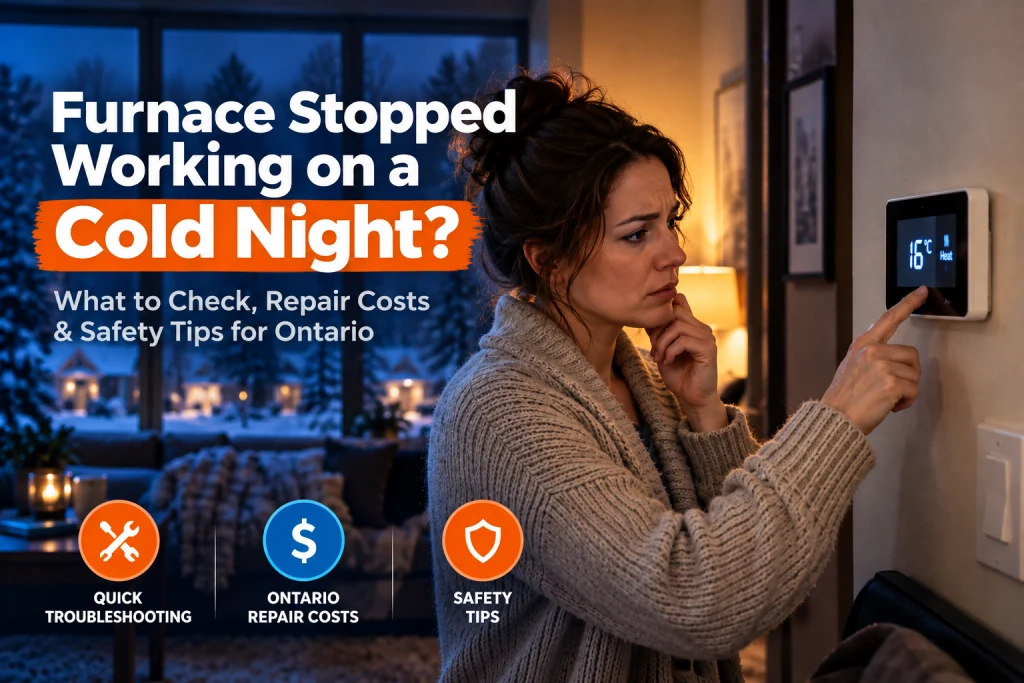
If your furnace stopped working on a cold night and the temperature inside is already dropping, here is the short version: check for a gas smell, a sounding carbon monoxide alarm, or visible scorching first, because those mean you leave the house and call from outside. If none of that applies, four quick checks, thermostat, breaker, filter, and the outdoor vent pipes, explain or fix most overnight furnace failures in about ten minutes. This guide walks through that order, what emergency repair actually costs across Ontario in 2026, and how to keep the house safe and livable until a technician arrives.
By the FurnacePrices.com Editorial Team•✔ Reviewed by a licensed HVAC technician•Updated: October 2026
This is written for homeowners in Hamilton, Burlington, Oakville, Milton, Brantford, Cambridge, and Kitchener who are standing in a cold house right now, not for technicians. In our experience, overnight furnace calls generally split into two groups: genuine no-heat emergencies, and furnaces that tripped a safety switch for a reason a homeowner can spot in under ten minutes. The checklist below is built to help you tell which one you are dealing with before you decide whether to pay after-hours rates or wait for morning.
Most furnace failures on a cold night are inconvenient, not dangerous. The distinction that actually matters is safety risk, not just how cold the living room feels. Run through this before you touch anything.
🚨 Leave the house and call from outside if: your carbon monoxide alarm is sounding, you smell rotten eggs or a sharp chemical odour near the furnace, you see soot, scorch marks, or flames outside the burner compartment, or anyone in the home has a sudden headache, dizziness, or nausea with no other explanation. Do not try to reset the furnace first in any of these cases. Get everyone, including pets, outside, then call 911 or your gas utility’s emergency line before calling an HVAC contractor.
TSSA data shows that roughly 65% of Ontario’s carbon monoxide injuries and deaths happen inside homes, most tied to fuel-burning appliances that were not properly maintained or vented. That is exactly why the checks above come first, before any troubleshooting. If none of them apply and the house is holding a temperature you can manage for a few hours, an emergency call usually is not necessary yet. The next section covers four common causes worth checking yourself before deciding whether tonight’s call can wait until morning.
Quick Checks: Thermostat, Breaker, and Vents
If there is no gas smell, no CO alarm, and no visible damage, four things are worth checking first, in this order, before you decide whether tonight’s call can wait.
Thermostat. Confirm it is set to “Heat,” not “Cool” or “Off,” and that the target temperature is above the current room temperature. Replace the batteries if the display is dim or blank. A dead thermostat battery is one of the most common false alarms behind winter no-heat calls.
Breaker and furnace switch. Reset any tripped breaker labelled “Furnace” once. Also check the furnace’s own service switch, a light switch mounted on or near the unit, in case it was bumped off.
Air filter. Pull the filter and hold it up to a light. If you cannot see light through it, a clogged filter has likely triggered a high-limit safety shutdown. Replace it if you have a spare; if not, it is safe to leave until morning as long as the house is holding temperature.
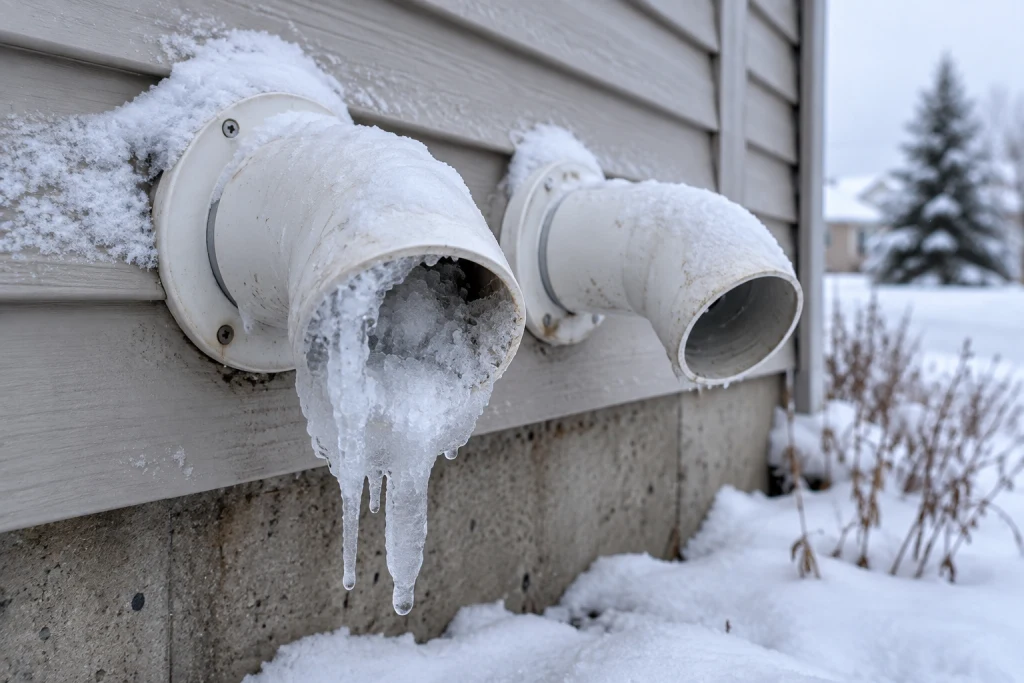
Outdoor intake and exhaust vents. Go outside and look at the two PVC pipes exiting the wall near the furnace. If snow, ice, or debris is covering either one, this is very likely your cause.
That fourth check catches more overnight failures than most homeowners expect, and it is worth understanding why. High-efficiency furnaces, anything rated 90% AFUE or higher, vent through PVC pipes instead of a chimney because they pull almost all the heat out of the exhaust gas before it leaves the house. That makes them efficient, but it also means the exhaust is barely above outdoor air temperature by the time it exits, and on a calm, cold night the leftover moisture can drift back toward the nearby intake and freeze solid across the opening.
If the intake pipe, usually the lower of the two, has only a light dusting of snow, you can generally clear it by hand. If either pipe is frozen solid with a plug of ice, do not chip, hammer, or pour hot water on it. Call a technician instead: forcing a blocked vent open on a live gas appliance is exactly the kind of shortcut that turns a cold night into a carbon monoxide problem instead of a fixed furnace.
🔍 Free Diagnostic Tool
Still Not Sure What’s Wrong? Run This First
Answer a few quick questions about what you’re seeing and hearing to narrow down the likely cause before deciding whether to call tonight or wait until morning.
Step 1 of 60%
🔥
Furnace Troubleshooting Wizard
Which furnace issue are you having? Answer a few quick questions to help identify the most likely cause of your furnace problem and what to do next.
What is the main issue you're experiencing with your furnace?
What color is your furnace flame?
What sound do you hear from your furnace?
How is the heating performance?
When was your last professional maintenance?
Would you like to receive a free no-obligation estimate from our local contractor partners as well?
Great! Almost done, your result is on the next page.
Please enter your contact details so our Certified contractors can provide estimates as well.
This field is required.
Please enter a valid email address.
Please enter your phone number.
Please enter your city or postal code.
By submitting this form, you are giving your consent to receive phone calls and text messages from our contractor partners.
You're almost done! Where do we send the results?
Enter your details below to see your diagnosis. Please provide your details to see your results.
Name is required.
Email is required.
Please enter your city or postal code.
🔍 Diagnosis Complete
Get a Free Repair Estimate
Connect with certified local HVAC technicians who can diagnose and fix your furnace fast.
For a deeper walkthrough of each of these parts, plus causes specific to older furnaces with a standing pilot light, see our furnace not working guide.
What If the Furnace Starts, Then Shuts Off Again?
A furnace that fires up, runs briefly, and shuts off again, sometimes called short cycling, points to a different set of causes than one that never starts at all.
Restricted airflow. A clogged filter or closed supply vents can cause overheating, which trips a limit switch as a protective measure. Replacing the filter and opening vents in unused rooms often resolves this.
Flame sensor or ignition fault. A dirty flame sensor can cause the furnace to light, then shut off within seconds because it can't confirm a stable flame. It's an inexpensive fix for a technician, but not safe to clean yourself on a live gas furnace.
Frozen condensate line. On high-efficiency furnaces, the condensate drain can freeze in an unheated space during a hard cold snap, backing up and triggering a safety shutdown. Look for a small plastic tube near the furnace's base; if it's visibly frozen or a float switch has tripped, that's a job for a technician, not a DIY thaw.
Check for an error code first. Most furnaces built in the last 15 years flash a numbered LED code through a small window on the control board when they lock out. Photograph the flash pattern and check it against the manual, or send it to your technician, before you call; it often speeds up diagnosis.
Don't try to bypass a limit switch, flame sensor, or condensate float switch to force the furnace to keep running. Those parts exist specifically to shut the system down before something more dangerous happens.
How to Stay Warm Safely Until Help Arrives
If none of the quick checks solve it and you are waiting on a technician, here is how to keep the house livable without creating a second emergency.
Close off unused rooms and gather everyone into one or two smaller spaces. A small area holds heat with far less energy loss than trying to warm the whole house.
Use electric space heaters only, kept at least one metre from anything flammable, plugged directly into a wall outlet rather than an extension cord or power bar, and never left running unattended overnight.
Layer bedding and clothing rather than pushing a portable heater past what the room actually needs. Most homes hold a safe temperature for hours even with the furnace off.
Let taps drip slightly on exterior-wall plumbing if the outage looks like it will run past a few hours, to lower the risk of frozen pipes.
⚠️ Never do this to stay warm: don't run a gas oven, stove, barbecue, or a fuel-powered generator indoors or in an attached garage. All of these produce carbon monoxide, and running one for heat with no working furnace to help move air through the house is one of the most common ways an Ontario cold snap turns into a genuine CO emergency instead of just a cold one.
What Emergency Furnace Repair Costs in Ontario
If the quick checks do not resolve it and the house is genuinely losing heat, here is what Ontario homeowners typically pay for an after-hours furnace repair in 2026, by the part that failed.
Repair
Typical Cost (CAD)
Same-Visit Fix?
Igniter or flame sensor
$150 – $350
Usually yes
Draft inducer motor
$350 – $750
Usually yes
Blower motor
$400 – $900
Usually yes
Control board
$300 – $650
Sometimes; board may be special-order
Gas valve
$400 – $850
Sometimes; safety-critical part often special-order
Cracked heat exchanger
$1,800 – $3,500+
Rarely; usually leads to full replacement
These are planning estimates in CAD, not guaranteed prices. Published Ontario repair costs vary significantly by contractor, furnace model, part availability, and whether the call is after hours. Always confirm with a written estimate before work begins.
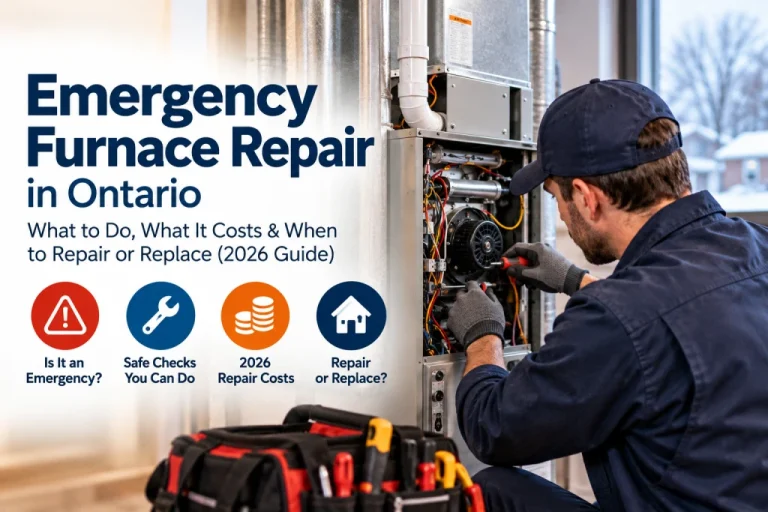
On top of the part and labour, expect an after-hours emergency surcharge of roughly $150 to $350, or a flat 1.5x to 2x labour multiplier for calls outside 8am to 6pm, weekends, and holidays. That is the cost of having a technician on call at 2am, not a sign you are being overcharged, but it is still worth asking for in writing before anyone starts work. If the furnace is holding the house at a livable temperature, waiting for regular business hours is usually the cheaper and equally safe option. For the full breakdown of what happens once a technician is dispatched, typical arrival windows, and how the diagnostic fee works, see our furnace emergency repair guide.
One thing worth flagging specifically for a middle-of-the-night call: this is exactly when contractors who aren't registered with TSSA for fuel-related work are most likely to pick up when a licensed company's line is busy. In Ontario, registered fuels contractors are the only businesses legally authorized to do this kind of work, and TSSA maintains a public registry where you can verify a contractor's registration before letting anyone touch the unit, even at 3am. Our furnace repair near me guide covers what else to check if you need to find one on short notice.
🚀 Furnace Down Right Now?
Get a Free Quote From Trusted Local HVAC Pros
Whether it's a same-visit fix or a sign your furnace needs replacing, compare options with transparent pricing and no obligation. We connect you with licensed, TSSA-registered contractors across the Golden Horseshoe.
How the free quote works: tell us your city and what the furnace is doing, and we pass that along to available local HVAC contractors, one or more of whom will contact you directly to arrange diagnosis or service. Confirm the diagnostic fee and get a written estimate before authorizing any repair. FurnacePrices.com may receive compensation when you request a quote through our referral form; this does not change the pricing or safety information in this guide.
How to Stop This From Happening Again
Most furnace failures on a cold night trace back to something visible weeks earlier. A small amount of routine care before winter catches most of them.
Book a fall tune-up before the first hard freeze, so a technician can catch a weak ignitor, a dirty flame sensor, or an intake screen that is already partly blocked before it fails at 2am.
Change the filter every one to three months. A clogged filter is one of the most common causes of both nuisance shutdowns and reduced efficiency, and it is the cheapest thing on this list to fix.
Clear snow away from both outdoor vent pipes after every significant snowfall, and check them again during any multi-day cold snap, especially on a calm, windless night when exhaust has nowhere to disperse.
Install and test a CO alarm near every sleeping area, not just near the furnace, matching Health Canada's placement guidance, and replace the batteries or the unit itself on the schedule printed on the device.
Don't ignore repeated breaker trips. Resetting the same breaker night after night instead of booking a daytime service call is how a $150 fix turns into a much larger one.
If you are getting the whole house winter-ready rather than just the furnace, our winter heating tips guide covers insulation, thermostat scheduling, and other steps that reduce how hard your system has to work on the coldest nights.
Frequently Asked Questions
Is a furnace stopping on a cold night always an emergency?
No. If indoor temperature is holding steady and there's no gas smell, sparking, or CO alarm, a same-day appointment is usually safe and cheaper than an after-hours call.
What's the first thing to check when a furnace stops working at night?
Check the thermostat first: confirm it's set to "heat" with a target temperature above room temperature, then check its batteries before touching the furnace itself.
Can ice on the outside vent pipe stop a furnace from working?
Yes. High-efficiency furnaces exhaust through PVC pipes that can ice over in a cold snap, tripping a safety switch that shuts the whole system down until it's cleared.
How much does emergency furnace repair cost at night in Ontario?
Expect the standard repair cost plus a $150 to $350 after-hours surcharge, or a 1.5x to 2x labour multiplier, depending on the contractor and time of night.
Is it safe to sleep in a cold house without heat overnight?
There's no single safe temperature for every household. If the house keeps dropping, anyone vulnerable is present, or you're worried about frozen pipes, arrange help rather than waiting it out.
What should I never do to warm my house during a furnace outage?
Never run a gas oven, barbecue, or generator indoors for heat. These produce carbon monoxide and have caused deaths in homes with no working furnace.
HV
Reviewed by a Licensed HVAC Technician
This article was technically reviewed for accuracy before publishing. Our editorial process combines field experience from licensed technicians with guidance from manufacturer documentation and government safety resources.
 Canadian