Fill out the form below to apply and get featured as one of our Top Contractors. Gain visibility, attract more clients, and showcase your expertise to a wider audience!
🔒 Your information is private and secure
Free to apply
Verified contractors only
Canada-wide visibility
No hidden charges
Free Service
No obligation
Get Your FREE HVAC Quote Today
Compare prices from top-rated local contractors in minutes
Everything You Need to Know Before Getting a Heat Pump
Thinking about installing a heat pump but not sure where to begin?
Whether you’re replacing an aging furnace, upgrading your home’s energy efficiency, or looking for a system that provides both heating and cooling, understanding heat pump prices in Canada is the first step toward making an informed decision.
This guide explains how much a heat pump costs, what affects installation pricing, which type is right for your home, and how to maximize rebates and long-term energy savings.
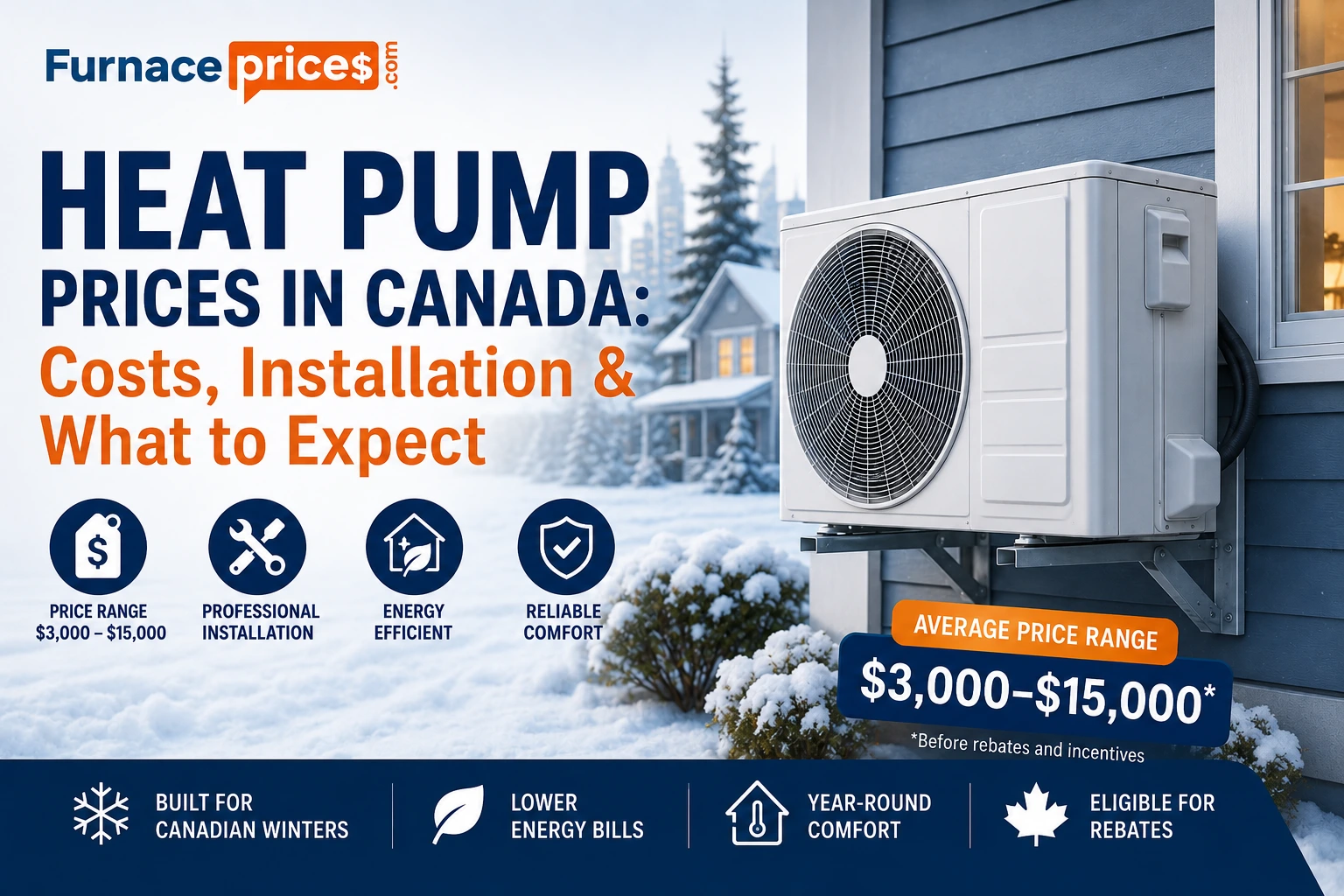
The average heat pump price in Canada ranges from $3,000 to over $15,000 installed, depending on the type of system, home size, efficiency rating, brand, and installation complexity.
Step 1 of 60%
❄️
Heat Pump Cost Calculator
How much will a new heat pump cost you? Get an instant price estimate based on your home and needs — takes under 2 minutes.
What type of heat pump are you looking for?
What efficiency level are you considering?
Higher HSPF = more efficient = lower bills, but higher upfront cost.
How large is your home (sq ft)?
This helps estimate the right capacity unit for your home.
1,500 sq ft
500 sq ft4,000 sq ft
Do you need installation included?
Does your home have existing ductwork?
Would you like a free quote from a local certified contractor?
Great! Almost done, your result is on the next page.
Please enter your contact details so our certified contractors can provide accurate quotes.
This field is required.
Please enter a valid email address.
Please enter your phone number.
Please enter your city or postal code.
By submitting this form, you are giving your consent to receive phone calls and text messages from our contractor partners.
You’re almost done! Where do we send the results?
Please provide your details to see your results.
Name is required.
Email is required.
Please enter your city or postal code.
❄️ Estimate Ready
Your Heat Pump Cost Estimate
Equipment Cost
—
Total Estimated Cost
—
Get Accurate Quotes from Local Pros
These are estimates. Get precise quotes from certified HVAC contractors in your area — for free.
Tip: The lowest-priced system isn’t always the best value. Higher-efficiency models often reduce monthly heating and cooling costs enough to offset their higher upfront price.
What Affects Heat Pump Installation Cost?
Several factors influence your final installation price.
Home size
Heating and cooling load
Existing ductwork
Electrical upgrades
Cold-climate performance
Heat pump brand
Labour rates in your province
Permit requirements
Smart thermostat installation
Indoor air quality accessories
Homes requiring new ductwork or electrical panel upgrades generally cost more than straightforward replacements.
Heat Pump Prices by Home Size
Home Size
Recommended Capacity
Estimated Installed Cost
Under 1,000 sq ft
1.5–2 Ton
$3,500–$7,000
1,000–1,500 sq ft
2–2.5 Ton
$5,000–$9,000
1,500–2,500 sq ft
2.5–3.5 Ton
$7,000–$12,000
2,500+ sq ft
4–5 Ton
$10,000–$15,000+
For budget-conscious options like a Senville heat pump, a professional load calculation is still the best way to determine the correct system size.
Step 1 of 50%
📐
Heat Pump Size & BTU Calculator
Find the right heat pump capacity for your home. Get your recommended BTU output in under 2 minutes.
What is your home's square footage?
1,500 sq ft
500 sq ft5,000 sq ft
What climate zone do you live in?
Climate affects how much heating and cooling capacity you need.
How well insulated is your home?
What are your ceiling heights?
Would you like a free quote from a local certified contractor?
Almost done! Your BTU recommendation is on the next page.
Enter your details so certified contractors can follow up with an accurate quote.
This field is required.
Please enter a valid email address.
Please enter your phone number.
Please enter your city or postal code.
By submitting this form, you are giving your consent to receive phone calls and text messages from our contractor partners.
You're almost done!
Please provide your details to see your results.
Name is required.
Email is required.
Please enter your city or postal code.
📐 Size Calculated
Your Recommended Heat Pump Size
Recommended BTU
—
Tonnage
—
Get a Confirmed Size from a Pro
A proper Manual J load calculation by a certified HVAC contractor ensures perfect sizing for your home.
Always compare warranty coverage, local dealer support, and efficiency ratings—not just equipment price; budget-friendly brands like Gree are worth checking too.
❓ What Is a Heat Pump?
A heat pump is a system that can both cool your home in summer and warm it in winter — using electricity. It works by moving heat rather than generating it from fuel like a furnace or boiler does.
🧊 In cooling mode:
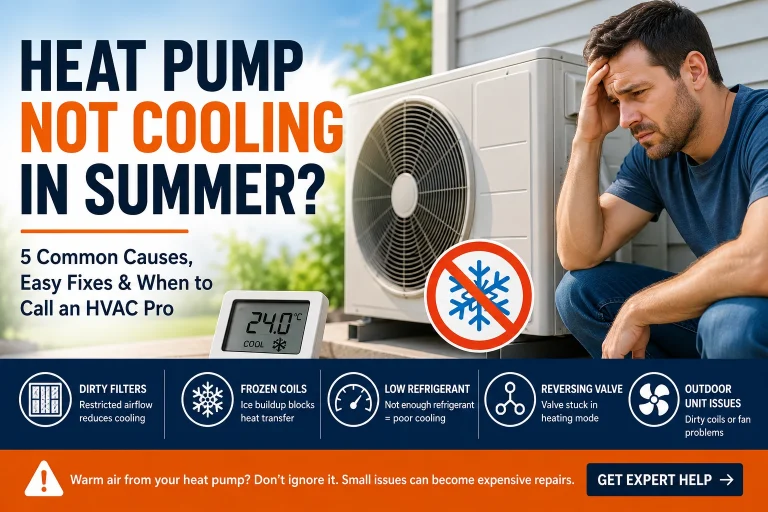
It pulls heat from inside your home and releases it outside — just like a standard air conditioner. If cooling output ever drops, our heat pump not cooling in summer guide covers common causes and fixes.
🔥 In heating mode:
It pulls heat from the outdoor air and brings it inside — even in cold weather.
Yes, it can work in Canadian winters too! Cold-climate heat pumps are specially designed to handle low temperatures.
Connects to your home’s ductwork to distribute air through vents. Ideal if you already have a forced-air heating system.
2. Ductless Mini-Split
Uses wall-mounted units in different rooms, such as a Samsung ductless heat pump. Great for homes without ducts or for adding comfort to specific zones.
3. Hybrid Heat Pump
Combines a heat pump with a backup gas furnace. It automatically switches to the most efficient option depending on outdoor temperatures.
4.Cold Climate Heat Pump
Designed specifically for Canadian winters, these systems maintain heating capacity even when temperatures fall below -25°C — see our heat pump energy efficiency trends in Canada for how this technology has evolved, making them ideal for colder regions.
⚡ Energy Efficiency Ratings (SEER2 & HSPF2)
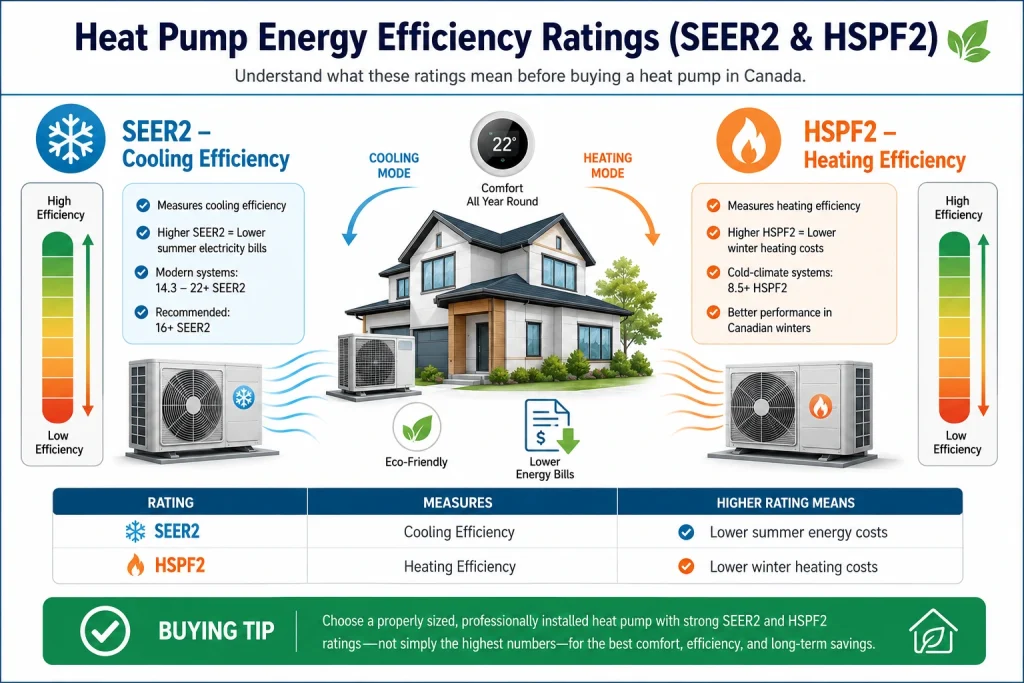
When comparing heat pumps, efficiency ratings are just as important as price. Higher efficiency systems typically use less electricity, helping reduce monthly heating and cooling costs over the life of the unit.
SEER2 (Seasonal Energy Efficiency Ratio 2)
SEER2 measures a heat pump's cooling efficiency under updated testing standards that better reflect real-world operating conditions.
Most modern heat pumps range from 14.3 to 22+ SEER2.
For many Canadian homes, a system with SEER2 16 or higher provides an excellent balance of comfort, efficiency, and value.
HSPF2 (Heating Seasonal Performance Factor 2)
HSPF2 measures how efficiently a heat pump provides heating during the winter.
Higher HSPF2 ratings mean better heating performance and lower electricity use.
Cold-climate heat pumps commonly have HSPF2 ratings of 8.5 or higher.
Choosing a higher HSPF2 model can help reduce winter heating costs, especially in colder parts of Canada.
ENERGY STAR® Certification
Many high-efficiency heat pumps carry the ENERGY STAR® certification, which indicates they meet strict energy performance standards. ENERGY STAR-certified systems often provide:
Lower annual energy costs
Improved year-round comfort
Reduced greenhouse gas emissions
Eligibility for certain provincial or utility rebate programs
Buying Tip: Don't choose a heat pump based solely on the highest efficiency rating. A properly sized, professionally installed system with good SEER2 and HSPF2 ratings will usually provide better long-term performance and lower operating costs than an oversized or undersized unit.
Monthly Operating Costs
Besides the purchase price, homeowners should consider annual operating costs.
Typical electricity costs depend on:
climate
electricity rates
insulation
thermostat settings
system efficiency
🌡️
Heat Pump Operating Cost Calculator
Calculate the estimated monthly operating cost of your heat pump for heating or cooling with this quick quiz.
Step 1 of 714%
What is your heat pump's heating efficiency (COP)?
COP (Coefficient of Performance) measures heating efficiency. Higher = more efficient. Check your manual or use the default.
3.2 COP
1.0 COP4.5 COP
💡 Most modern heat pumps: 2.5–4.0 COP. Standard default: 3.2
What is your heat pump's cooling efficiency (SEER)?
SEER (Seasonal Energy Efficiency Ratio) measures cooling efficiency. Higher = more efficient.
Check your electricity bill or use the Canadian average.
$0.14 per kWh
$0.08/kWh$0.40/kWh
💡 Canadian average: ~$0.14/kWh. Ontario: ~$0.13, BC: ~$0.12, AB: ~$0.18
Would you like a free no-obligation estimate from local contractor partners?
Great! Almost done, your result is on the next page.
Please enter your contact details so our Certified contractors can provide estimates as well.
This field is required.
Please enter a valid email address.
Please enter your phone number.
Please enter your city or postal code.
By submitting this form, you are giving your consent to receive phone calls and text messages from our contractor partners.
You're almost done!
Please provide your details to see your results.
Name is required.
Email is required.
Please enter your city or postal code.
🌡️ ESTIMATE READY
Your Heat Pump Operating Cost Estimate
Monthly Heating Cost (est.)
—/month
Monthly Cooling Cost (est.)
—/month
Annual Heating Cost
—
Annual Cooling Cost
—
Total Annual Cost
—
Your Electricity Rate
—
IMPORTANT: This is a general estimate for informational purposes only. Actual costs vary based on usage patterns, local weather, thermostat settings, and equipment age.
Get Accurate Quotes from Local Pros
These are estimates. Get precise quotes from certified contractors — for free.
Compared with electric baseboard heating or oil furnaces, modern heat pumps — including efficient models like a Daikin heat pump — can significantly reduce annual heating costs.
Heat Pump vs Furnace Cost
Feature
Heat Pump
Gas Furnace
Purchase Price
Higher
Lower
Cooling
Yes
No
Heating Cost
Lower
Moderate
Carbon Emissions
Lower
Higher
Rebates
Available
Limited
💚
Heat Pump Savings Calculator
Get a quick estimate on how much you could potentially save in heating costs by switching from your current system to an air-source heat pump.
Step 1 of 714%
What is your current heating type?
Do you have any of your past utility bills?
Your actual bills help us provide a more accurate estimate. If not, we can estimate based on similar homes in your region.
What's your approximate annual heating cost?
Check your utility bills or estimate based on your monthly costs.
$1,000 / year
$100$5,000
What type of fuel are you heating with?
Do you know how efficient your current furnace is?
Older systems run less efficiently, so your actual savings may be even higher.
What climate region do you live in?
Would you like a free no-obligation estimate from local contractor partners?
Great! Almost done, your result is on the next page.
Please enter your contact details so our certified contractors can provide estimates.
This field is required.
Please enter a valid email address.
Please enter your phone number.
Please enter your city or postal code.
By submitting this form, you are giving your consent to receive phone calls and text messages from our contractor partners.
You're almost done!
Please provide your details to see your results.
Name is required.
Email is required.
Please enter your city or postal code.
💚 ESTIMATE READY
Your Heat Pump Savings Estimate
Estimated Annual Savings
—/year
Current Annual Cost
—
Est. HP Annual Cost
—
5-Year Savings
—
Est. Payback Period
—
How we calculated this
—
Important: This is a general estimate for informational purposes only. Actual savings vary based on equipment choice, local utility rates, usage patterns, and installation quality. Get quotes from certified contractors for accurate numbers.
Get Accurate Quotes from Local Pros
Find out exactly how much you could save — get free quotes from certified contractors.
Yes — modern cold-climate heat pumps are built to perform well even at -25°C or colder. Brands like Mitsubishi, Fujitsu, and Lennox offer models with advanced technology like:
Variable-speed compressors
Enhanced defrost cycles
Dual-stage heating options
💡 Tip: If your region experiences extreme winters, consider a hybrid system or a backup heat source for peak cold days.
🧰 Installation Considerations
Here’s what to expect during the installation:
Home assessment: A professional will assess your home size, insulation, and heating/cooling needs.
System selection: Choosing the right capacity and model for efficiency — popular options include a KeepRite ductless heat pump.
Ductwork check (if needed): For ducted systems, your ducts may need upgrades.
Positioning: Indoor and outdoor units, such as a Toshiba ductless heat pump, must be installed with good airflow and accessibility in mind.
While some homeowners consider DIY heat pump installation, we always recommend choosing a licensed HVAC technician to ensure proper setup and warranty protection.
Heat Pump Maintenance Costs
In addition to routine maintenance:
Annual tune-up: $150–300
Filter replacement
Coil cleaning
Refrigerant inspection
Preventative maintenance protects efficiency and warranty coverage.
🔍
Heat Pump Troubleshooting Wizard
Answer 5 quick questions about your heat pump symptoms and get a likely diagnosis with recommended next steps.
Step 1 of 520%
What is the main issue you're experiencing with your heat pump?
When does the problem mainly occur?
What sound do you hear from your heat pump?
What's happening with your indoor temperatures?
When was your last professional maintenance?
Would you like a free no-obligation estimate from our local contractor partners?
Great! Almost done, your result is on the next page.
Please enter your contact details so our certified contractors can provide estimates.
This field is required.
Please enter a valid email address.
Please enter your phone number.
Please enter your city or postal code.
By submitting this form, you are giving your consent to receive phone calls and text messages from our contractor partners.
You're almost done!
Please provide your details to see your results.
Name is required.
Email is required.
Please enter your city or postal code.
🔍 DIAGNOSIS READY
—
—
—
Recommended Next Steps
—
⚠️ Urgency Level: —
Note: This diagnosis is based on common symptom patterns and is for informational purposes only. A certified HVAC technician should inspect your system for an accurate diagnosis.
Get a Professional Diagnosis
Connect with certified local contractors who can diagnose and fix your heat pump — for free quotes.
Installing a high-efficiency heat pump may qualify you for rebates, incentives, or financing programs that help reduce the overall cost of your upgrade. Available programs vary by province, utility provider, and the type of heat pump you install.
Provincial Rebates
Many provinces offer rebates to encourage homeowners to install energy-efficient heat pumps. Incentive amounts, eligible equipment, and application requirements vary by province, so it's important to review the latest programs available in your area before purchasing a system.
Utility Incentives
Some electricity and natural gas utilities provide additional incentives for qualifying heat pump installations or for replacing older, less efficient heating systems. In some cases, utility incentives can be combined with provincial rebate programs.
Financing Options
In addition to rebates, eligible homeowners may have access to low-interest financing programs that help spread the cost of purchasing and installing a heat pump over time. Financing can make upgrading to a high-efficiency system more affordable without requiring a large upfront investment.
Check Current Programs Before You Buy
Rebate programs, funding amounts, and eligibility requirements change regularly. Before choosing a heat pump, check your provincial energy efficiency program, local utility provider, or speak with a qualified HVAC contractor to confirm the latest incentives available in your area.
Buying Tip: If you're replacing both your heating and cooling equipment, ask your installer whether bundling multiple energy-efficient upgrades could qualify you for additional rebates or financing opportunities.
🧼 Heat Pump Maintenance
Regular maintenance helps your heat pump run efficiently and last longer:
Clean or replace filters every 1–3 months
Keep outdoor unit clear of snow, ice, and debris — this matters even for compact systems like a York ductless heat pump
Schedule annual professional maintenance
Watch for unusual noises or performance changes — if your system suddenly stops responding, our heat pump not working troubleshooting guide walks through quick fixes before you call a technician
Well-maintained systems can last 12–15 years or more.
How big is my home and what’s the insulation like?
Do I need backup heat?
What’s my budget?
Talk to a certified HVAC expert to get personalized recommendations.
🏆
Heat Pump Recommendation Wizard
Answer a few quick questions and we'll recommend the best heat pump tier for your home, climate, and budget.
Step 1 of 1010%
What is your primary heating source today?
Do you have central ductwork in your home?
How well insulated is your home?
How large is your home?
Which region do you live in?
How cold do winters get where you live?
How long are you planning to stay in your home?
How important is energy efficiency to you?
What is your budget for a new system?
Do you want your heat pump to provide both heating and cooling?
Would you like a free no-obligation estimate from local contractor partners?
Great! Almost done, your result is on the next page.
Please enter your contact details so our Certified contractors can provide estimates as well.
This field is required.
Please enter a valid email address.
Please enter your phone number.
Please enter your city or postal code.
By submitting this form, you are giving your consent to receive phone calls and text messages from our contractor partners.
You're almost done!
Please provide your details to see your results.
Name is required.
Email is required.
Please enter your city or postal code.
🏆 RECOMMENDATION READY
Your Heat Pump Recommendation
Recommended Tier
—
—
Typical Price Range
—
HSPF Rating
—
SEER Rating
—
Cold Weather Rating
—
Why this recommendation?
—
Note: This is a general recommendation based on your answers. Actual suitability depends on your specific home, local climate, and installation requirements. Get quotes from certified contractors for accurate advice.
Get Accurate Quotes from Local Pros
These are estimates. Get precise quotes from certified contractors — for free.
A heat pump can be one of the smartest and most efficient ways to stay comfortable year-round in Canada, and our best heat pumps in Canada roundup highlights the top-rated systems worth considering. Whether you’re upgrading from a traditional furnace or installing new, the right heat pump system can lower your bills, reduce your carbon footprint, and make your home more comfortable in every season.
Need help choosing a heat pump?👉 Contact our experts atFurnacePrices.com — we’ll help you compare brands, get local quotes, and make the best decision for your home and budget.
1.How much does a heat pump cost in Canada?
Average installed prices range from $3,000 to over $15,000, depending on the type and installation requirements.
2.Is a heat pump cheaper than a furnace?
Although installation usually costs more, heat pumps often reduce long-term heating costs because they transfer heat instead of generating it.
3.How long do heat pumps last?
Most systems last 12–20 years with proper maintenance, and models featured in our top Toshiba ductless heat pump roundup are built with that lifespan in mind.
4.Are heat pumps worth it in Canada?
Yes. Modern cold-climate heat pumps provide efficient heating and cooling while reducing energy consumption and greenhouse gas emissions.
5.Can a heat pump replace a furnace?
In many regions, yes — see our heat pump vs furnace comparison for a full breakdown. In colder climates, some homeowners choose a hybrid system that combines a heat pump with a gas furnace for additional heating during extreme cold.
 Canadian