We use cookies to ensure that we give you the best experience on our website.
⭐ Top Contractor Program
Want to Stand Out?
Fill out the form below to apply and get featured as one of our Top Contractors. Gain visibility, attract more clients, and showcase your expertise to a wider audience!
🔒 Your information is private and secure
Free to apply
Verified contractors only
Canada-wide visibility
No hidden charges
Free Service
No obligation
Get Your FREE HVAC Quote Today
Compare prices from top-rated local contractors in minutes
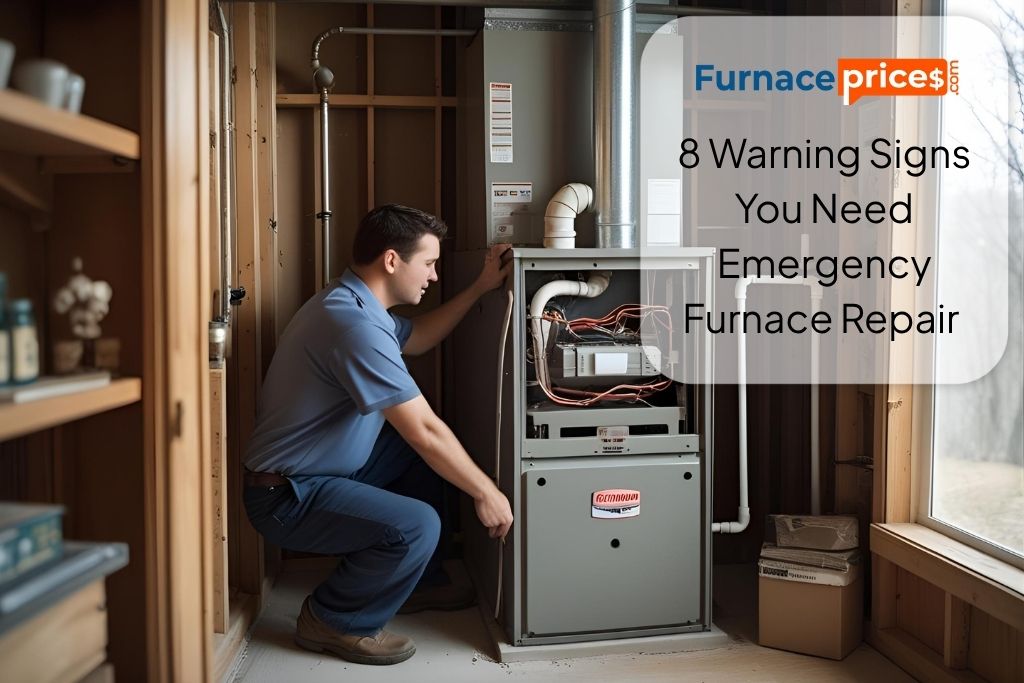
It’s the coldest night of the year. Your family is bundled up, trusting your furnace to keep the house warm. But suddenly, something feels off. A strange noise. No warm air. A weird smell. You begin to wonder—is my furnace about to fail?
A malfunctioning furnace in the middle of winter is more than just inconvenient—it’s a health and safety risk. In this blog, we’ll help you recognize 8 signs that scream “Call for emergency repair—NOW!”
Your furnace should hum quietly in the background—not bang, rattle, or squeal like a haunted machine.
Here’s what some common furnace sounds might mean:
Banging: Gas buildup due to dirty burners. This is dangerous and needs professional attention.
Squealing: A worn-out or loose blower belt.
Rattling: Loose screws or parts shaking during operation.
Scraping: Possibly a broken blower wheel or worn motor bearings.
🛠️ What to do: Turn off the system and call a technician immediately. Ignoring these noises could lead to total breakdown.
🧯 2. Carbon Monoxide Detector Is Beeping
This is extremely serious.
Gas furnaces can leak carbon monoxide (CO) when the system is damaged or not venting properly. CO is colorless, odorless, and deadly.
🚨 If your CO alarm goes off:
Evacuate your home immediately.
Call 911.
Do not try to restart your furnace.
After it’s safe, contact an emergency HVAC technician.
💡 Pro tip: If you have a gas furnace, you must have CO detectors installed near bedrooms.
🔁 3. Furnace Keeps Turning On and Off (Short Cycling)
Does your furnace keep running in quick bursts—starting, stopping, and restarting constantly?
This is known as short cycling, and it can be caused by:
A dirty filter
Faulty thermostat
An improperly sized furnace
Clogged vents or sensors
Short cycling wastes energy, spikes your utility bills, and wears out your system faster.
❄️ 4. No Hot Air Coming From Vents
If your furnace is blowing cold or no air at all, that’s a red flag. You could be dealing with:
A failed blower motor
Malfunctioning thermostat
Dirty air ducts
Broken ignitor
🔥 No heat during freezing weather? That’s an emergency repair situation—especially for families with kids or elderly loved ones at home.
🔥 5. Yellow or Flickering Pilot Light
Your furnace’s pilot flame should always be steady and blue.
A yellow or flickering flame means incomplete combustion, which could cause a carbon monoxide leak.
Causes include:
Dirty burners
Insufficient oxygen
Damaged heat exchanger
Improper gas pressure
🚨 A yellow flame = Shut off your system and call for emergency service right away.
👃 6. Strange or Burning Smells
If you smell anything unusual, take it seriously:
Rotten eggs: Could mean a gas leak (dangerous—evacuate!).
Burning plastic or rubber: Possible electrical issues.
Burning dust: Often normal when first starting up—but if it lasts, something’s wrong.
Smoky smell or oil smell: May indicate a combustion problem.
Never ignore furnace smells—they’re often the first warning signs of serious failure.
🔄 7. Blower Fan Won’t Shut Off
If your furnace fan keeps running non-stop:
Check if your thermostat is set to “On” instead of “Auto.”
If not, it could be a faulty fan limit switch or thermostat wiring problem.
This constant running can overheat your system and lead to serious damage.
🛑 8. Furnace Won’t Turn On or Stay On
This is the most obvious and urgent sign.
When your furnace refuses to start or keeps shutting down, you could be looking at:
A bad ignition system
Clogged filter
Tripped breaker
Faulty thermostat
Malfunctioning safety switch
A professional diagnosis is needed ASAP before it gets worse—or leaves you without heat.
🚨 Why You Shouldn’t Delay Emergency Furnace Repair
Waiting can lead to:
Gas or carbon monoxide leaks
House fires
Complete system failure
Expensive replacements
Skyrocketing utility bills
Unsafe indoor air quality
Early action = less money, more safety, and a longer furnace lifespan.
🛡️ Prevent Furnace Emergencies: What You Can Do
You can avoid furnace disasters by doing a few simple things:
✅ DIY Furnace Maintenance Tips:
Change your furnace filter every 1–3 months
Keep vents and returns unobstructed
Listen for strange sounds or smells
Check the pilot light color
Watch your utility bills—sudden spikes can be a clue
🧰 Hire a Pro For:
Annual inspections
Deep cleaning
Safety checks
Airflow testing
Warranty maintenance
🏁 Final Word: Don’t Wait for a Breakdown
Furnace trouble isn’t just an inconvenience—it can be dangerous. If you’ve noticed any of these 8 signs, now is the time to act.🏡 Stay safe. Stay warm. 📞 Contact your local emergency furnace repair service before things get worse.
 Canadian