We use cookies to ensure that we give you the best experience on our website.
⭐ Top Contractor Program
Want to Stand Out?
Fill out the form below to apply and get featured as one of our Top Contractors. Gain visibility, attract more clients, and showcase your expertise to a wider audience!
🔒 Your information is private and secure
Free to apply
Verified contractors only
Canada-wide visibility
No hidden charges
Free Service
No obligation
Get Your FREE HVAC Quote Today
Compare prices from top-rated local contractors in minutes
A Complete, Expert-Backed Guide to What Canadian Homeowners Can Expect to Pay – Understanding how much a new furnace should cost can feel overwhelming, especially with the range of options, efficiency levels, installation conditions, and regional pricing differences across Canada. To help Canadian homeowners make informed decisions, this guide breaks down the latest furnace price in Canada data for 2025 — including installation costs, efficiency impacts, fuel types, and practical buying considerations.
Understanding the True Cost of a New Furnace in Canada
Based on information gathered from homeowners across the country, the average cost of a new natural gas furnace in Canada ranges from roughly $4,000 to $6,750, including professional installation.
Some homeowners may pay less, particularly when opting for an entry-level model with minimal installation requirements. Others may spend more if they select a high-performance system or need additional upgrades to meet modern safety codes. Every home is different, and furnace price in Canada reflects those realities.
This updated guide explains what influences furnace price in Canada, why costs vary significantly from one region to another, and how to avoid being caught off-guard by unusually low or misleading quotes. Whether you live in Ontario or elsewhere in Canada, the goal is to help you understand the true cost of replacing your furnace and how to choose the right system for long-term comfort, safety, and efficiency.
For most Canadian households, replacing a furnace falls within a predictable range, though the final price depends on several factors such as home size, installation complexity, fuel type, and efficiency rating.
Entry-level furnace with basic installation:$3,000 – $4,000
Higher-end or complex installations:$6,750 – $10,000+
Entry-level models are the most budget-friendly options, especially in urban regions where competition among HVAC contractors helps keep the furnace price in Canada lower. High-performance, variable-speed furnaces with advanced features or specialized installation needs can push costs above average. Larger homes, additional safety upgrades, venting modifications, or fuel conversions can also increase the furnace price in Canada
While manufacturers offer a wide range of furnace types, the cost of installation remains one of the most influential factors. Proper installation ensures safety, efficiency, and long-term reliability — and this is not an area where cutting corners ever pays off.
What Affects the Cost of a Furnace in Canada?
Every Canadian home has its own heating requirements, which is why furnace prices can vary so widely. The factors below play the biggest roles in determining how much you’ll ultimately pay for a new system and its installation.
1. Home Size and Required BTU Output
A larger home requires a furnace with greater heating capacity. Furnaces are sized by BTU output — the amount of heat they generate per hour.
A small home may require a 40,000–60,000 BTU unit.
Larger homes may need 80,000–120,000 BTUs or more.
Higher-capacity models cost more not only because the equipment is larger, but also because they may require upgraded venting, electrical capacity, or ductwork adjustments to operate safely and efficiently.
Proper furnace sizing is crucial — an undersized system struggles to heat your home, while an oversized unit may cycle frequently, reducing comfort and shortening its lifespan. A knowledgeable contractor will assess insulation, layout, climate, and square footage to determine the right BTU range for your home, which can also impact the overall furnace price in Canada.
2. Region, Climate & Market Competition
Furnace prices differ widely across Canada. Your province, city size, and even your proximity to major distribution hubs can influence what you will pay.
Urban areas like Toronto, Ottawa, Calgary, and Vancouver tend to have competitive pricing due to the number of licensed HVAC contractors.
Rural regions, especially areas far from major cities, often face higher prices. Travel costs, limited competition, and supply chain factors play a significant role in the final cost.
Meanwhile, rural or remote areas typically face higher prices. These increases reflect added travel time for technicians, higher operating costs for local companies, and potential delays in obtaining parts or equipment.
Canadian winters also differ by region — areas with harsher climates may require higher-capacity furnaces, which impacts cost. Your proximity to major suppliers and the overall demand for HVAC services in your area also influence seasonal pricing trends and appointment availability.
3. Replacing an Older Furnace
If your existing furnace is outdated or installed under older building codes, your home may need upgrades. These may include:
New venting
Electrical modifications
Plenum or ductwork adjustments
Drainage or safety improvements
Older homes may also have outdated or incompatible duct systems that restrict airflow. In those cases, adjustments or replacements may be necessary to maintain proper heating distribution and efficiency.
While these upgrades add to the installation cost, they also help prevent performance issues, reduce energy waste, and extend the lifespan of your new equipment. A thorough pre-installation assessment helps uncover hidden issues, avoid surprises, and ensure a safe, code-compliant installation.
4. Fuel Type (Natural Gas, Propane, Oil, or Electric)
Different fuel types affect both equipment cost and long-term operating expenses.
Natural gas furnaces remain the most common and cost-effective option in Canada.
Propane furnaces often cost slightly more, partly due to rural installation and delivery considerations.
Electric and oil furnaces fall into a similar price range but tend to be more expensive to operate over time.
Propane furnaces can be slightly more expensive, especially in rural communities where propane delivery and tank installation add to the overall cost. Electric and oil furnaces fall within a similar equipment price range but tend to have higher monthly operating costs depending on local utility rates.
Some homeowners transitioning from oil or electric to natural gas or propane may need extra work such as gas line installation or tank setup, which increases total project cost but often lowers operating expenses over time.
5. Efficiency Rating (AFUE)
AFUE — Annual Fuel Utilization Efficiency — measures how much energy from the fuel source is converted into usable heat. The higher the AFUE rating, the less energy lost.
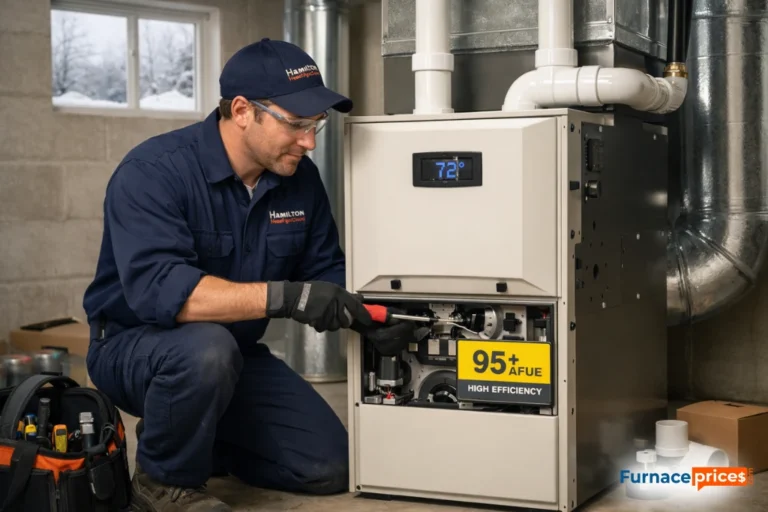
Canada requires most new furnaces to be 95% AFUE or higher, meaning nearly all new systems qualify as “high-efficiency.”
However, furnaces with premium features or efficiency-boosting components often cost more upfront.
High-efficiency enhancements include:
Variable-speed ECM motors
Modulating burners
Advanced heat exchangers
Enhanced sound-dampening technology
These systems tend to offer more consistent temperatures, quieter operation, and better comfort — not just lower energy consumption.Premium features such as variable-speed ECM motors, modulating gas valves, multi-stage burners, and enhanced heat exchangers offer improved temperature consistency, quieter operation, and better long-term reliability.
These advanced systems may cost more upfront, but many homeowners appreciate the added comfort, reduced noise, and potential energy savings. Selecting the right efficiency level depends on your climate, home insulation, and long-term heating expectations.
Is a High-Efficiency Furnace Worth the Extra Cost?
Efficiency alone won’t always produce dramatic savings on heating bills. However, the components that increase efficiency often provide better performance, improved comfort, and longer equipment lifespan.
Upgrading to a top-tier system may cost an additional $1,000 to $2,000, but many homeowners find that the quieter operation and consistent indoor temperatures justify the investment. In addition, high-efficiency models often come with stronger warranties for both parts and heat exchangers.
If your goal is long-term comfort and reliability, a higher-end furnace is often a worthwhile choice.
How Furnace Prices Vary Across Canada
While furnace prices in Canada tend to fall within a general national range, your exact location can have a major impact on overall cost. Regional labour rates, contractor availability, delivery logistics, and climate all influence what homeowners ultimately pay.
These variations become more noticeable the farther you live from a major urban centre, where competition and supply chains are strongest. Understanding these geographic differences helps homeowners better anticipate real costs rather than relying solely on broad national averages.
Why Rural Furnace Prices Are Higher
Homeowners in remote or rural areas often see prices 20–60% higher than those in cities. Reasons include:
Fewer licensed HVAC contractors
Higher transportation and fuel costs
Longer travel distances for service calls
Higher overall operating costs for local businesses
Limited access to parts and distribution centres
Rural contractors also face elevated overhead costs due to fewer customers spread across larger geographic areas. This means travel time for service calls is longer, fuel costs add up, and stocking parts becomes more expensive since they are farther from major distributors— all factors that can increase the overallfurnace price in Canada.
These added logistical challenges are reflected in the final price homeowners pay, making rural furnace installations consistently more costly compared to metropolitan areas.
Estimated Cost Impact by Distance
1 hour or more from the nearest city: Expect prices 20–40% higher
2 to 3 hours or more from a major service area: Costs may increase 50–60% or more
Based on these adjustments, a homeowner in a rural region may pay $4,800 to $9,600 for a new furnace, depending on home size, installation requirements, and the contractor’s travel distances.
Urban vs. Rural Pricing
Metro regions like the GTA, Ottawa, Winnipeg, Montreal, and Vancouver tend to have many HVAC contractors competing for business, which helps stabilize prices. Conversely, remote communities often have only a handful of providers.
Even in large cities, however, pricing varies depending on the contractor’s experience, reputation, insurance coverage, and warranty offerings— all factors that influence the overall furnace price in Canada.
It’s wise to be cautious with unusually low quotes. Reliable contractors must cover insurance, licensing, training, warranty reserves, and staff wages — all of which contribute to fair pricing.
Furnace Prices by Efficiency (AFUE)
Even though AFUE ratings are more standardized today due to Canada’s national high-efficiency requirements, efficiency still plays a role in furnace pricing. Higher AFUE systems generally include advanced technology that improves performance, comfort, and fuel savings, which can increase the upfront cost.
AFUE Rating
Typical Price Range
90% AFUE
$3,000 – $4,000+
92% AFUE
$3,500 – $4,500+
95% AFUE
$4,000 – $5,000+
96% AFUE
$4,500 – $5,500+
97% AFUE
$5,000 – $6,500+
98%+ AFUE
$5,500 – $7,000+
Understanding these efficiency levels helps homeowners appreciate how far modern furnaces have evolved. While older, less efficient models were once common, today’s high-efficiency systems offer significantly reduced heat loss, more consistent temperature control, and better long-term operating costs.
Although furnaces below 95% AFUE are rarely available now, historical pricing ranges help illustrate how each jump in efficiency adds both value and cost.
Furnace Prices by Fuel Type
Below are typical price ranges (including installation) based on fuel type:
Natural Gas Furnaces
$4,000 – $6,750+ Natural gas remains the most widely used and affordable home heating option across Canada. It provides reliable performance, competitive installation pricing, and some of the lowest operating costs among fuel types.
Homeowners in cities and suburban areas with access to natural gas lines generally pay less due to streamlined installation and abundant contractor availability.
Propane Furnaces
$5,000 – $7,500+ Propane furnaces tend to cost more, especially in rural areas where propane delivery and storage tanks are required. Transporting propane to remote regions adds to long-term fuel costs, and fewer contractors servicing these areas typically increases installation fees.
Despite the higher price, propane remains a dependable heating solution for homes located far from natural gas lines.
Electric Furnaces
$3,000 – $5,500+ Electric furnaces are usually cheaper to install because they require no venting system and involve fewer mechanical components.
However, monthly operating costs are higher in provinces where electricity rates exceed natural gas or propane costs. Electric systems may still appeal to smaller homes, milder climates, or households seeking simpler maintenance.
Oil Furnaces
$3,000 – $5,500+ Oil furnaces are less common today but still found in older Canadian homes, particularly in rural regions. Installation prices are comparable to electric furnaces, but ongoing fuel costs can be high and volatile.
Many homeowners switching from oil to natural gas or propane may face added conversion costs for piping, venting, or tank removal, which increases total project expenses.
Installation Costs and What They Include
Furnace installation labour typically ranges from $1,000 to $1,200+, though this varies by region, home design, and the complexity of the work.
Installation costs account for far more than the physical installation of the unit — they also cover safety compliance, technician expertise, and the significant overhead required to operate a professional HVAC business.
House layout
Installation difficulty
Required safety updates
Regional labour rates
Contractor labour includes time spent removing the old equipment, setting up the new furnace, updating connections, testing safety systems, and ensuring everything meets current building codes. The variation in labour costs across Canada reflects differences in technician availability, travel distance, and demand during peak heating seasons — all of which can influence the overall furnace price in Canada.
Why Installation Labor Costs Matter
Quality installation directly influences the performance, lifespan, and safety of your furnace. Professional installers invest heavily in licensing, insurance, specialized tools, company vehicles, training programs, and adherence to evolving industry standards. These necessary expenses help ensure they can safely, legally, and effectively install high-efficiency heating systems — factors that also contribute to the overall furnace price in Canada.
Licensing and insurance
Ongoing training
Trucks, tools, and fuel
Office and warehouse overhead
Warranty reserves
Safety compliance requirements
A properly installed furnace runs more efficiently, breaks down less often, and remains eligible for its full manufacturer warranty. In contrast, poorly installed furnaces may experience airflow issues, venting problems, efficiency losses, or premature wear.
When comparing quotes, homeowners should consider not only the equipment price but also the workmanship quality and long-term reliability of the installation.
Factors That Increase Installation Costs
Here are some common scenarios that may increase installation pricing:
1. Hard-to-Access Furnace Locations
Units placed in crawlspaces, tight corners, attics, or older mechanical rooms may require extra time and effort.
2. Venting Upgrades
Newer furnaces often require PVC venting, condensate drainage, or modifications to existing ductwork. Older systems may need full venting replacements.
3. Electrical Work
High-efficiency furnaces may require updated wiring, new breakers, or grounding improvements.
4. Chimney Liner or Drainage Work
Modern systems may demand new chimney liners or updated drainage solutions to handle condensation properly.
5. Conversions
Switching from oil or electric to natural gas or propane is more complex and typically adds labour hours and material costs.
Total Furnace Replacement Cost Summary
In most cases, Canadian homeowners can expect:
Absolute minimum for furnace + installation:$3,000 – $3,500
Financing, extended warranties, rural installation fees, and long-term interest charges may increase the final total. Homeowners should compare multiple quotes and consider both short-term affordability and long-term operating costs when choosing a new furnace.
Money-Saving Tips for Buying a Furnace
1. Look for Contractor Promotions
Local HVAC companies frequently offer deals during slower seasons.
2. Take Advantage of Manufacturer Rebates
Equipment manufacturers often run seasonal promotions for high-efficiency models.
3. Check Available Government Rebates
Federal, provincial, and municipal programs occasionally offer incentives for upgrading to energy-efficient heating systems.
4. Additional Local Rebates
Some utilities offer rebates or on-bill credits for upgrading equipment.
5. Don’t Be Tempted by Extremely Low Prices
Quotes under $2,000 often come with serious risks:
Used or refurbished equipment
No warranty
Unlicensed or uninsured installers
Additional surprise fees
Always verify licensing, insurance, and warranty terms.
Rent-to-Own Furnace Programs: Are They Worth It?
Rent-to-own or rental furnace plans allow homeowners to replace their systems with no upfront cost. Payments are made monthly and often include repair coverage.
While this can help with short-term affordability, rent-to-own programs typically cost significantly more over time than purchasing a furnace outright — an important consideration when evaluating the overall furnace price in Canada.
This model has also received criticism due to aggressive sales tactics used by some providers. Homeowners should review contract terms carefully and compare long-term costs before choosing this option.
Frequently Asked Questions
1. Can I buy a furnace separately and hire someone to install it?
Most reputable contractors will not install a furnace they did not supply. Liability issues, warranty concerns, and unknown equipment history make this a risky arrangement for installers. Even if you find someone willing to install a third-party furnace, warranties — both manufacturer and labour — may not apply.
2. How much does a furnace alone cost without installation?
A standalone furnace typically costs $1,500 – $3,500 depending on efficiency and features. However, consumers cannot typically buy furnaces directly from manufacturers — you must go through authorized contractors.
3. How much does a furnace + air conditioner bundle cost?
Homeowners who replace both systems together often receive discounted pricing. Expect a combined cost of $5,000 – $10,000 depending on model, efficiency, and installation requirements.
4. Is electric or oil heat cheaper than gas?
Not usually. Electricity and heating oil tend to be more expensive in many regions of Canada, making natural gas the lowest-cost fuel for home heating where available.
5. How much does ductwork installation cost?
Installing new ductwork is a major renovation that can cost many thousands of dollars. Walls, ceilings, and flooring must often be opened to install new ducts.
6. How much does a furnace humidifier cost?
A whole-home humidifier integrated with your furnace typically costs $300 – $600 and is easiest to install during a furnace replacement.
7. How much does it cost to move a furnace?
Relocating a furnace can cost anywhere from several thousand dollars to $10,000+, depending on ductwork modifications and venting changes. Many HVAC companies discourage moving an existing furnace due to the complexity involved.
Final Thoughts
On average, Canadians can expect to pay $4,000 to $6,750 for a new high-efficiency furnace, though prices vary based on home size, fuel type, installation requirements, and location. While national averages offer helpful guidance, the best way to determine your true cost is to request a detailed quote from a licensed, established contractor with a solid reputation.
A properly installed furnace is essential for safety, comfort, and long-term performance — and choosing an experienced professional is just as important as selecting the equipment itself.
📌 When Are You Planning to Install a New Furnace?
Tell us your ideal installation timeline so we can match you with trusted local HVAC experts across Ontario:
🔥 Need a furnace installed urgently? (Next 2–3 days) ⏳ Planning your upgrade in the next few weeks? 🤔 Still comparing brands, prices, or contractor quotes?
Our contractor network covers most major and mid-sized Ontario regions, providing expert support whether you’re replacing an older furnace or upgrading to a high-efficiency model.
👉 See the full list of Ontario service regions
🏆 Trusted by Recognized Canadian HVAC Associations
Many HVAC companies in our network are members of reputable national and provincial organizations, including:
 Canadian