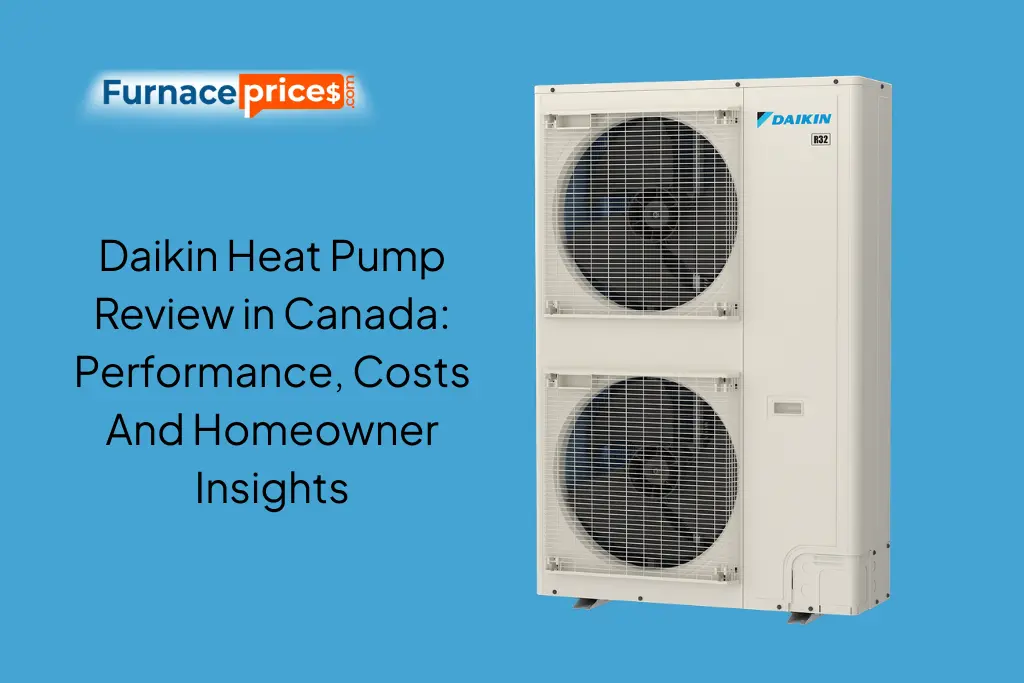
Daikin is a long-established Japanese HVAC manufacturer known worldwide for its heating and cooling technologies, with tens of millions of installations across the globe. In Canada, the brand has become a familiar option for homeowners looking for reliable, efficient alternatives to traditional heating systems. This Daikin Heat Pump Review in Canada takes a balanced, homeowner-focused look at Daikin heat pumps — including their features, performance, warranty details, pricing, and feedback from Canadians who use them.
Daikin Heat Pumps at a Glance
Daikin produces a variety of air-source and air-to-air heat pumps designed for residential heating and cooling. Many models reach efficiency ratings up to 22.5 SEER2 and 8.5 HSPF2, placing them in the mid to upper range compared to other equipment on the Canadian market. Their catalogue includes ductless heat pumps, whole-home systems, and packaged units suitable for homes with different layouts and heating needs.
For homeowners trying to manage upfront costs, Daikin also offers economical and mid-tier models. These units are more affordable initially, though they may not achieve the same long-term energy savings as the company’s higher-end systems. Still, they can operate at full output down to about –10°C (14°F) and can continue functioning, with reduced efficiency, as temperatures drop toward –27°C.
Several models include a 12-year Parts Limited Warranty and 12-year Unit Replacement Warranty when properly registered — one of the more generous warranties in the industry.
One consistent point raised by homeowners and installers is noise. While not unusually loud, many Daikin outdoor units run above 60 decibels, which is noticeable in quiet backyards or close to windows.
Daikin systems tend to prioritize reliability and straightforward functionality over advanced “smart home” features. Some homeowners also report that Daikin’s customer support directs many inquiries to installers rather than providing direct consumer assistance.
Bottom Line: Daikin offers dependable heat pumps with strong efficiency ratings and a broad range of configurations. Noise levels can be higher than some competitors, but for homeowners seeking a mid-priced, reliable system without a long list of bells and whistles, Daikin remains a solid option.
Reviews & Feedback From Canadian Homeowners
We regularly gather feedback from homeowners across Canada to understand how Daikin heat pumps perform over time in real-world conditions.
Many users appreciate the improved efficiency, more consistent heating, and quieter-than-expected indoor units. Variable fan speeds and smoother temperature control are often mentioned as positives.
Experiences with installation vary. Some homeowners report smooth start-ups and strong performance right away, while others mention receiving defective components that required replacement under warranty. Daikin’s warranty support is generally viewed positively, though response times can depend heavily on the installing contractor.
A few owners have noticed higher standby electricity consumption in certain Daikin models. While this does not affect all installations, it’s something to be aware of when comparing long-term operating costs.
Noise concerns also appear in reviews; some users describe hearing intake noise outdoors, though many note that overall comfort improvements outweigh these inconveniences.
Daikin Heat Pump Specifications
Below is an overview of the performance characteristics commonly associated with Daikin heat pumps.
Energy Efficiency
In Canada, the minimum efficiency standard for heat pumps is 13 SEER. Daikin models often exceed this minimum, with several units achieving ratings from the mid-teens up to the mid-twenties.
Many systems hold certifications such as ENERGY STAR®, AHRI, and ETL, indicating verified performance. Daikin heat pumps typically produce up to four units of heat for every unit of electricity they consume, which can translate to substantial savings over electric baseboard or older gas systems.
The units use refrigeration-grade copper tubing and aluminum fin coils to improve heat transfer and help maintain efficiency.
Air-to-air systems rely mostly on the surrounding air for energy — with roughly 80% of their output derived from outdoor heat and only 20% from electricity, depending on operating conditions.
Noise Levels
While Daikin incorporates sound-dampening components, many models fall in the 65–70 decibel range during operation. This is comparable to a normal conversation or background household noise.
One exception is the Daikin SkyAir FTQ ducted model, which can operate as quietly as 47.5 decibels, making it one of the quieter units in Daikin’s lineup.
Homeowners sensitive to outdoor noise may want to consider placement carefully or look for one of Daikin’s quieter series.
Operational Temperature Range
Daikin heat pumps typically maintain full heating capacity down to 14°F (–10°C). They can continue running at lower temperatures — even below –18°C — though output naturally decreases as conditions become more severe.
This capability makes Daikin systems workable for most parts of Canada, especially when paired with a backup heat source in colder regions or during extreme weather events.
The upper operating limit is about 115°F, well above the hottest temperatures experienced in most Canadian climates.
Environmental Impact
Case studies have shown that heat pumps can reduce carbon emissions dramatically when compared to traditional electric resistance or fossil-fuel heating. Daikin reports that its systems may be 2 to 24 times less carbon-intensive, depending on the home’s previous heating method and the local electricity grid’s emissions profile.
Daikin continues to use R-410A refrigerant, which is less ozone-damaging than older refrigerants, though not as climate-friendly as newer low-GWP refrigerants that will become more common in future models.
Maintenance Expectations
Daikin recommends routine cleaning of indoor filters roughly every two months, as restricted airflow can significantly affect performance.
If the installing contractor does not offer a maintenance plan within the first 18 months, homeowners can enroll through Daikin’s Stand By Me program, which provides options for ongoing service.
Daikin offers three levels of maintenance packages:
Bronze:
• Annual maintenance
• Coverage for parts and labour on preventative repairs under warranty
Silver:
• All Bronze features
• Replacement of worn spare parts
Gold:
• Includes Bronze + Silver benefits
• Free breakdown callouts
• Full parts and labour coverage for Daikin components
Additional Features
Many Daikin heat pumps include:
- Insulated blower compartments for quieter operation
- Durable outdoor enclosures made from galvanized steel with powder-coat finishes
- Inverter board cooling, which helps improve efficiency
- Water-shedding drain pans designed to prevent water accumulation
- Intelligent defrost cycles for better performance in freezing temperatures
How Daikin Heat Pumps Work
Daikin offers both ducted and ductless (mini-split) systems in Canada.
Ductless Mini-Splits
These systems consist of one outdoor unit connected to one or more compact indoor heads. They are ideal for homes without ductwork or for supplementing heating in specific rooms, such as sunrooms or additions.
Ducted Heat Pumps
Ducted systems connect to a home’s existing ductwork or can be integrated into new construction. They provide even, whole-home heating and cooling when paired with compatible air handlers.
Heat pumps function by absorbing heat from the air and transferring it indoors during winter or outdoors in summer, allowing them to operate efficiently across seasons.
Daikin Heat Pump Pricing in Canada
Costs vary depending on system size, installation requirements, and model selection.
Ducted Heat Pumps
Most homeowners can expect to pay around $10,000 to $20,000 for a fully installed Daikin ducted system. A typical installation often averages close to $16,000, though more complex homes or cold-climate models may cost more.
Ductless Mini-Splits
Single-zone Daikin mini-splits typically cost between $6,000 and $12,000 installed. Multi-zone systems with several indoor heads will cost more accordingly.
Because installation quality plays such a large role in performance, it’s important to work with a qualified, experienced heat pump installer.
Daikin Heat Pump Models & Series Overview
Below are three popular Daikin heat pump models commonly chosen by Canadian households.
1. Daikin DZ20VC
The DZ20VC is a variable-speed heat pump that can reach efficiency levels up to 21 SEER when paired with a compatible Daikin furnace or air handler.
Key Features:
- Works with Daikin One+ smart thermostat
- Variable-speed “Daikin Inside” compressor
- AHRI-certified and ETL-listed
- Heavy-gauge steel cabinet with sound-reducing top
- Copper tubing with aluminum fin coils
- Built-in system monitoring intelligence
- High-density acoustic blanket
- ECM condenser fan motor
- Durable baked-enamel finish
2. Daikin DZ18TC
The DZ18TC offers efficiency up to 19 SEER and includes several design elements aimed at reliability and long-term performance.
Key Features:
- Compatible with Daikin communicating equipment
- Two-speed scroll compressor
- Copeland CoreSense diagnostics
- Copper/aluminum coil design
- Acoustic sound blanket
- Time-delay defrost technology
- Factory-installed filter drier and heater band
- Enamel-coated steel exterior
3. Daikin DZ7TC
The DZ7TC provides efficiency up to 17.2 SEER2 and includes strong noise-reduction features.
Key Features:
- ComfortAlert diagnostics
- Copper tube and enhanced aluminum fins
- Two-speed ECM condenser fan
- Straightforward wiring for communicating or non-communicating setups
- Multiple pressure switches
- Short-cycle protection
- Factory-installed filter drier, accumulator, muffler, and sensors
Choosing a Daikin Heat Pump: Buyer’s Guide for Canadians
When comparing Daikin models, here are the key factors to consider:
Energy Source & Efficiency
Higher-efficiency models generally cost more upfront but reduce long-term energy use. In provinces with higher electricity rates, efficiency becomes especially important.
Warranty Coverage
Daikin offers competitive warranties on parts and compressors, but coverage varies by model and whether you register the equipment. Always confirm details with your installer.
Noise Level
Take into account where the outdoor unit will be placed. If it sits near a bedroom, patio, or neighbour’s property line, choosing a quieter model may be worth the investment.
Check the system’s temperature rating to ensure it suits your region. Homeowners in colder parts of Ontario or the Prairies may need a backup heat source.
Unit Configuration
Daikin offers:
- Wall-mounted units for flexible installation and good aesthetics
- Floor-mounted units for larger rooms needing higher output
- Ceiling-mounted units for spaces where wall and floor space is limited
Company Overview: Daikin
Daikin Industries Ltd. began in 1924 and has been innovating HVAC technologies for decades. In 1951, the company became the first in Japan to produce packaged air conditioning units, marking a major milestone.
Daikin later expanded into heat pumps, refrigerant development, and advanced control systems. Today, the company owns Goodman Manufacturing in the U.S. and distributes products to more than 140 countries. With roughly 12% of the global HVAC market share, Daikin is one of the largest manufacturers of air conditioners worldwide.
Daikin Heat Pump FAQs
1. How long do Daikin heat pumps last? With proper installation and regular maintenance, Daikin systems typically operate 15–20 years.
2. Do Daikin heat pumps reduce carbon emissions? Yes. Because heat pumps move heat rather than generate it through combustion, they produce far fewer emissions than fossil-fuel heating systems.
Daikin Whole-Home Heat Pump Systems
Daikin’s whole-home systems combine heat pumps with compatible air handlers to deliver year-round comfort. These systems maintain heating capacity even in cold temperatures — often down to around –25°C with appropriate models.
Variable-speed motors and inverter technology help keep temperatures consistent, reduce energy use, and improve humidity control.
Daikin Ductless Heat Pumps
Daikin’s single-zone ductless units pair a compact indoor head with a quiet outdoor unit. These models offer flexible installation and are well suited for smaller spaces, offices, studios, and additions up to around 1,600 sq. ft.
Popular ductless series include:
- Daikin 19 Series
- Daikin LV Series
- Daikin EMURA
- Daikin Aurora (cold-climate)
Daikin Packaged Heat Pumps
The DP Series packaged heat pumps house all components outdoors, typically on rooftops or concrete pads. They provide heating and cooling from a single unit and require minimal indoor space.
Daikin Heat Pump Pros & Cons
Pros
- Even temperature distribution across multi-level homes
- Durable and visually clean exterior design
- Made in North America (Goodman/Daikin facility in Texas)
- Maintains full heating output down to about –10°C
- Compact, space-efficient designs
Cons
- Many models run louder than comparable competitors
- No labour coverage in standard warranties
- Requires registration for full compressor coverage
- No models exceeding 22.5 SEER2
- Only approved contractors may install Daikin systems
Daikin Warranty Breakdown
Daikin’s warranty coverage varies by model and whether the homeowner registers the system.
Base Warranty
- 5-year parts
- No compressor coverage
Registered Warranty
- 12-year parts coverage
- 6–12 years compressor coverage, depending on the model
Unit Replacement Warranty
Some models include 0-, 6-, or 12-year unit replacement depending on the system.
Daikin does not include labour coverage in its standard warranty. Homeowners may purchase extended labour protection through ASURE where available.
Need help choosing a heat pump?
If you’re unsure which system is right for your home, FurnacePrices.com offers expert-backed guides and a trusted contractor directory to help Canadians make confident HVAC decisions.
📌 When Are You Planning to Install a New Furnace?
Tell us your ideal installation timeline so we can match you with trusted local HVAC experts across Ontario:
🔥 Need a furnace installed urgently? (Next 2–3 days)
⏳ Planning your upgrade in the next few weeks?
🤔 Still comparing brands, prices, or contractor quotes?
👉 Request personalized quotes based on your timeline and Ontario location.
📍 Ontario Cities We Commonly Serve
FurnacePrices.com helps homeowners across Ontario compare furnace options, estimate installation costs, and find reliable, vetted HVAC contractors.
Frequently supported service areas include:
Our contractor network covers most major and mid-sized Ontario regions, providing expert support whether you’re replacing an older furnace or upgrading to a high-efficiency model.
👉 See the full list of Ontario service regions
🏆 Trusted by Recognized Canadian HVAC Associations
Many HVAC companies in our network are members of reputable national and provincial organizations, including:
These affiliations indicate strong training standards, code compliance, and reliable installation practices.
💰 Key Factors That Influence Furnace Installation Pricing
Furnace replacement costs in Ontario vary based on several important considerations:
Understanding these elements helps you set a realistic budget for your installation.
📞 Thinking About Installing a New Furnace?
Compare quotes from trusted Ontario HVAC professionals—fast, easy, and with zero obligation.
👉 Get quick, no-pressure furnace quotes today




![GREE Heat Pump Review in Canada [Comprehensive Brand Overview & Buying Guide]](https://furnaceprices.com/wp-content/uploads/2025/11/GREE-Heat-Pump-Review-in-Canada-Comprehensive-Brand-Overview-Buying-Guide-768x512.webp)