We use cookies to ensure that we give you the best experience on our website.
⭐ Top Contractor Program
Want to Stand Out?
Fill out the form below to apply and get featured as one of our Top Contractors. Gain visibility, attract more clients, and showcase your expertise to a wider audience!
🔒 Your information is private and secure
Free to apply
Verified contractors only
Canada-wide visibility
No hidden charges
Free Service
No obligation
Get Your FREE HVAC Quote Today
Compare prices from top-rated local contractors in minutes
Planning to install or replace an air conditioner in Canada? In 2025, the average air conditioner installation cost in Canada ranges from $3,200 to $6,800 for most homes, depending on system size, efficiency, brand, and installation requirements. Smaller 2-ton central air conditioners typically cost $3,200–$4,900 installed, while larger 4–5 ton systems can range from $4,600–$6,800. Factors such as ductwork modifications, electrical upgrades, and regional labour rates can increase the final price. This guide explains current air conditioner prices in Canada, installation costs, and the key factors that affect what you’ll pay.
What Affects the Cost of a New Air Conditioner in Canada?
Understanding what drives Air Conditioner Prices in Canada helps you budget realistically and avoid surprises. Here are the key factors:
Replacing vs. New Install
Swapping out an existing unit is typically simpler and cheaper. If your home has never had central A/C, expect additional costs for electrical work, line sets, and ductwork modifications.
Brand & Model
Budget brands (Goodman, Keeprite, York) start around $3,000–$5,500 installed. Premium brands (Lennox, Carrier, Trane) run $3,500–$7,500+. The brand gap matters less than installation quality.
Efficiency Rating (SEER)
Higher SEER units cost more upfront but reduce monthly hydro bills. Entry-level 13–15 SEER units cost $3,750–$6,000; 18+ SEER units push $5,500–$8,000+.
System Size (Tonnage)
A proper load calculation is essential. Undersized units struggle on hot days; oversized units short-cycle and wear out faster.
Location
Urban Ontario homeowners usually benefit from competitive contractor pricing. Rural areas often carry a travel premium.
Installation Complexity
Tight access, long line runs, electrical panel upgrades, or relocating the outdoor pad can add hundreds to your total.
Typical Cost Range for Central Air Conditioners in Canada (2025)
Most Canadian homeowners pay between $4,000 and $7,000 for a complete central A/C installation including equipment and labour. Here’s how pricing breaks down:
Price Range
What It Typically Covers
$3,000 – $4,500
Entry-level unit, standard replacement, budget brands
$4,500 – $6,500
Mid-efficiency unit, most homes, reputable brands
$6,500 – $8,500+
High-efficiency, premium brands, complex installs
If you’re seeing quotes above $8,500, the installation likely involves significant home upgrades or a top-tier variable-speed system. Quotes below $3,000 should be examined carefully — they may involve refurbished equipment or shortcuts.
Use our AC Cost Calculator to estimate your costs instantly. Enter your home size, province, and efficiency preference to get a personalized price range.
Step 1 of 70%
❄️
Air Conditioner Cost Calculator
How much is adding or upgrading your existing A/C going to cost? Get a new air conditioner price estimate instantly with this short quiz.
What size AC unit do you need (tons)?
1 ton = 12,000 BTU. Most homes need 2–3 tons.
2.5 tons
1 tons5 tons
Which efficiency rating do you prefer (SEER)?
Higher SEER = more efficient = lower energy bills, but higher upfront cost.
Do you need additional ductwork installation?
Do you need installation included?
Do you want a smart thermostat included?
Do you want noise reduction upgrade?
Would you like to receive a free no-obligation estimate from our local contractor partners as well?
Great! Almost done, your result is on the next page.
Please enter your contact details so our Certified contractors can provide estimates as well.
This field is required.
Please enter a valid email address.
Please enter your phone number.
Please enter your city or postal code.
By submitting this form, you are giving your consent to receive phone calls and text messages from our contractor partners.
You're almost done!
Please provide your details to see your results.
Name is required.
Email is required.
Please enter your city or postal code.
❄️ Estimate Ready
Your Air Conditioner Cost Estimate
Equipment Cost
—
Total Estimated Cost
—
Get Accurate Quotes from Local Pros
These are estimates. Get precise quotes from certified HVAC contractors in your area — for free.
Several features separate entry-level air conditioners from more advanced models. Understanding these differences helps determine whether a higher-priced model is worth it for your home.
Efficiency Rating (SEER/SEER2)
Entry-level: 13–14 SEER
Mid-range: 15–18 SEER
Premium: 18 SEER and above
Higher SEER units typically cost more upfront but operate more efficiently, potentially saving energy over time.
Compressor Technology
Single-stage: Most affordable but less refined temperature control.
Two-stage: Better efficiency and more consistent comfort.
Variable-speed: Premium option with precise control, quieter operation, and improved humidity management.
ENERGY STAR Certification
Most mid-range and higher-efficiency systems carry ENERGY STAR certification, indicating strong performance metrics and potentially qualifying for rebates.
Warranty Differences
Premium models often include longer coverage—sometimes up to 10–20 years for major components, or even full-unit replacement guarantees under certain conditions.
Additional Technology
Higher-end systems may include:
Advanced noise reduction
Self-diagnostic controls
More durable materials
Smart home integration
Although the most advanced American models (e.g., 26 SEER units) are not commonly sold in Canada due to climate and cost considerations, there are still many efficient options well-suited for Canadian homes.
Air Conditioner Prices by Brand in Canada
Note: All major brands offer entry-level, mid-range, and premium models. Brand choice matters less than the quality of the contractor installing the unit.
Higher efficiency units cost more upfront, but operating savings over 10–15 years can more than offset the price difference. This is especially true in Ontario and Quebec where electricity rates continue to climb.
Air Conditioner Prices by Size (Tonnage)
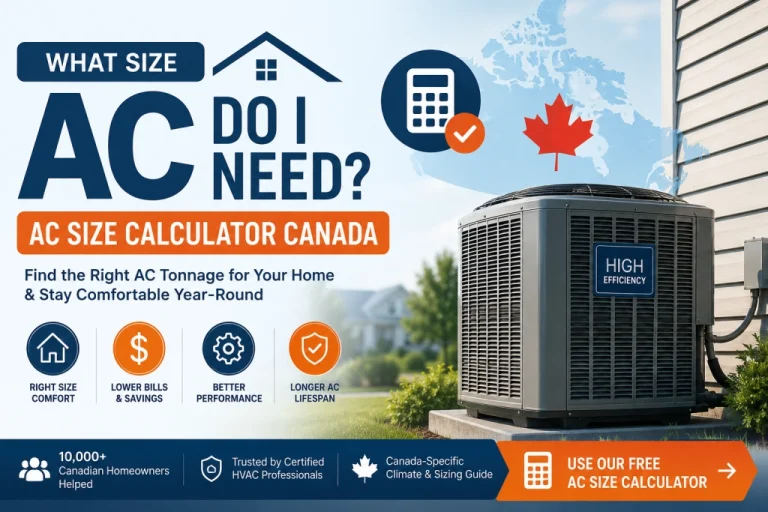
Proper sizing is one of the most important — and most overlooked — decisions in an A/C purchase. Use the AC Size Calculator above to get a preliminary estimate, then confirm with a certified technician..
Below are general minimum starting prices for standard installations:
System Size
Minimum Average Installed Price
1.5 Ton
$3,000 – $4,200+
2 Ton
$3,200 – $4,900+
2.5 Ton
$3,700 – $5,900+
3 Ton
$3,700 – $5,900+
4 Ton
$4,600 – $6,800+
5 Ton
$4,600 – $6,800+
Factors that affect the right size include square footage, ceiling height, insulation quality, sun exposure, and local climate. A full Manual J calculation from a qualified HVAC technician is the only reliable method.
Step 1 of 30%
📐
A/C Size Calculator
This short quiz is designed to help homeowners estimate the correct central air conditioning system size and BTU rating for your home.
Select your home type
Approximate home square footage of finished living space
Would you like to receive a free no-obligation estimate from our local contractor partners as well?
Great! Almost done, your result is on the next page.
Please enter your contact details so our Certified contractors can provide estimates as well.
This field is required.
Please enter a valid email address.
Please enter your phone number.
Please enter your city or postal code.
By submitting this form, you are giving your consent to receive phone calls and text messages from our contractor partners.
You're almost done!
Please provide your details to see your results.
Name is required.
Email is required.
Please enter your city or postal code.
📐 Size Calculated
Your Recommended AC Size
Recommended Tonnage
—
BTU Output
—
Get a Confirmed Size from a Pro
A certified HVAC contractor performs a Manual J load calculation for exact sizing.
Regional differences in labour rates, contractor availability, and equipment supply costs can meaningfully shift your final price:
Ontario — Highly competitive market, especially in the GTA. Mid-sized cities like Burlington and Hamilton typically offer strong pricing. See our detailed AC installation cost guide for Burlington.
Alberta — Labour costs trend slightly higher than the national average.
BC — Urban pricing is competitive; rural areas can run 10–15% higher.
Atlantic Canada — Fewer contractors means less price competition; expect to pay a modest premium.
How Location Affects Air Conditioner Prices in Canada
Your region can influence equipment and labour costs:
Rural areas often have higher pricing due to travel time and fewer contractors.
Urban and suburban regions usually have more competitive pricing thanks to greater availability of HVAC providers.
Neighbourhood demographics can influence costs, similar to many other contracting services.
Why Contractor Choice Matters More Than You Think
Two homeowners buying the exact same air conditioner can end up with very different results — simply because of who installed it. A poor installation can cost you years of reliable operation, void your manufacturer warranty, and lead to higher energy bills.
Signs of a trustworthy HVAC contractor include: proper licensing, manufacturer certifications, transparent written quotes, and solid after-installation support.
Avoid contractors who quote unusually low prices without a site visit, pressure you into same-day decisions, or cannot provide proof of insurance.
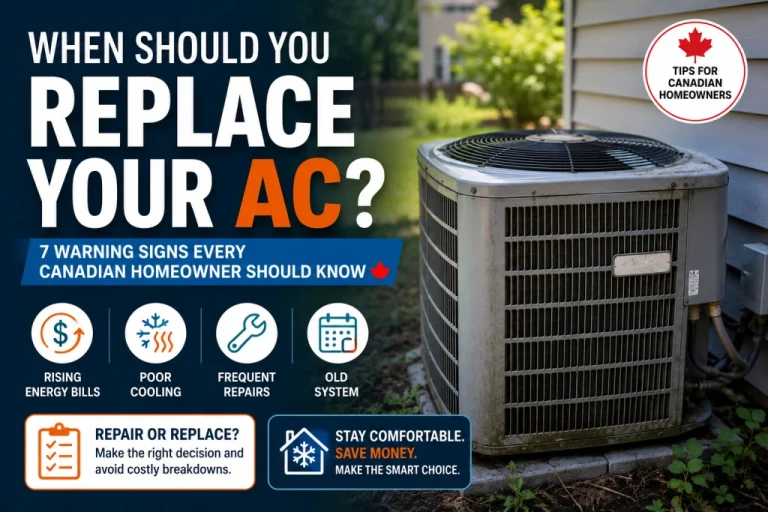
Most central air conditioners last 15–20 years with proper maintenance. If your unit is over 12 years old, frequently needs repairs, or can no longer keep up with summer heat, replacement is often more cost-effective than continued repairs. Read our detailed guide on when to replace your AC and AC repair costs in Burlington to help you decide.
Final Thoughts
A new air conditioner is one of the most significant home comfort investments a Canadian homeowner will make. Understanding Air Conditioner Prices in Canada — and the many variables that influence them — puts you in a much stronger position to compare quotes, choose the right equipment, and avoid costly mistakes.
Use our free AC calculators to estimate your cost and sizing before you call a contractor. And when you're ready to move forward, compare quotes from verified local HVAC professionals through FurnacePrices.com.
FAQ
Q1: How much does a new air conditioner cost in Canada in 2025?
Most homeowners pay $4,000–$7,000 installed, though costs can range from $3,000 to $8,500+.
Q2: What size air conditioner do I need?
Most homes need 20 BTU per sq ft, but proper sizing requires a professional load calculation.
Q3: Is it cheaper to replace or repair an air conditioner?
Repair if the unit is under 10 years old and costs are low. Older systems often justify replacement.
Q4: What SEER rating should I buy in Canada?
A 16–17 SEER unit offers the best balance of efficiency and cost for most homeowners.
Q5: How long does AC installation take?
Most replacement installations take 4–6 hours. More complex projects may take a full day.
Q6: Do I need a permit to install an air conditioner in Canada?
Often yes. Licensed HVAC contractors usually handle permits and local code requirements.
Q7: What air conditioner brands are best in Canada?
Top brands include Carrier, Trane, Lennox, Daikin, and Goodman. Installation quality matters most.
Q8: Are ductless mini-splits worth it in Canada?
Yes. They're ideal for homes without ducts and can provide both heating and cooling.
Not Sure Which A/C Is Right for Your Home?
Whether you're just starting your research or ready to buy, FurnacePrices.com connects Canadian homeowners with expert guides, pricing breakdowns, and certified local contractors — so you can make a confident, informed decision.
📌 When Are You Planning to Install?
Tell us your timeline and we'll match you with trusted HVAC professionals across Ontario:
🔥 Urgent — I need installation within the next 2–3 days
⏳ Soon — I'm planning an upgrade in the coming weeks
🤔 Still exploring — I'm comparing brands, models, and contractor quotes
FurnacePrices.com helps homeowners across Ontario compare options, estimate costs, and connect with vetted HVAC contractors. Frequently served areas include:
 Canadian