Fill out the form below to apply and get featured as one of our Top Contractors. Gain visibility, attract more clients, and showcase your expertise to a wider audience!
🔒 Your information is private and secure
Free to apply
Verified contractors only
Canada-wide visibility
No hidden charges
Free Service
No obligation
Get Your FREE HVAC Quote Today
Compare prices from top-rated local contractors in minutes
A central air conditioner is one of the most effective ways to cool an entire home evenly—especially in Canada, where summers are getting hotter and more humid each year. If you’re researching costs, energy efficiency, or whether your existing furnace can handle a new system, this guide is designed to help you make a confident, informed decision. If you’re still comparing different cooling systems, explore our Air Conditioner Prices in Canada guide for a broader overview of pricing and options.
This article is written for commercial research intent: homeowners comparing options, planning budgets, and evaluating long-term value—not just upfront price.
Looking for a Trusted HVAC Contractor?
While this guide covers central air conditioner pricing across Canada, FurnacePrices.com currently connects homeowners with trusted HVAC contractors throughout Ontario. If you’re located in Ontario, you can compare multiple quotes from vetted local professionals and make a more informed purchasing decision.
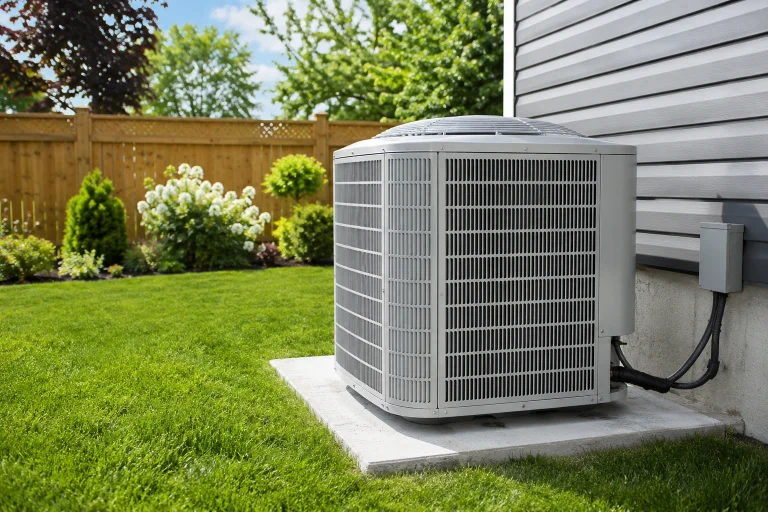
A central air conditioner is a whole-home cooling system that uses a network of ductwork to distribute cooled air evenly throughout the house. Unlike window or portable units, central AC provides consistent temperature control, quieter operation, and better humidity management.
How it works (simple breakdown)
Outdoor unit (condenser): Releases heat outside
Indoor coil (evaporator): Absorbs heat from indoor air
Furnace or air handler: Pushes cooled air through ducts
Thermostat: Regulates temperature and efficiency
Central AC systems are most common in detached homes, townhouses, and larger semi-detached properties across Canada.
Central Air Conditioner Installation Cost in Canada
Average cost ranges (installed)
Home Size
AC Size
Installed Cost (CAD)
Small home / condo
1.5–2 ton
$3,500 – $5,000
Mid-size home
2–3 ton
$4,500 – $6,500
Large home
3–5 ton
$6,500 – $9,500+
What affects the price?
Home size & cooling load
Existing ductwork condition
Electrical upgrades
Brand & efficiency level
Furnace compatibility
Province & local labor rates
What Does Central Air Conditioner Installation Cost Include?
When comparing quotes, it’s important to understand what is included in the total installation price. Two contractors may recommend the same central air conditioner but provide very different estimates based on labour, materials, and additional upgrades.
Installation Item
Typical Cost (CAD)
Central air conditioner unit
$2,500–$5,500
Professional installation
$800–$2,000
Refrigerant line replacement
$250–$800
Electrical upgrades
$300–$1,200
Smart thermostat (optional)
$150–$500
Concrete equipment pad
$150–$400
Permit (where required)
$100–$300
Old unit removal & disposal
$100–$400
Keep in mind that not every installation requires these upgrades. A straightforward replacement in a home with compatible ductwork and electrical service will generally cost less than installing central air conditioning in a home for the first time.
Want a personalized estimate? Use our calculator below to estimate your installation costs.
Step 1 of 70%
❄️
Air Conditioner Cost Calculator
How much is adding or upgrading your existing A/C going to cost? Get a new air conditioner price estimate instantly with this short quiz.
What size AC unit do you need (tons)?
1 ton = 12,000 BTU. Most homes need 2–3 tons.
2.5 tons
1 tons5 tons
Which efficiency rating do you prefer (SEER)?
Higher SEER = more efficient = lower energy bills, but higher upfront cost.
Do you need additional ductwork installation?
Do you need installation included?
Do you want a smart thermostat included?
Do you want noise reduction upgrade?
Would you like to receive a free no-obligation estimate from our local contractor partners as well?
Great! Almost done, your result is on the next page.
Please enter your contact details so our Certified contractors can provide estimates as well.
This field is required.
Please enter a valid email address.
Please enter your phone number.
Please enter your city or postal code.
By submitting this form, you are giving your consent to receive phone calls and text messages from our contractor partners.
You're almost done!
Please provide your details to see your results.
Name is required.
Email is required.
Please enter your city or postal code.
❄️ Estimate Ready
Your Air Conditioner Cost Estimate
Equipment Cost
—
Total Estimated Cost
—
Get Accurate Quotes from Local Pros
These are estimates. Get precise quotes from certified HVAC contractors in your area — for free.
Central Air Conditioner Installation Cost by Province
While national averages provide a useful benchmark, the actual cost of installing a central air conditioner varies depending on where you live. Labour rates, permit requirements, local demand, and electricity costs all influence the final installation price.
Province
Typical Installed Cost
Ontario
$4,000–$7,000
Alberta
$3,800–$6,800
British Columbia
$4,200–$7,500
Quebec
$3,800–$6,500
Atlantic Canada
$3,700–$6,300
Ontario and British Columbia generally have higher labour costs, while some Prairie and Atlantic provinces may offer slightly lower installation prices. Homes requiring electrical upgrades, ductwork modifications, or premium high-efficiency systems should expect higher overall costs regardless of location. If you live in Ontario, browse our local air conditioner cost and installation guides for your city.
Tip: Always compare at least three written quotes from licensed HVAC contractors to understand pricing in your local market.
Efficiency Ratings Explained: SEER in Canada
SEER (Seasonal Energy Efficiency Ratio) measures how efficiently a central air conditioner converts electricity into cooling.
In most Canadian climates, 15–16 SEER systems provide the best return on investment without overspending on ultra-high efficiency that may not fully pay back.
Is a Higher SEER Rating Worth the Extra Cost?
Choosing the highest SEER rating isn't always the best financial decision. While premium systems consume less electricity, they also have a higher purchase price. For many Canadian homeowners, a 15–16 SEER central air conditioner offers the best balance between upfront cost and long-term energy savings.
SEER Rating
Upfront Cost
Energy Savings
Best For
13–14 SEER
Lowest
Basic
Rental properties or tight budgets
15–16 SEER
Moderate
Excellent
Most Canadian homes
17–18 SEER
Higher
Very Good
Long-term homeowners
20+ SEER
Highest
Maximum
Luxury homes and high cooling demand
If you plan to stay in your home for many years, a higher-efficiency model can lower monthly hydro bills and provide better humidity control. However, for shorter ownership periods, a mid-range SEER system often delivers the strongest return on investment.
SEER vs. SEER2: What's the Difference?
If you've researched newer air conditioners, you've probably seen both SEER and SEER2 ratings.
SEER2 is the updated testing standard introduced to better reflect real-world operating conditions. While the numbers may appear lower than traditional SEER ratings, that doesn't necessarily mean the equipment is less efficient. Instead, the testing method is more demanding, providing homeowners with a more accurate estimate of actual performance.
When comparing systems:
Compare SEER with SEER.
Compare SEER2 with SEER2.
Don't compare one directly to the other.
For most Canadian homeowners, choosing a properly sized system remains far more important For most Canadian homeowners, choosing a properly sized system remains far more important than chasing the highest efficiency rating available.
Need help choosing? Try our recommendation wizard below.
Step 1 of 110%
🏆
AC Recommendation Wizard
Which air conditioner should you buy? Find out which air conditioning system is ideal for your home, needs, and budget.
What region do you live in?
How large is your home?
How well insulated is your home?
How often do you run your AC in the summer?
How important is energy efficiency to you?
What is your budget preference?
How long are you planning on staying in your home?
Do you want smart/advanced features?
Do you have central ductwork?
How many people live in your home?
Would you like to receive a free no-obligation estimate from our local contractor partners as well?
Great! Almost done, your result is on the next page.
Please enter your contact details so our Certified contractors can provide estimates as well.
This field is required.
Please enter a valid email address.
Please enter your phone number.
Please enter your city or postal code.
By submitting this form, you are giving your consent to receive phone calls and text messages from our contractor partners.
You're almost done!
Please provide your details to see your results.
Name is required.
Email is required.
Please enter your city or postal code.
🏆 Recommendation Ready
Your Recommended AC System
Best Match For You
—
Get Expert Advice & Free Quotes
A certified HVAC contractor can confirm the best unit for your specific home and climate.
A central air conditioner doesn’t work alone—it relies on your furnace blower to circulate air.
When compatibility issues arise
Older furnaces may not support modern AC coils
Undersized blowers reduce efficiency
Non-variable-speed motors increase noise & energy use
Smart upgrade strategy
If your furnace is:
15+ years old
80% efficiency or lower
Experiencing frequent repairs
👉 Replacing both the furnace and central air conditioner together often saves $1,000–$2,000 in labour and may qualify for additional incentives. Compare current furnace prices in Canada before replacing both systems.
Best Central Air Conditioner Brands in Canada
Top-performing brands commonly installed in Canada include:
Trane – Durable, premium build quality
Carrier – Strong efficiency & reliability
Lennox – High-SEER, quiet operation
Goodman—Budget-friendly, solid warranties
🔧 Expert tip: Installation quality matters more than brand. A properly sized and installed mid-tier unit will outperform a poorly installed premium system.
Rebates & Energy Savings in Canada
Many homeowners reduce upfront costs through:
Common rebate sources
Federal Greener Homes initiatives
Provincial energy efficiency programs
Local utility incentives
Manufacturer promotions
Typical rebate amounts
$250 – $1,000 for high-efficiency central AC
Additional incentives when paired with furnace upgrades
Smart thermostat bonuses in some regions
📌 Always confirm eligibility before installation—retroactive rebates are rarely approved.
Central Air Conditioner Brand Comparison
Every major manufacturer offers entry-level, mid-range, and premium models. The right brand depends on your budget, warranty preferences, local dealer support, and installation quality.
Brand
Typical Installed Price
Warranty
Best For
Carrier
$4,500–$7,500
10 Years
Premium performance
Trane
$4,700–$7,800
10 Years
Reliability
Lennox
$4,800–$8,000
10 Years
High efficiency
Goodman
$3,200–$5,500
10 Years
Budget-conscious buyers
Daikin
$3,800–$6,500
12 Years
Overall value
KeepRite
$3,000–$5,300
10 Years
Affordable replacement
Napoleon
$3,500–$6,200
10 Years
Canadian homeowners
Rheem
$3,700–$6,700
10 Years
Balanced performance
While these price ranges provide a useful benchmark, installation quality has a greater impact on long-term reliability than the brand alone. A properly sized and professionally installed mid-range system will often outperform a poorly installed premium unit.
Central Air Conditioner vs. Heat Pump: Which Is Better?
Both central air conditioners and heat pumps provide efficient cooling, but they serve different long-term needs.
A central air conditioner only cools your home and works alongside your existing furnace during winter.
A central air conditioner may be the better choice if:
Your furnace is relatively new.
You primarily need summer cooling.
You want a lower upfront investment.
A heat pump may be worth considering if:
You're replacing both heating and cooling equipment.
You're looking to reduce natural gas usage.
Your home qualifies for local energy-efficiency incentives.
Choosing between the two depends on your climate, energy costs, and long-term ownership plans. Learn more in our complete Heat Pump Buying Guide.
Pros & Cons of a Central Air Conditioner
✅ Pros
Whole-home comfort
Better humidity control
Quiet operation
Increases property value
Compatible with smart thermostats
❌ Cons
Higher upfront cost than window units
Requires ductwork
Professional installation needed
Next Step: Planning a Complete HVAC Upgrade
If your furnace is aging or struggling to keep up, it may be worth evaluating both systems together. Reviewing a furnace and central air conditioner replacement cost guide can help you understand combined installation pricing, long-term energy savings, and which rebate programs apply when systems are upgraded as a pair. This approach often leads to better efficiency, fewer compatibility issues, and lower overall costs.
How to Choose the Right Central Air Conditioner for Your Home
Selecting the right central air conditioner goes beyond brand names and upfront pricing. Canadian homeowners should focus on performance suitability, long-term operating costs, and climate-specific needs to avoid overpaying or underperforming systems.
1. Proper Sizing Matters More Than You Think
A central AC that is too small will struggle during peak summer heat, while an oversized system will short-cycle—turning on and off frequently, wasting energy, and failing to control humidity properly. This is why professional installers perform a Manual J load calculation, which considers:
Square footage
Insulation levels
Window size and orientation
Ceiling height
Regional climate conditions
Skipping this step is one of the most common causes of poor comfort and high energy bills.
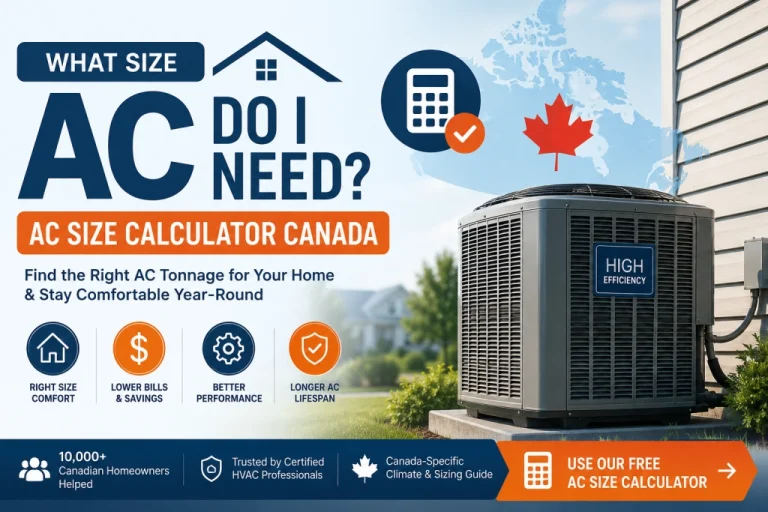
Find the Right AC Size for Your Home Before requesting installation quotes, estimate the correct AC size using our calculator below.
Step 1 of 30%
📐
A/C Size Calculator
This short quiz is designed to help homeowners estimate the correct central air conditioning system size and BTU rating for your home.
Select your home type
Approximate home square footage of finished living space
Would you like to receive a free no-obligation estimate from our local contractor partners as well?
Great! Almost done, your result is on the next page.
Please enter your contact details so our Certified contractors can provide estimates as well.
This field is required.
Please enter a valid email address.
Please enter your phone number.
Please enter your city or postal code.
By submitting this form, you are giving your consent to receive phone calls and text messages from our contractor partners.
You're almost done!
Please provide your details to see your results.
Name is required.
Email is required.
Please enter your city or postal code.
📐 Size Calculated
Your Recommended AC Size
Recommended Tonnage
—
BTU Output
—
Get a Confirmed Size from a Pro
A certified HVAC contractor performs a Manual J load calculation for exact sizing.
2. Single-Stage vs Two-Stage vs Variable-Speed Systems
Modern central air conditioners come with different compressor technologies:
Single-stage systems run at full power or not at all. They are affordable but less efficient.
Two-stage systems operate at a lower capacity most of the time, improving comfort and reducing noise.
Variable-speed systems continuously adjust output, offering the best humidity control, quiet operation, and energy savings.
For most Canadian homes, two-stage systems provide the best balance between cost and performance.
3. Noise Levels and Outdoor Placement
Noise is an often-overlooked factor. Central AC units are rated in decibels (dB), and quieter models make a noticeable difference—especially if the outdoor unit is near bedrooms, patios, or neighboring properties. Premium units can be up to 50% quieter than older models.
4. Maintenance and Operating Costs
Routine maintenance extends the lifespan of a central air conditioner and preserves efficiency. Homeowners should budget for:
Annual professional inspections
Filter replacements every 1–3 months
Occasional coil cleaning
Neglecting maintenance can increase electricity usage by 10–25% over time.
5. Long-Term Value vs Upfront Cost
While higher-efficiency systems cost more initially, they often pay off through:
Lower monthly energy bills
Fewer repairs
Better rebate eligibility
Increased home resale value
For homeowners planning to stay in their home for 7–10 years or more, investing in a mid-to-high efficiency central air conditioner typically delivers stronger long-term value.
Common Mistakes When Buying a Central Air Conditioner
Many homeowners focus primarily on price, but choosing the wrong system can lead to higher energy bills, inconsistent cooling, and expensive repairs. Avoid these common mistakes when comparing central air conditioners.
Choosing the lowest quote without comparing installation quality.
Selecting an oversized unit that short-cycles and struggles with humidity control.
Ignoring the condition of an older furnace that may not be compatible with a new air conditioner.
Paying for a very high SEER rating without calculating whether the additional energy savings justify the higher purchase price.
Failing to compare manufacturer warranties and contractor workmanship guarantees.
Accepting a quote without a proper Manual J load calculation.
Not requesting multiple written estimates from qualified HVAC contractors.
Taking time to compare equipment, installation methods, and contractor experience usually delivers better long-term value than focusing on price alone.
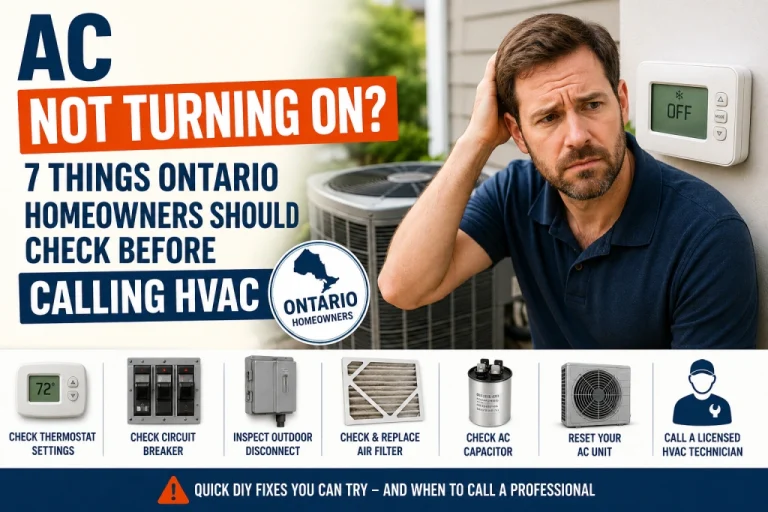
Not sure whether your AC needs replacing? Diagnose common cooling issues below.
Step 1 of 50%
🔍
AC Troubleshooting Wizard
Which AC issue are you having? Answer a few quick questions to help identify the most likely cause of your air conditioner problem and what to do next.
When you check your thermostat, what do you notice?
What sound do you hear from your AC unit?
How is the airflow from your vents?
When did you last have professional maintenance?
Would you like to receive a free no-obligation estimate from our local contractor partners as well?
Great! Almost done, your result is on the next page.
Please enter your contact details so our Certified contractors can provide estimates as well.
This field is required.
Please enter a valid email address.
Please enter your phone number.
Please enter your city or postal code.
By submitting this form, you are giving your consent to receive phone calls and text messages from our contractor partners.
You're almost done!
Please provide your details to see your results.
Name is required.
Email is required.
Please enter your city or postal code.
🔍 Diagnosis Ready
AC Troubleshooting Results
Most Likely Cause
—
Get a Certified Tech to Confirm
Our diagnosis is a starting point. A certified HVAC technician can confirm the issue and fix it right the first time.
Expert Tip: One of the most common issues HVAC professionals encounter isn't a poor-quality air conditioner—it's poor sizing. An oversized system cools the home too quickly without removing enough humidity, while an undersized unit runs longer, increasing wear and electricity costs. A professional load calculation remains one of the most important steps in selecting the right system.
How Much Does It Cost to Run a Central Air Conditioner in Canada?
The purchase price is only part of the overall cost of owning a central air conditioner. Monthly operating costs depend on the size of the system, its efficiency rating, local electricity rates, and how often it runs during the summer.
A typical 2.5-ton, 15–16 SEER central air conditioner operating in Ontario may cost approximately $40–$90 per month during peak cooling season. Homes with larger systems, longer operating hours, or higher electricity rates can expect higher monthly costs.
Higher-efficiency systems generally consume less electricity, helping offset their higher purchase price over time. Homeowners can also reduce operating costs by replacing air filters regularly, sealing air leaks, scheduling annual maintenance, and using a programmable or smart thermostat.
If you're unsure what your system may cost to operate, use our AC Running Cost Calculator to estimate monthly and annual electricity expenses based on your home size and local utility rates.
Estimate your monthly and yearly electricity costs using the calculator below.
Step 1 of 70%
⚡
Air Conditioner Operating Cost Calculator
Calculate the estimated monthly and annual operating cost of your air conditioner based on your usage, climate, and electricity rate.
What type of air conditioner do you have?
What is the size of the area you are cooling?
How well insulated is your space?
What is your climate region?
What temperature do you set your thermostat to?
Thermostat setting affects how hard your AC works.
22°C
17°C27°C
What is your average electricity rate? ($/kWh)
Check your electricity bill for your rate. Average is $0.12–$0.15/kWh.
$0.13/kWh
0.07/kWh0.3/kWh
Would you like to receive a free no-obligation estimate from our local contractor partners as well?
Great! Almost done, your result is on the next page.
Please enter your contact details so our Certified contractors can provide estimates as well.
This field is required.
Please enter a valid email address.
Please enter your phone number.
Please enter your city or postal code.
By submitting this form, you are giving your consent to receive phone calls and text messages from our contractor partners.
You're almost done!
Please provide your details to see your results.
Name is required.
Email is required.
Please enter your city or postal code.
⚡ Costs Calculated
Your AC Operating Costs
Monthly Cost
—
Annual Cost
—
Reduce Your Energy Costs
A properly sized, high-efficiency AC keeps operating costs low. Get free quotes from certified contractors.
Should You Replace Your Furnace and Central Air Conditioner Together?
Replacing both systems at the same time isn't always necessary, but it can be the most cost-effective option when your furnace is approaching the end of its service life.
Homeowners often benefit from replacing both systems together when:
the furnace is more than 15 years old
the blower motor is incompatible with a modern high-efficiency air conditioner
major furnace repairs are already required
combined installation qualifies for additional rebates or financing offers
Installing both systems together also reduces labour costs, ensures better equipment compatibility, and provides more consistent heating and cooling performance throughout the year.
What Warranty Should You Expect?
A quality central air conditioner is a long-term investment, and warranty coverage should be considered alongside price and efficiency.
Most leading manufacturers provide:
10-year limited parts warranties (registration usually required)
1–2 years of labour coverage from the installing contractor
Optional extended labour warranties for additional protection
Keep in mind that manufacturer warranties typically require professional installation and regular maintenance. Improper installation or lack of maintenance may reduce warranty coverage.
When comparing quotes, ask contractors exactly what is covered, how long labour is included, and whether annual maintenance is required to maintain warranty protection.
How Long Does Installation Take?
Most central air conditioner replacements are completed within one working day.
However, installation can take longer when additional work is required, including:
Electrical upgrades
New refrigerant lines
Ductwork modifications
Furnace replacement
Thermostat upgrades
If both your furnace and air conditioner are being replaced together, the project may take one to two days depending on the complexity of the installation.
Planning ahead during spring or early summer often provides more scheduling flexibility than waiting until peak heat arrives.
Final Buying Advice
A central air conditioner is a long-term investment—not just a cooling appliance. The best outcomes come from:
Proper sizing
High-quality installation
Balanced efficiency (not overpaying for extreme SEER)
Furnace compatibility planning
Found This Helpful?
FurnacePrices.com offers expert guides and access to certified local contractors. Visit our site to compare furnace options or request a free, no-obligation quote for your home.
Explore all of our free AC calculators to compare installation costs, running costs, repair estimates, system sizing, and energy savings.
🔧Connecting Homeowners with Trusted Furnace & AC Contractors Across Ontario
At FurnacePrices.com, we bridge the gap between homeowners and reliable, vetted HVAC contractors—whether you’re installing a new furnace, upgrading your air conditioner, or replacing your full home comfort system.
📌 When Are You Planning to Install a New Furnace or Air Conditioner?
Tell us your installation timeline, and we’ll match you with the most suitable HVAC professionals in your area:
🔥 Need an urgent installation? (Next 2–3 days) ⏳ Planning your upgrade in the coming weeks? 🤔 Still comparing brands, prices, or contractor quotes?
👉 Request personalized furnace or AC quotes based on your timeline and Ontario location.
📍 Ontario Cities We Commonly Serve
FurnacePrices.com helps homeowners across Ontario compare heating and cooling systems, estimate installation costs, and connect with trustworthy contractors.
Our network covers most major and mid-sized regions in Ontario, ensuring expert assistance whether you’re replacing an older furnace/AC or upgrading to a high-efficiency model.
👉 See the full list of Ontario service regions
🏆Trusted by Leading Canadian HVAC Associations
Many companies in our contractor network are active members of respected national and provincial HVAC organisations, such as:
 Canadian