Fill out the form below to apply and get featured as one of our Top Contractors. Gain visibility, attract more clients, and showcase your expertise to a wider audience!
🔒 Your information is private and secure
Free to apply
Verified contractors only
Canada-wide visibility
No hidden charges
Free Service
No obligation
Get Your FREE HVAC Quote Today
Compare prices from top-rated local contractors in minutes
Everything you need to know about cost, sizing, efficiency, and installation — before you buy.
A central air conditioner for a typical Canadian home costs $3,000–$10,000+ installed. Size it with a professional load calculation (not guesswork). Choose at least 16 SEER for long-term savings. Get three quotes from licensed HVAC contractors before deciding.
A central air conditioner is one of the most impactful home comfort investments you’ll make. This complete guide walks you through every decision — cost, size, efficiency, brands, installation, and maintenance — so you can buy with total confidence.
What Is a Central Air Conditioner and Do You Actually Need One?
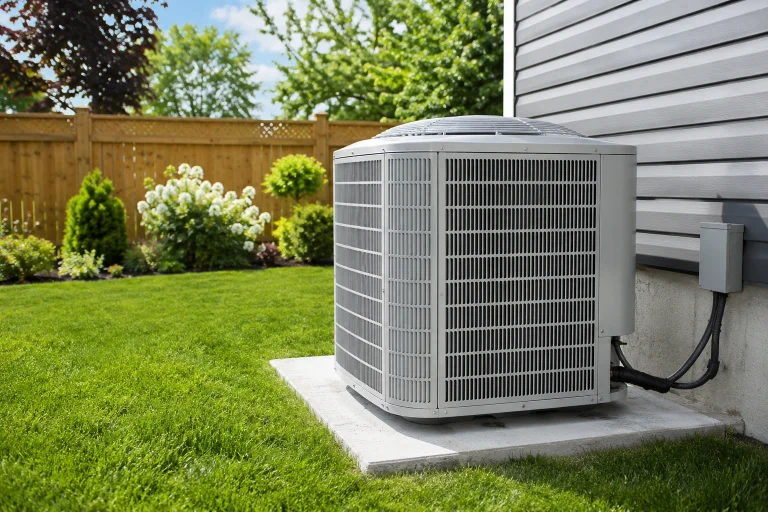
A central air conditioner cools your entire home through your existing ductwork — distributing cold air evenly from basement to top floor. It’s composed of three main parts: the outdoor condenser unit, the indoor evaporator coil (connected to your furnace or air handler), and the ductwork network.
Unlike window units or portable ACs that cool one room at a time, central AC delivers consistent whole-home comfort. If your home has a forced-air furnace, adding central AC is typically straightforward. If not, ductwork installation is an additional cost factor to plan for.
Central AC is the right call when you want consistent temperatures throughout the home, better indoor air quality through filtration, and a system that adds real resale value to your property.
How Much Does a Central Air Conditioner Cost in Canada?
Pricing varies by unit type, efficiency, home size, and province. Here’s the honest breakdown for 2025:
Tier
SEER Range
Installed Cost
Best For
Basic
13–14 SEER
$3,000–$4,500
Budget buyers, smaller homes
Mid-range
15–18 SEER
$4,500–$6,000
Most Canadian homeowners
Premium
19+ SEER
$6,000–$10,000+
Large homes, long-term savings
Prices vary by province and contractor. Labour costs in Toronto or Vancouver will be notably higher than in smaller cities. Always collect two to three quotes. What drives the final price? Brand choice, unit size, ductwork complexity, electrical upgrades needed, and whether you’re replacing an existing system.
Pro tip
The best time to buy is late fall or early spring — before peak season demand drives up prices and wait times. Planning ahead often saves $300–$700.
What Size Central Air Conditioner Does My Home Actually Need?
Sizing is where costly mistakes happen. An oversized central air conditioner short-cycles — blasting cold air then shutting off repeatedly — leading to higher bills, excess humidity, and early system failure. An undersized unit runs non-stop and never keeps up on hot days.
AC size is measured in tons or BTUs. One ton equals 12,000 BTUs per hour. As a rough starting point, most homes need 20–25 BTUs per square foot. But your actual requirement depends on insulation quality, ceiling height, window count, sun exposure, and local climate.
Always have a licensed HVAC technician perform a Manual J load calculation before recommending a unit size. If a contractor skips this step and quotes based only on square footage — that’s a red flag.
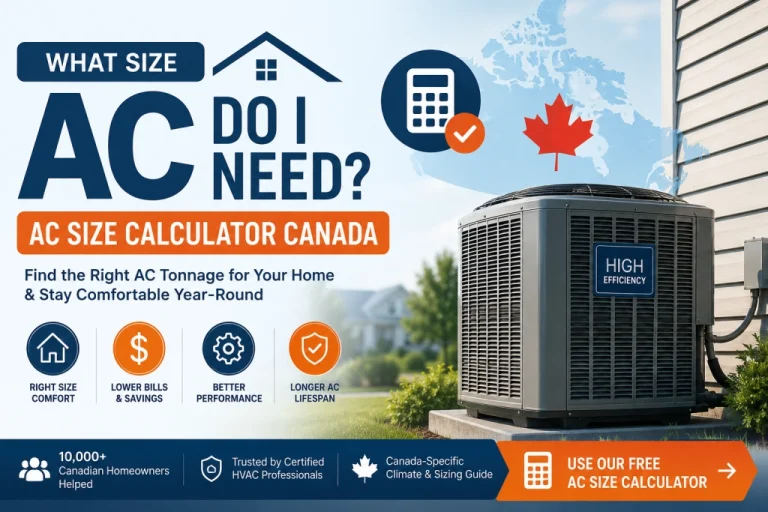
Use the calculator below for a quick estimate, then confirm with your installer:
Step 1 of 30%
📐
A/C Size Calculator
This short quiz is designed to help homeowners estimate the correct central air conditioning system size and BTU rating for your home.
Select your home type
Approximate home square footage of finished living space
Would you like to receive a free no-obligation estimate from our local contractor partners as well?
Great! Almost done, your result is on the next page.
Please enter your contact details so our Certified contractors can provide estimates as well.
This field is required.
Please enter a valid email address.
Please enter your phone number.
Please enter your city or postal code.
By submitting this form, you are giving your consent to receive phone calls and text messages from our contractor partners.
You're almost done!
Please provide your details to see your results.
Name is required.
Email is required.
Please enter your city or postal code.
📐 Size Calculated
Your Recommended AC Size
Recommended Tonnage
—
BTU Output
—
Get a Confirmed Size from a Pro
A certified HVAC contractor performs a Manual J load calculation for exact sizing.
Understanding SEER Ratings: What Does It Mean for Your Hydro Bill?
SEER — Seasonal Energy Efficiency Ratio — measures how much cooling a system delivers per unit of electricity over an entire season. The higher the SEER, the lower your electricity bill. Canada's current minimum is 13 SEER, but 16–18 SEER is recommended for most homeowners.
Upgrading from 13 SEER to 18 SEER can reduce cooling energy costs by roughly 28%. Over 15 years, that's real money back in your pocket. Look for ENERGY STAR certified models — they meet or exceed Natural Resources Canada efficiency standards and may qualify for provincial rebates.
Note: SEER2 is a newer, more accurate testing standard being phased in across North America. When comparing units, make sure you're comparing the same rating system.
Want to see what upgrading your efficiency could save? Use the savings calculator:
Step 1 of 80%
💚
New Air Conditioner Savings Calculator
How much can you save by upgrading your air conditioner? Get an instant estimate of your potential annual electricity cost savings.
What is the size of your home?
How would you rate your home's insulation & windows?
How many months per year do you use your AC?
Hours per day you run your AC (on average)
How old is your current central air conditioner?
The SEER rating of older units is used to calculate your current running costs.
What type of new AC are you considering?
What is your average electricity rate? ($/kWh)
Check your electricity bill. Average is $0.12–$0.15/kWh.
$0.13/kWh
0.07/kWh0.3/kWh
Would you like to receive a free no-obligation estimate from our local contractor partners as well?
Great! Almost done, your result is on the next page.
Please enter your contact details so our Certified contractors can provide estimates as well.
This field is required.
Please enter a valid email address.
Please enter your phone number.
Please enter your city or postal code.
By submitting this form, you are giving your consent to receive phone calls and text messages from our contractor partners.
You're almost done!
Please provide your details to see your results.
Name is required.
Email is required.
Please enter your city or postal code.
💚 Savings Calculated
Your Potential AC Savings
Annual Savings
—
Payback Period
—
Current Annual Cost
—
New Annual Cost
—
Start Saving — Get Free Quotes
These are estimates. Certified HVAC contractors can give you accurate savings projections based on your home.
Which Central AC Brand Should You Choose in Canada?
Brand matters — but not as much as the installer. A premium brand installed poorly will underperform a mid-range brand installed by a skilled technician. That said, brand reputation affects warranty terms, parts availability, and long-term reliability.
Lennox: Premium efficiency, ultra-quiet. Best for max energy savings.
Trane: Renowned durability. Built to outlast the competition.
Carrier: Original AC innovator. Wide range from entry to premium.
Goodman: Best value. Lifetime compressor warranty on select models.
York : Solid mid-range with strong Canadian contractor support.
KeepRite: Popular across Ontario. Trusted by Canadian HVAC pros.
Amana: Affordable with strong warranties. Great long-term value.
Brock AC: Canadian option with competitive pricing and local support.
Also compare: Guardian AC — a popular choice among Canadian homeowners looking for reliability at a competitive price point. See our full Best Central Air Conditioners 2025 roundup for detailed side-by-side comparisons.
What Happens During Central AC Installation?
Understanding the process helps you ask the right questions and avoid surprises:
Step 1 — Inspection & load calculation. A licensed technician inspects your home and ductwork, then performs a Manual J calculation to determine the correct unit size. Duct issues are identified here.
Step 2 — Old unit removal. If replacing an existing system, the old unit is safely removed and refrigerant is reclaimed per Canadian regulations.
Step 3 — New system installation. The outdoor condenser and indoor evaporator coil are installed. The coil connects to your existing furnace or air handler. A dedicated 240V electrical circuit is verified or added.
Step 4 — System testing. Refrigerant is charged, lines are checked for leaks, airflow and temperature differential are verified, and the full system is run through a performance check.
A standard replacement takes one to two days. New installations with ductwork modifications may take longer. Always verify your installer holds the appropriate provincial licence — in Ontario, look for a 313D or 313A refrigeration mechanic certification.
How to Maintain Your Central Air Conditioner for Maximum Lifespan
A well-maintained central air conditioner lasts 15 to 20 years. Neglect it and you're looking at 8 to 10. Here's the maintenance checklist that makes the difference:
Replace or clean air filters every 1–3 months. A clogged filter restricts airflow, forces harder work, and degrades air quality. Check monthly during peak cooling season.
Schedule annual spring maintenance from a certified technician. They'll clean coils, check refrigerant levels, inspect electrical connections, lubricate moving parts, and run full diagnostics.
Keep the outdoor unit clear. Maintain two feet of clearance on all sides. Clear debris, leaves, and dirt from fins regularly. In winter, a breathable cover helps.
Flush the condensate drain annually. A clogged drain causes water damage and system shutdowns. Diluted bleach once per season keeps it clear.
Unfamiliar with HVAC terminology? Our HVAC Glossary explains every term in plain language.ling season, check it monthly.
Provincial Rebates Worth Knowing Before You Buy
Many Canadian provinces offer rebates for high-efficiency central air conditioners. Check before purchasing — these change regularly.
In Ontario, Enbridge Gas and local electricity utilities have historically offered rebates for ENERGY STAR certified equipment. British Columbia, BC Hydro and FortisBC offer rebates for qualifying high-efficiency systems. In Alberta, check with your local utility.
Your HVAC contractor should know current available rebates and help you apply. Always ask.
FAQ About Central Air Conditioners
1. How long does a central air conditioner last in Canada?
With regular maintenance, most central AC systems last 15–20 years. Annual servicing helps maximize lifespan.
2. What SEER rating should I buy in Canada?
A 16 SEER unit suits most homes. For heavier cooling use, consider 18–20 SEER for better efficiency.
3.Do I need to replace my ductwork when installing a new central AC?
Not always. Existing ducts can often be reused if they're in good condition and properly sized.
4. Can I install central AC without an existing furnace?
Yes, but you'll need an air handler, which increases costs. A ductless mini-split may also be an option.
5. How do I know if my AC is the right size?
Oversized units short cycle and struggle with humidity, while undersized units run constantly without adequate cooling.
6.What is the difference between a heat pump and a central air conditioner?
A central AC only cools, while a heat pump provides both heating and cooling.
7.When is the best time to buy a central air conditioner in Canada
Spring and fall usually offer better prices, shorter wait times, and more installer availability.
8.How many quotes should I get for a central AC installation?
Get at least three quotes to compare pricing, efficiency ratings, warranties, and installation details.
Ready to get accurate quotes?
Connect with vetted, licensed HVAC contractors in your province.
 Canadian