Fill out the form below to apply and get featured as one of our Top Contractors. Gain visibility, attract more clients, and showcase your expertise to a wider audience!
🔒 Your information is private and secure
Free to apply
Verified contractors only
Canada-wide visibility
No hidden charges
Free Service
No obligation
Get Your FREE HVAC Quote Today
Compare prices from top-rated local contractors in minutes
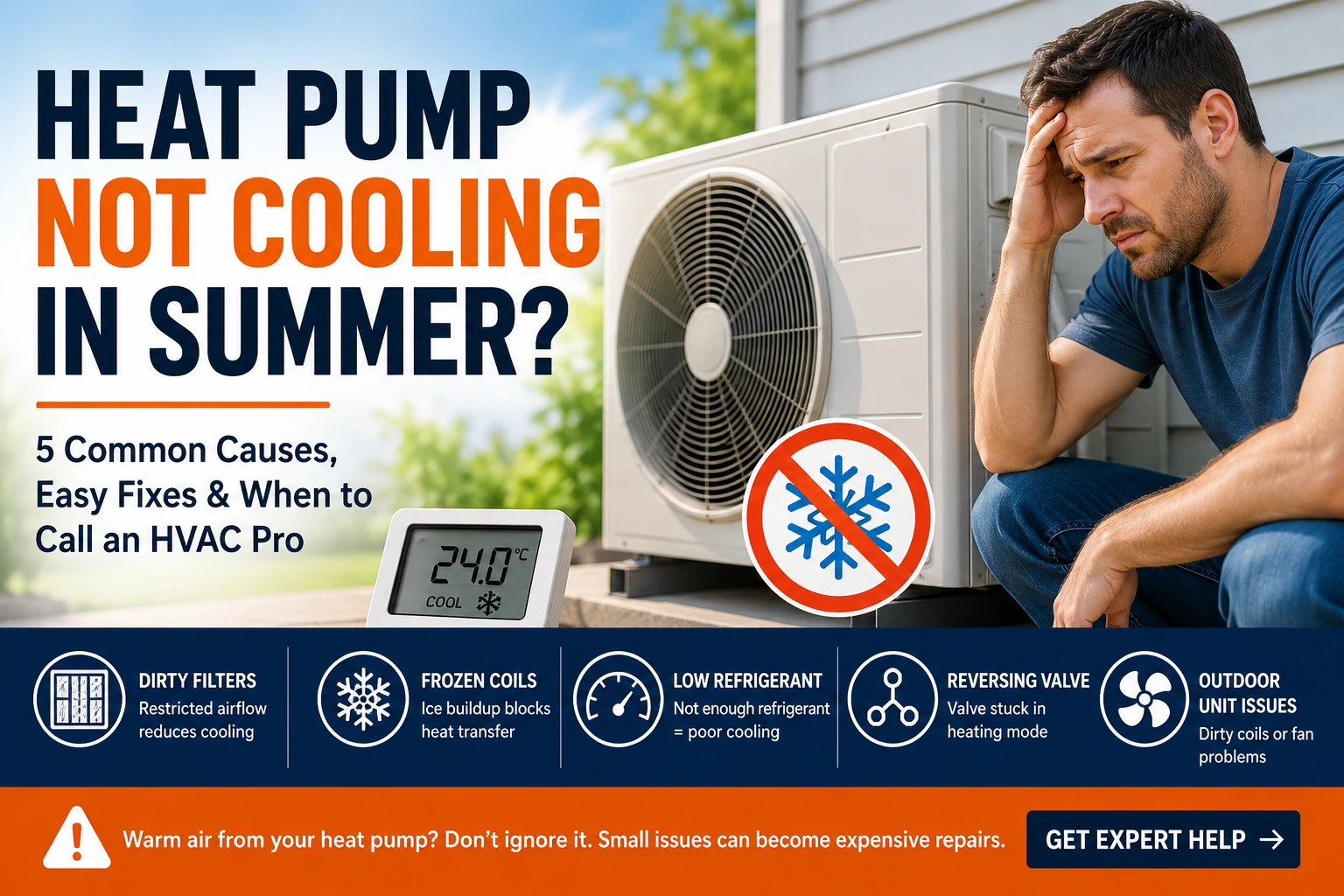
A heat pump not cooling your home in the middle of a summer heat wave is one of the most stressful HVAC problems a homeowner can face — mostly because people forget their heat pump isn’t just a heater. This guide is written for homeowners whose heat pump is running but the air coming out feels lukewarm, weak, or not cold at all, and who want to know what’s wrong before they pay for a service call.
By the FurnacePrices.com Editorial Team•✔ Reviewed by a licensed HVAC technician•Updated: July 2026
By the end, you’ll know the five most common reasons a heat pump stops cooling, what it means when it blows warm air instead, which checks are safe to do yourself, and when the problem crosses the line into a same-day emergency.
The patterns below reflect what technicians actually see on hot-weather service calls — not a generic internet checklist. Let’s work through it step by step.
Why Your Heat Pump Is Also Your Air Conditioner
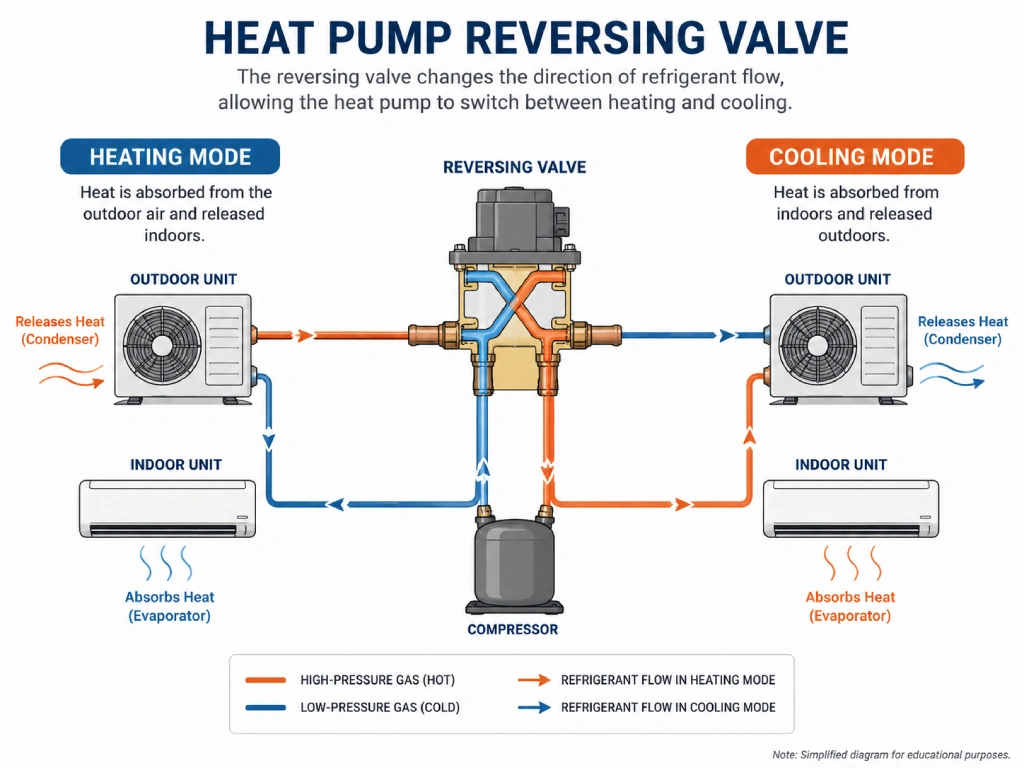
A heat pump doesn’t just make heat in winter — it moves heat. A component called the reversing valve flips the direction of refrigerant flow so the same outdoor and indoor coils that warm your house in January cool it in July. In cooling mode, your heat pump is functionally identical to a central air conditioner.
That’s important context: almost everything that causes a standard AC to underperform — a dirty filter, low refrigerant, a blocked outdoor unit — can also stop a heat pump from cooling. If your system has never cooled properly, or has recently stopped, it’s worth reviewing our broader guide to a heat pump not working for issues that affect both heating and cooling modes. If you’re comparing systems altogether, our heat pump vs air conditioner comparison and heat pump refrigerant guide cover the mechanical differences in more depth.
5 Common Reasons a Heat Pump Won’t Cool Your Home
Most cooling failures trace back to one of five causes. Working through them in order — cheapest and most likely first — will save you an unnecessary service call more often than not.
1. Dirty Air Filter or Frozen Indoor Coil
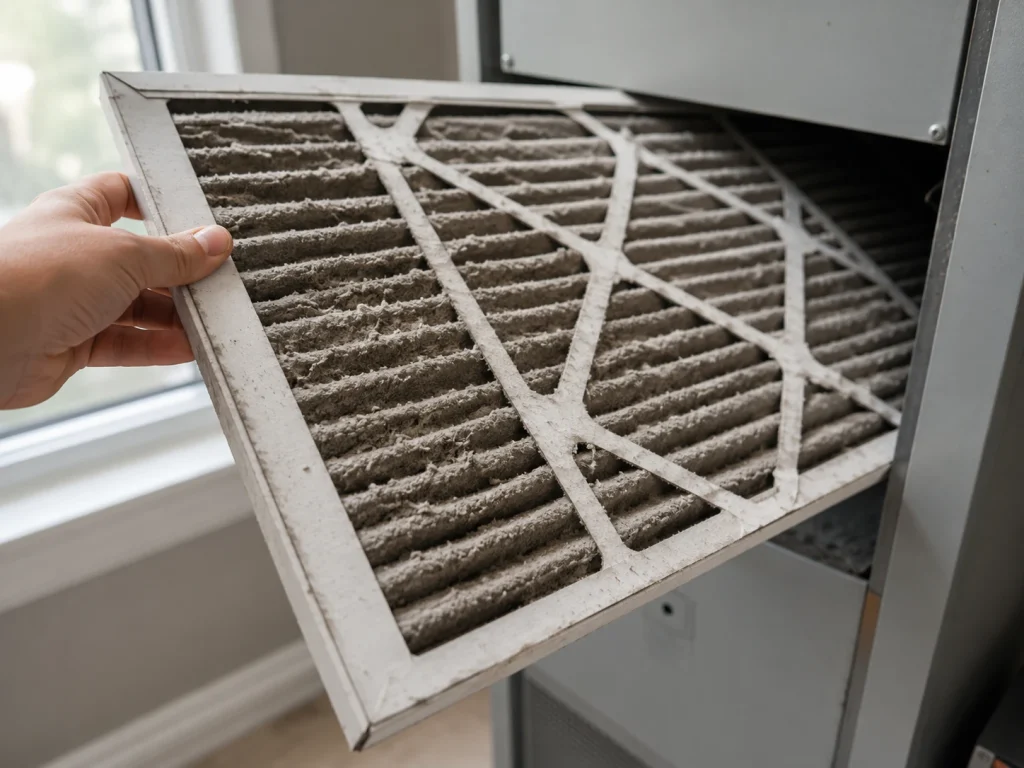
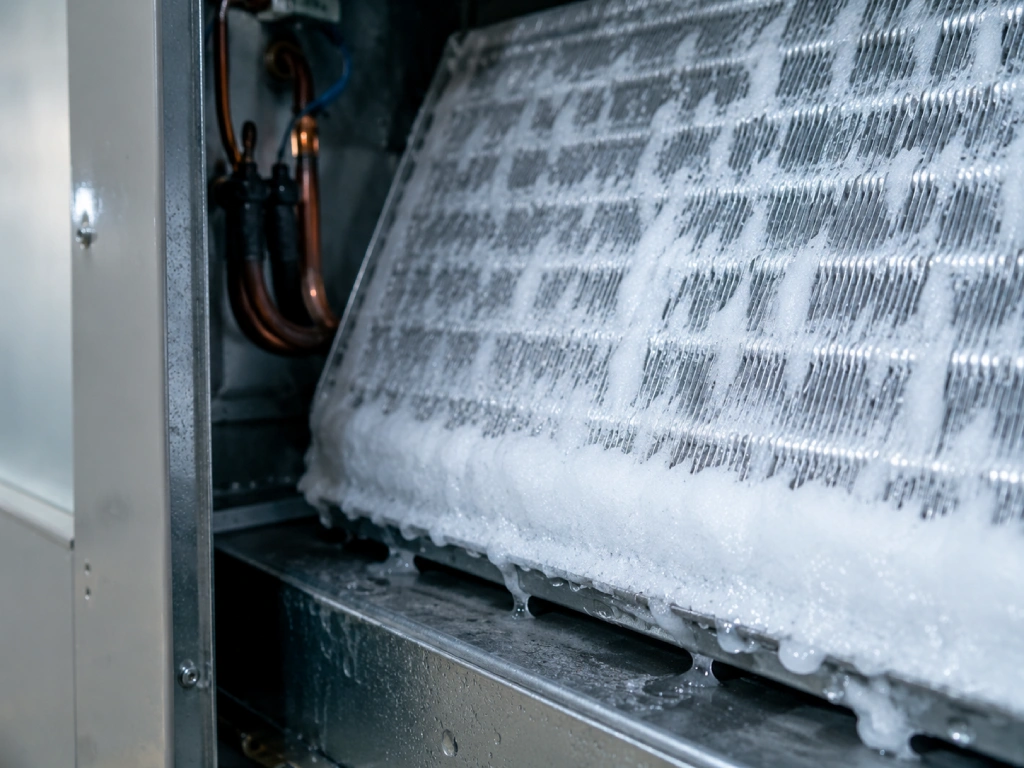
A clogged filter starves the system of airflow. Without enough air moving across the indoor coil, the coil gets too cold, ice forms on it, and cooling output drops sharply — sometimes to almost nothing. This is by far the single most common cause of weak or absent cooling, and it’s also the cheapest to fix.
2. Low Refrigerant Charge
Refrigerant doesn’t get “used up” — if the level is low, there’s a leak somewhere in the system. A low charge reduces the heat pump’s ability to absorb heat from your home, so air still blows but never gets truly cold. Low refrigerant needs a licensed technician; it isn’t a DIY fix and shouldn’t be treated like one. Refrigerant handling and system performance in Canada follow technical benchmarks set by bodies like ASHRAE, which is one reason this repair isn’t something to attempt without proper training and equipment.
3. Stuck Reversing Valve
If the reversing valve fails to switch, the system stays locked in heating mode even though the thermostat is calling for cooling — which is exactly why so many “heat pump not cooling” calls are actually reversing valve problems. This is a mechanical or electrical failure that requires a technician to diagnose and replace.
4. Blocked or Dirty Outdoor Unit
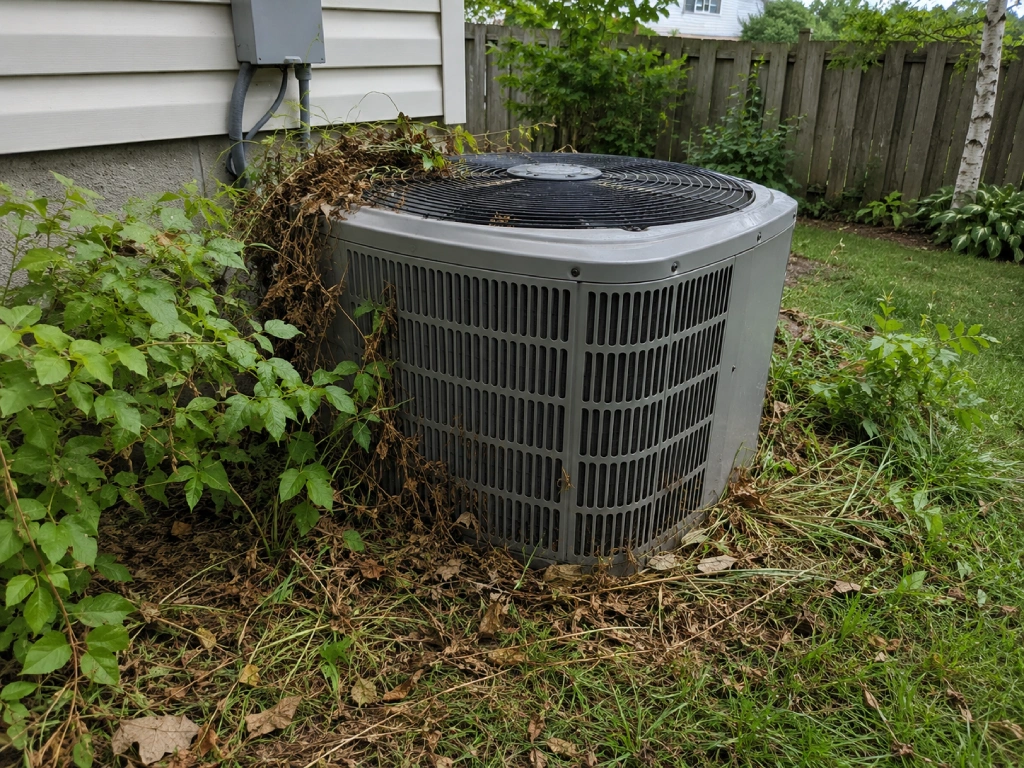
In cooling mode, the outdoor unit is where heat pulled from inside your home gets released. Grass clippings, leaves, mulch, or a fence built too close to the unit restrict airflow and make the whole system work harder while cooling less. This is one of the easiest issues for a homeowner to spot and fix.
5. Wrong Thermostat Mode or Settings
It sounds obvious, but it’s genuinely common — especially right after the seasons change or a power outage resets settings. If the thermostat is set to “Heat,” “Auto” with a confusing schedule, or a fan-only setting, the system may run without ever actually cooling. Always rule this out first; it costs nothing to check.
💡 Pro Insight: Technicians estimate that roughly a third of “my heat pump won’t cool” calls in summer turn out to be a dirty filter or a blocked outdoor unit — both are things a homeowner can usually check in five minutes before booking a repair.
Symptom → Likely Cause Quick Reference
If you only have a minute, match what you’re seeing against the table below before reading further.
Symptom
Most Likely Cause
Warm air, immediately
Wrong thermostat mode or stuck reversing valve
Cool air that fades over time
Low refrigerant or an icing coil
Weak airflow, but cool
Dirty filter or failing blower motor
Ice on the indoor coil or lines
Restricted airflow (filter or blocked vents)
Outdoor unit not running at all
Tripped breaker or failed capacitor
Outdoor fan runs, but no cool air inside
Refrigerant leak or reversing valve fault
Still not sure which one matches your system? Answer a few quick questions and get a likely cause instantly:
🔍
Heat Pump Troubleshooting Wizard
Answer 5 quick questions about your heat pump symptoms and get a likely diagnosis with recommended next steps.
Step 1 of 520%
What is the main issue you're experiencing with your heat pump?
When does the problem mainly occur?
What sound do you hear from your heat pump?
What's happening with your indoor temperatures?
When was your last professional maintenance?
Would you like a free no-obligation estimate from our local contractor partners?
Great! Almost done, your result is on the next page.
Please enter your contact details so our certified contractors can provide estimates.
This field is required.
Please enter a valid email address.
Please enter your phone number.
Please enter your city or postal code.
By submitting this form, you are giving your consent to receive phone calls and text messages from our contractor partners.
You're almost done!
Please provide your details to see your results.
Name is required.
Email is required.
Please enter your city or postal code.
🔍 DIAGNOSIS READY
—
—
—
Recommended Next Steps
—
⚠️ Urgency Level: —
Note: This diagnosis is based on common symptom patterns and is for informational purposes only. A certified HVAC technician should inspect your system for an accurate diagnosis.
Get a Professional Diagnosis
Connect with certified local contractors who can diagnose and fix your heat pump — for free quotes.
These are rough Canadian ranges to set expectations — your heat pump repair cost guide has the full breakdown, and the heat pump cost calculator can give you a number specific to your situation.
Problem
Typical Cost (CAD)
Filter replacement
$15 – $40
Capacitor replacement
$180 – $350
Refrigerant leak repair
$400 – $1,500
Reversing valve replacement
$700 – $1,800
Step 1 of 60%
❄️
Heat Pump Cost Calculator
How much will a new heat pump cost you? Get an instant price estimate based on your home and needs — takes under 2 minutes.
What type of heat pump are you looking for?
What efficiency level are you considering?
Higher HSPF = more efficient = lower bills, but higher upfront cost.
How large is your home (sq ft)?
This helps estimate the right capacity unit for your home.
1,500 sq ft
500 sq ft4,000 sq ft
Do you need installation included?
Does your home have existing ductwork?
Would you like a free quote from a local certified contractor?
Great! Almost done, your result is on the next page.
Please enter your contact details so our certified contractors can provide accurate quotes.
This field is required.
Please enter a valid email address.
Please enter your phone number.
Please enter your city or postal code.
By submitting this form, you are giving your consent to receive phone calls and text messages from our contractor partners.
You're almost done! Where do we send the results?
Please provide your details to see your results.
Name is required.
Email is required.
Please enter your city or postal code.
❄️ Estimate Ready
Your Heat Pump Cost Estimate
Equipment Cost
—
Total Estimated Cost
—
Get Accurate Quotes from Local Pros
These are estimates. Get precise quotes from certified HVAC contractors in your area — for free.
Ranges reflect typical Canadian service call quotes and vary by region, brand, and technician. Confirm with a local diagnosis.
Heat Pump Blowing Warm Air Instead of Cool? Here's What It Means
Warm or room-temperature air from the vents during cooling mode usually means one of three things: the system is stuck in heating mode, it has lost refrigerant, or the reversing valve failed to switch. Which one it is often depends on when the air turns warm.
Warm from the moment it turns on — usually a thermostat mode issue or a stuck reversing valve.
Starts cool, then gradually warms up — often a refrigerant leak or a coil icing over from restricted airflow.
Cool air, but weak airflow — points to a dirty filter or a failing blower motor rather than the refrigerant side at all.
Noting which pattern matches your system helps a technician diagnose the issue faster over the phone — and can save you a second visit.
More Heat Pump Cooling Symptoms, Explained
The five causes above cover most cases, but a few specific symptom combinations deserve their own explanation.
Heat Pump Running But Not Cooling
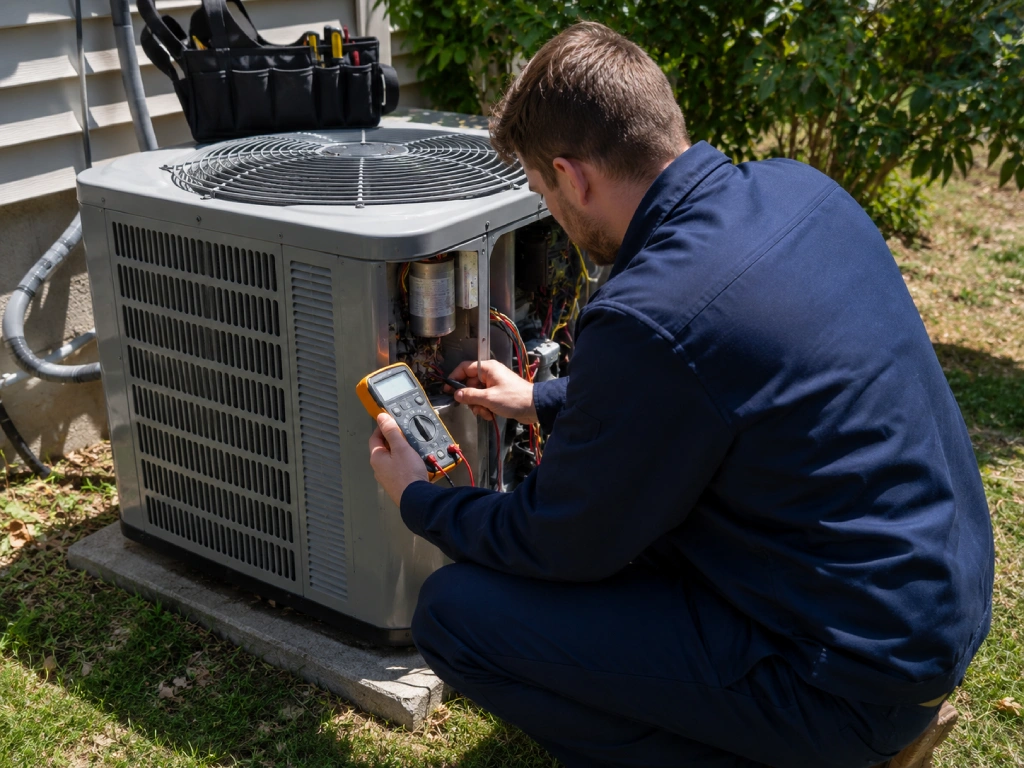
If both the indoor and outdoor units are running but the house still isn't cooling, the compressor is doing work without actually moving heat — the classic sign of a refrigerant leak or a reversing valve that hasn't fully switched. This isn't a DIY fix; it needs a gauge set and a technician.
Outdoor Unit Running, But No Cool Air Inside
This usually points indoors rather than outdoors — a dirty filter, a failing blower motor, or closed/blocked supply vents can all stop cool air from reaching the rooms even when the outdoor unit sounds perfectly normal.
Not Cooling After a Power Outage
A power outage can reset the thermostat to a default heating schedule or trip a breaker without you noticing. Always check the thermostat mode and the breaker panel first after any outage before assuming there's a mechanical fault.
Not Cooling Upstairs (But Fine Downstairs)
Heat rises, so upstairs rooms naturally run warmer — but a large gap usually means restricted airflow to those rooms specifically: closed vents, a clogged filter reducing overall output, or ductwork that was never balanced correctly for the second floor.
Cooling, But Not Cooling Enough
If the system cools but never quite reaches the setpoint on hot days, it may simply be undersized for your home, or it may be losing capacity from a slow refrigerant leak, dirty coils, or reduced airflow. A load calculation through the heat pump size & BTU calculator is a good first step.
Step 1 of 50%
📐
Heat Pump Size & BTU Calculator
Find the right heat pump capacity for your home. Get your recommended BTU output in under 2 minutes.
What is your home's square footage?
1,500 sq ft
500 sq ft5,000 sq ft
What climate zone do you live in?
Climate affects how much heating and cooling capacity you need.
How well insulated is your home?
What are your ceiling heights?
Would you like a free quote from a local certified contractor?
Almost done! Your BTU recommendation is on the next page.
Enter your details so certified contractors can follow up with an accurate quote.
This field is required.
Please enter a valid email address.
Please enter your phone number.
Please enter your city or postal code.
By submitting this form, you are giving your consent to receive phone calls and text messages from our contractor partners.
You're almost done!
Please provide your details to see your results.
Name is required.
Email is required.
Please enter your city or postal code.
📐 Size Calculated
Your Recommended Heat Pump Size
Recommended BTU
—
Tonnage
—
Get a Confirmed Size from a Pro
A proper Manual J load calculation by a certified HVAC contractor ensures perfect sizing for your home.
A compressor that runs continuously without producing cool air is working hard for no result — almost always a sign of low refrigerant, a failing compressor itself, or a reversing valve stuck between positions. Shut the system off and call a technician rather than letting it run.
DIY Checks Before You Call a Pro
These checks are safe for most homeowners and take less than fifteen minutes combined. If none of them solve the problem, it's time to call a technician rather than opening up the refrigerant lines yourself.
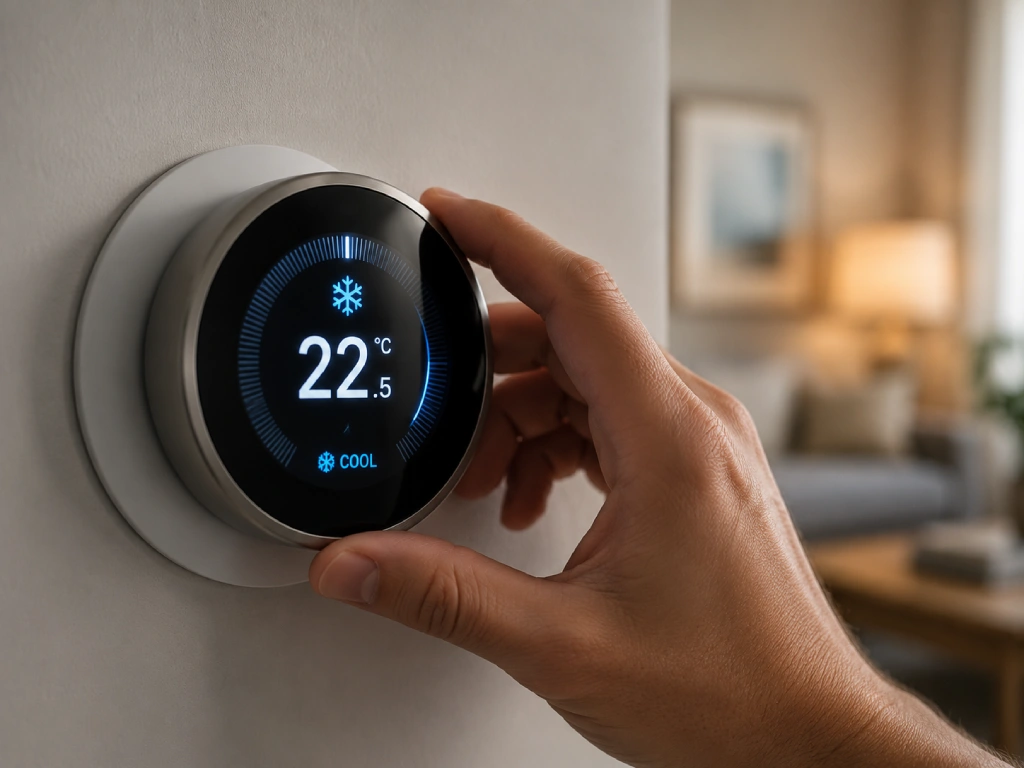
Confirm the thermostat mode. Set it to "Cool," not "Heat" or "Auto," and lower the temperature a few degrees below the current room temperature.
Check and replace the filter. A grey, dust-caked filter is often the entire problem — replace it if it hasn't been changed in the last 60–90 days.
Inspect the outdoor unit. Clear leaves, grass clippings, and debris, and make sure there's at least two feet of open space around it.
Look for ice on the indoor coil or lines. If you see frost or ice, turn the system off and let it thaw fully before running it again.
Check the breaker. A tripped breaker can let the indoor blower run while the outdoor compressor stays off, which feels exactly like "no cooling."
If you've worked through these and the system still isn't cooling, our heat pump troubleshooting wizard can help narrow down the issue further before you book a technician, and our seasonal AC maintenance checklist is worth bookmarking so this doesn't catch you off guard again next year.
🔧 Not Sure What's Wrong?
Get a Clear Answer Before You Spend a Dollar
Run your symptoms through our free tools to narrow down the cause, then get a no-obligation quote from a trusted local technician if you need one.
Free tools · No obligation · Built for Canadian homeowners
When It Becomes a Summer Emergency
Most cooling problems can wait a day or two for a scheduled appointment. But during a heat wave, a home with no working cooling can become genuinely dangerous — particularly for infants, older adults, pregnant people, and anyone with a heart or respiratory condition.
⚠️ Treat It as Urgent If: Indoor temperatures climb above 27–28°C (80–82°F) with vulnerable household members present, the system has completely stopped rather than just underperforming, or extreme heat is forecast for several consecutive days. Call for same-day or emergency service, and in the meantime use fans, close blinds during peak sun, and stay hydrated.
Cooling failures become especially common during Ontario heat waves when outdoor temperatures push past 30°C, but the same urgency applies across the country — from dry Alberta summers to the humid, sticky heat that makes BC's Interior and Atlantic Canada feel hotter than the thermometer suggests.
Most HVAC companies prioritize no-cooling calls during heat waves, so don't hesitate to say it's urgent when you book — it usually gets you moved up the schedule.
Pre-Summer Tune-Up: Preventing This Next Year
Almost every cause on this list is easier and cheaper to catch during a spring tune-up than to fix mid-heat-wave. A yearly service visit before cooling season typically covers:
Checking refrigerant charge and testing for slow leaks
Confirming the reversing valve switches cleanly between modes
Cleaning the indoor coil, outdoor coil, and blower components
Calibrating the thermostat and testing both heating and cooling cycles
Inspecting electrical connections and capacitors before they fail in peak heat
A properly maintained heat pump also runs more efficiently, which matters for a system that works year-round — see our full heat pump maintenance guide for a season-by-season checklist, and our heat pump lifespan guide if you're wondering how many more summers your current unit has left. For general efficiency benchmarks and what to look for in a well-maintained system, ENERGY STAR Canada is a reliable reference point, and homeowners considering an upgrade can check current federal incentives through the Canada Greener Homes Initiative.
Common Mistakes to Avoid
Running the system with an iced-over coil — this can damage the compressor and turn a cheap fix into an expensive one.
Assuming it needs a new unit — a heat pump problem is often a single failed part, not the whole system. If replacement does come up, the is a heat pump worth it quiz and heat pump cost calculator will tell you what a new install would actually cost before you decide.
Skipping annual maintenance — this is the single biggest predictor of a mid-summer breakdown.
Waiting out a heat wave with no cooling — treat prolonged extreme heat with no AC as a health risk, not an inconvenience.
Not sure if repair or replacement is the smarter call for your situation? This quick quiz will tell you:
🏠
Is a Heat Pump Worth It? Quiz
Answer 5 quick questions and find out if switching to a heat pump makes sense for your home, climate, and lifestyle.
Step 1 of 520%
How do you primarily heat your home currently?
Do you have ductwork and heating vents in your home?
Central duct systems allow for a ducted heat pump. Without ducts, a ductless mini-split is still an option but at higher cost.
Which region do you live in?
Heat pumps perform best in moderate climates. Cold-climate models now work well even in very cold regions.
How well insulated is your home?
How long are you planning on staying in your home?
A heat pump is a long-term investment. Longer stays mean better return on investment.
Would you like a free no-obligation estimate from local contractor partners?
Great! Almost done, your result is on the next page.
Please enter your contact details so our certified contractors can provide estimates.
This field is required.
Please enter a valid email address.
Please enter your phone number.
Please enter your city or postal code.
By submitting this form, you are giving your consent to receive phone calls and text messages from our contractor partners.
You're almost done!
Please provide your details to see your results.
Name is required.
Email is required.
Please enter your city or postal code.
🏠 RESULTS READY
—
—
—
Your Score
—
Max Possible
10 pts
Heating System
—
Region Suitability
—
Key factors from your answers
—
Note: This quiz provides a general recommendation. A certified HVAC contractor can assess your specific home and provide a tailored recommendation.
Get a Free Quote from Local Pros
Find out exactly how much a heat pump would cost for your home — for free.
A heat pump not cooling is almost always traceable to one of five things: a dirty filter, low refrigerant, a stuck reversing valve, a blocked outdoor unit, or a simple thermostat setting. Run through the quick DIY checks first — you'll solve the problem yourself more often than you'd think.
When the checks don't fix it, don't wait it out. A quick call to a licensed technician, especially during a heat wave, is worth far more than the cost of guessing.
✅ Licensed HVAC Professionals•🍁 Multiple Canadian Provinces Served•⚡ Fast Response Times•💬 Free Quotes, No Obligation
🚀 Still Not Cooling?
Get a Free Quote From Trusted Local HVAC Pros
Get a fast, no-obligation diagnosis and repair quote from a licensed local technician — most calls are answered the same day during heat waves.
The most common causes are a dirty air filter, low refrigerant, a stuck reversing valve, a blocked outdoor unit, or the thermostat set to the wrong mode. Start with the filter and thermostat first.
Why is my heat pump blowing warm air in summer?
Warm air usually means the system is stuck in heating mode, has a refrigerant leak, or the reversing valve failed to switch. When it starts happens matters — immediate warmth points to the valve or thermostat.
How do I put my heat pump into cooling mode?
Set the thermostat mode to "Cool," not "Heat" or "Auto," and set the target temperature a few degrees below the current room temperature so the system actually calls for cooling.
Is a heat pump not cooling an emergency?
It can be during a heat wave, especially with infants, older adults, or anyone with a health condition in the home. Treat total loss of cooling in extreme heat as urgent and call for same-day service.
How much does it cost to fix a heat pump that won't cool?
Simple fixes like a filter or capacitor often run under a few hundred dollars, while refrigerant leaks or a failed reversing valve typically cost more. Get an exact estimate with a repair cost calculator.
 Canadian