We use cookies to ensure that we give you the best experience on our website.
Furnace Type
Furnace Level
Home Size
Results
Furnace Cost Calculator
How much will upgrading your furnace cost? Get a new gas furnace price estimate instantly with this short quiz.
What type of furnace are you considering?
What level of furnace are you likely to choose?
How large is your home (sq ft)?
This helps estimate the right furnace capacity for your home.
2,000 sq ft
800 sq ft4,000 sq ft
Your Price Range
—
Equipment Cost
—
Total Estimated Cost
—
⚠️ This Estimate Alone
Price can change once your home is actually inspected
Ductwork, permits & site conditions not accounted for
No installation-day guarantee
✅ Certified Expert Quote
Price locked in — no surprises later
Free in-home inspection included
Installation-ready, all-in pricing
—
Licensed & Insured Pros No Spam, No Obligation Top-Rated Local Experts
We respect your privacy. You will be connected to one or two hand-picked, top-rated local contractors. No mass sharing, no spam, no obligation.
Join the homeowners who got a transparent, no-hidden-fee quote this month.
No obligation — local certified contractors have limited appointment slots this week.
Get Your Free, Accurate Quote
Enter your details so a certified local contractor can confirm this price with no hidden costs.
This field is required.
Please enter a valid email address.
Please enter your phone number.
Please enter your city or postal code.
By submitting this form, you are giving your consent to receive phone calls and text messages from our contractor partners.
You're All Set!
A certified local contractor will reach out shortly to confirm your accurate, installation-ready quote — no hidden costs, no obligation.
⭐ Top Contractor Program
Want to Stand Out?
Fill out the form below to apply and get featured as one of our Top Contractors. Gain visibility, attract more clients, and showcase your expertise to a wider audience!
🔒 Your information is private and secure
Free to apply
Verified contractors only
Canada-wide visibility
No hidden charges
Free Service
No obligation
Get Your FREE HVAC Quote Today
Compare prices from top-rated local contractors in minutes
If your AC running but not cooling your house is leaving every room warm even though you can hear the outside AC unit running, you’re dealing with one of the most common summer HVAC complaints. This guide is for homeowners whose AC fan is running but the compressor isn’t cooling properly, whether it’s central air running constantly in hot weather or just not cooling one part of the house.
By the FurnacePrices.com Editorial Team•✔ Reviewed by our licensed HVAC technician team•Last reviewed: July 2026
🛠️Editorial note: Every troubleshooting step in this guide is checked against real residential service calls handled across Ontario before publishing, and the article is reviewed on a regular schedule as pricing and equipment standards change. If you spot something outdated, our team updates it.
By the end, you’ll understand the seven most common causes, a quick way to decide between repair and replacement, which checks you can safely do yourself, and when it’s time to call a professional. No guesswork, just a clear path to cool air again.
Why Is My AC Running But Not Cooling? (Quick Answer)
An AC that runs constantly without cooling almost always points to one of three things: restricted airflow, a refrigerant problem, or a failing component like a capacitor or compressor. The fan and compressor may still power on, but if air can’t move properly or refrigerant can’t absorb heat, your home simply won’t cool down, no matter how long the outside AC unit keeps running.
Not sure where to start? Run our free AC troubleshooting wizard to narrow the issue down in a couple of minutes before you dig into the details below.
7 Common Causes of an AC Running But Not Cooling
1. Dirty or Clogged Air Filter
A clogged filter is the single most common reason an AC runs constantly without cooling. It starves the system of airflow, which drops the temperature at the coil so low it can freeze over, cutting off cooling entirely. During peak summer service calls, technicians routinely find filters clogged with pollen or construction dust after just a few weeks of heavy use, which is often enough on its own to freeze a coil. Check your filter first, always.
2. Low Refrigerant or a Leak
Refrigerant absorbs heat from your home and moves it outside. A slow leak means less refrigerant to do that job, so the system runs and runs while barely lowering the temperature. This one needs a licensed technician, since refrigerant handling is regulated. For background on refrigerant types and phase-outs, see our AC refrigerant guide, and get a sense of the likely repair cost with our AC repair cost calculator.
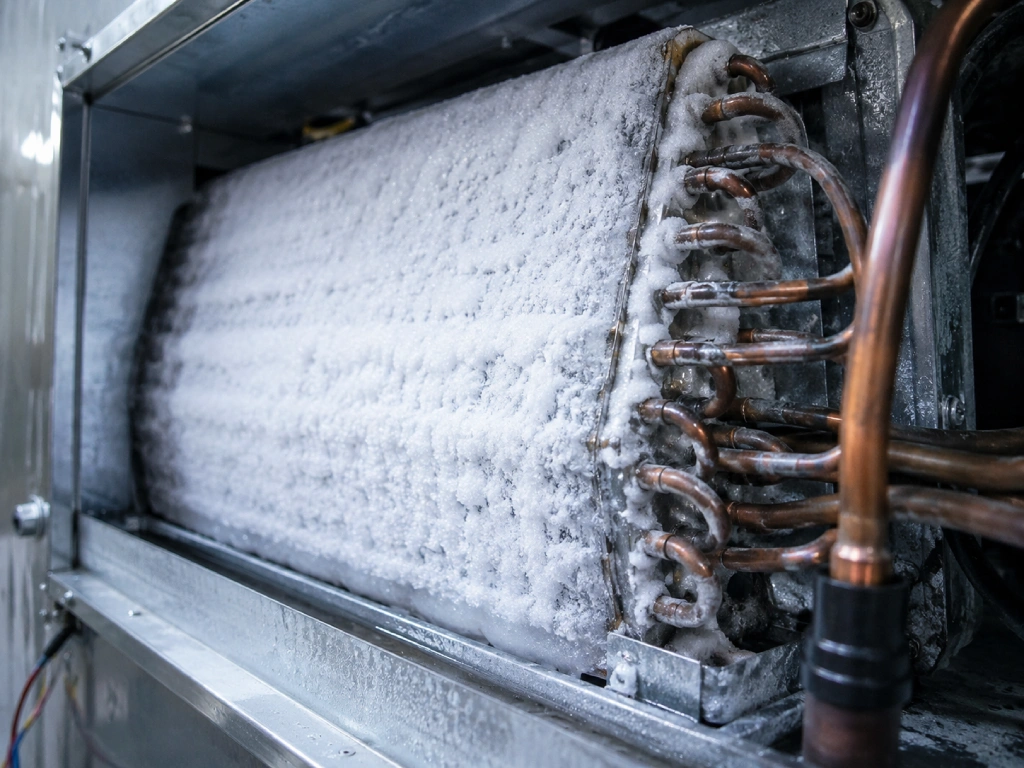
3. Frozen Evaporator Coil
⚠️ Don’t Force It: Running your AC with a frozen coil can push liquid refrigerant into the compressor and cause expensive damage. Switch the system to “off,” leave the fan on to help it thaw, and hold off on repairs until it’s fully clear.
A layer of ice on the indoor coil is usually a symptom rather than the root cause, triggered by low airflow or low refrigerant. Turn the system off and let it thaw for a few hours before restarting, otherwise you risk damaging the compressor.
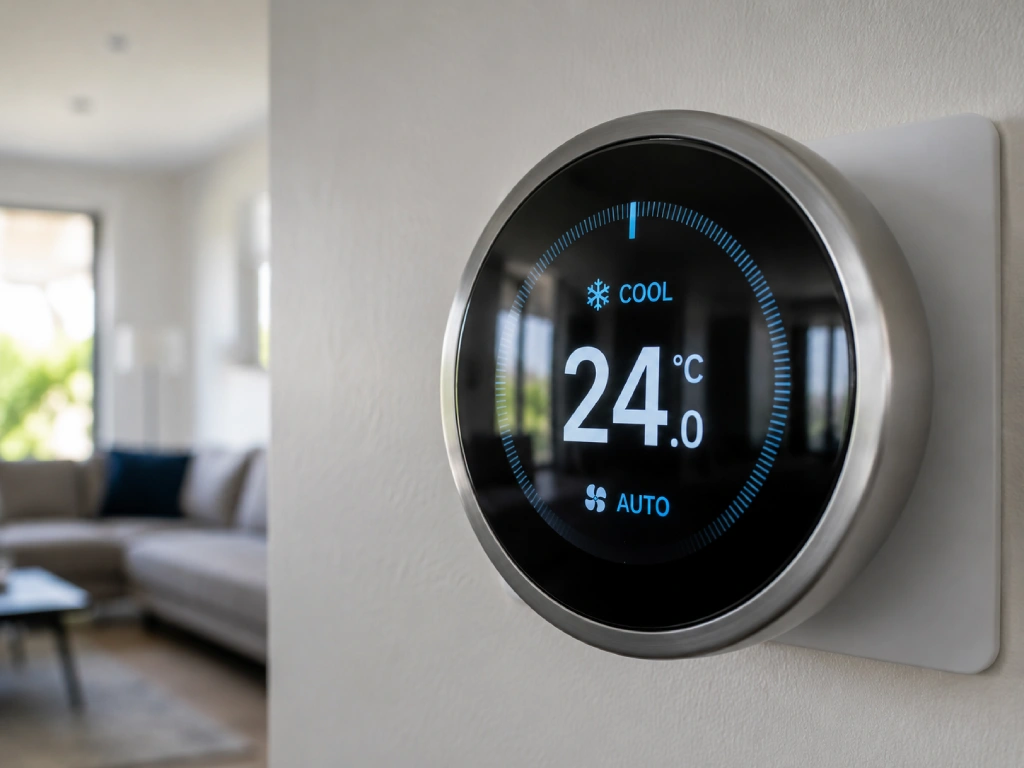
4. Thermostat Problems or Miscalibration
Sometimes the AC is working fine, but the thermostat is misreading the temperature, set to “on” instead of “auto,” or has a dead battery. It’s a quick, free check that solves more calls than you’d expect.
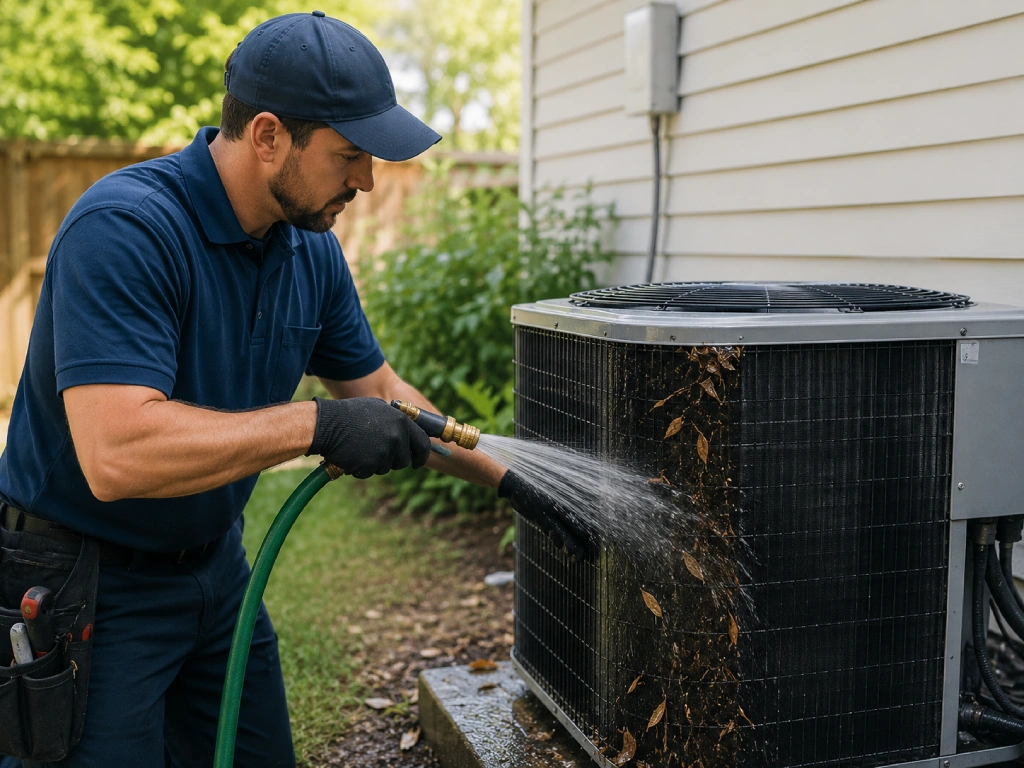
5. Dirty Condenser Coil (Outdoor Unit)
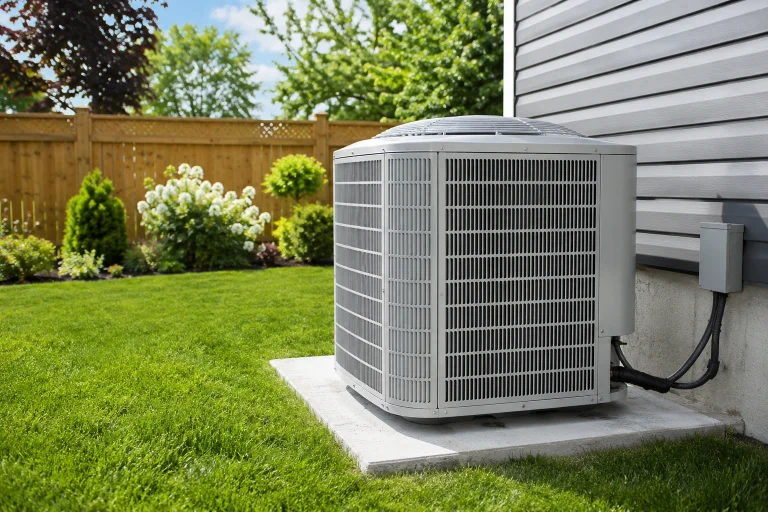
The outdoor unit needs to release heat into the air around it. Grass clippings, leaves, and dust caked onto the condenser coil trap that heat inside the system, so the outside AC unit runs constantly while struggling to cool. A garden hose rinse, with the power off, often helps immediately.
6. Failing Capacitor or Compressor
The capacitor gives the compressor and fan motors the jolt they need to start and run smoothly. A weak capacitor lets the system power on but starves the compressor, so it labours without properly cooling, sometimes with a noticeable humming sound from the outdoor unit. Left alone, this often ends in full compressor failure. Our AC compressor guide covers the warning signs in more detail.
💡 Pro Insight: A large share of “AC running but not cooling” service calls come down to either a weak capacitor or restricted airflow. Both are inexpensive fixes when caught early, but they escalate quickly if the system keeps running under strain.
7. Wrong Size Unit for Your Home
An undersized AC runs almost nonstop and still can’t keep up on hot days, since it simply doesn’t have the capacity for the space, which is why some homeowners notice their AC not cooling upstairs even though downstairs feels fine. If your system is older or was never sized correctly, confirm it with our AC size and tonnage calculator, then compare options with the AC recommendation wizard.
Should You Repair or Replace? A Quick Decision Guide
Once you know the cause, the next question homeowners usually ask is whether it’s worth fixing at all. Here’s a quick way to think about it.
Situation
Repair or Replace
Why
Unit under 8 years old, minor fault (filter, capacitor, thermostat)
Repair
Low cost, extends a healthy system’s life
First significant issue on an otherwise reliable unit
Repair
Isolated fault, no pattern of failure yet
Unit 10-plus years old with a compressor or coil failure
Replace
Repair cost often exceeds 50% of a new system
Repeated repairs within the same cooling season
Replace
Cumulative repair spend adds up fast
System still uses R-22 refrigerant
Replace
Refrigerant is being phased out and is costly to source
Compare Repair Cost vs. a New AC
If replacement is looking like the smarter option, this free calculator estimates what a new system would cost installed so you can weigh it against your repair quote.
Step 1 of 70%
❄️
Air Conditioner Cost Calculator
How much is adding or upgrading your existing A/C going to cost? Get a new air conditioner price estimate instantly with this short quiz.
What size AC unit do you need (tons)?
1 ton = 12,000 BTU. Most homes need 2–3 tons.
2.5 tons
1 tons5 tons
Which efficiency rating do you prefer (SEER)?
Higher SEER = more efficient = lower energy bills, but higher upfront cost.
Do you need additional ductwork installation?
Do you need installation included?
Do you want a smart thermostat included?
Do you want noise reduction upgrade?
Would you like to receive a free no-obligation estimate from our local contractor partners as well?
Great! Almost done, your result is on the next page.
Please enter your contact details so our Certified contractors can provide estimates as well.
This field is required.
Please enter a valid email address.
Please enter your phone number.
Please enter your city or postal code.
By submitting this form, you are giving your consent to receive phone calls and text messages from our contractor partners.
You're almost done!
Please provide your details to see your results.
Name is required.
Email is required.
Please enter your city or postal code.
❄️ Estimate Ready
Your Air Conditioner Cost Estimate
Equipment Cost
—
Total Estimated Cost
—
Get Accurate Quotes from Local Pros
These are estimates. Get precise quotes from certified HVAC contractors in your area — for free.
In most cases, no, but there are exceptions. A frozen coil or a struggling compressor won't hurt people, though continued strain can shorten the system's life or cause a breaker to trip. Treat it as a safety issue and shut the system off if you notice a burning smell, sparking, or repeated breaker trips, since those point to an electrical fault rather than a simple cooling problem.
How Long Can I Wait Before Calling Someone?
If a filter swap or thermostat check doesn't fix it, don't let the system run unattended for more than a day. A refrigerant leak or a failing capacitor rarely gets better on its own, and letting a struggling compressor keep running is the fastest way to turn an affordable repair into a full replacement.
Quick DIY Checks Before You Call a Technician
Replace or clean the air filter if it hasn't been changed in the last 60-90 days
Confirm the thermostat is set to "cool" and "auto," not "on"
Clear leaves, grass, and debris away from the outdoor condenser unit
Check that all supply vents inside the home are open and unblocked
Look for visible ice on the indoor coil or refrigerant lines
If you've worked through this list and the AC is still running without cooling, it's time for a professional look rather than more guesswork.
Try the AC Troubleshooting Wizard
Answer a few quick questions and this free tool narrows down exactly what's likely wrong with your system.
Step 1 of 50%
🔍
AC Troubleshooting Wizard
Which AC issue are you having? Answer a few quick questions to help identify the most likely cause of your air conditioner problem and what to do next.
When you check your thermostat, what do you notice?
What sound do you hear from your AC unit?
How is the airflow from your vents?
When did you last have professional maintenance?
Would you like to receive a free no-obligation estimate from our local contractor partners as well?
Great! Almost done, your result is on the next page.
Please enter your contact details so our Certified contractors can provide estimates as well.
This field is required.
Please enter a valid email address.
Please enter your phone number.
Please enter your city or postal code.
By submitting this form, you are giving your consent to receive phone calls and text messages from our contractor partners.
You're almost done!
Please provide your details to see your results.
Name is required.
Email is required.
Please enter your city or postal code.
🔍 Diagnosis Ready
AC Troubleshooting Results
Most Likely Cause
—
Get a Certified Tech to Confirm
Our diagnosis is a starting point. A certified HVAC technician can confirm the issue and fix it right the first time.
Free tools · No obligation · Built for Canadian homeowners
Typical Repair Costs for These Problems
Here's a realistic look at typical Canadian costs (CAD) so you know what to expect before a technician arrives. Actual pricing varies by brand, region, and labour rates.
Problem
DIY or Technician
Typical Cost (CAD)
Avg. Repair Time
Dirty filter or blocked vents
DIY
$0 - $30
10-15 minutes
Capacitor replacement
Technician
$150 - $400
30-60 minutes
Condenser coil cleaning
DIY or technician
$0 - $250
30-45 minutes
Refrigerant leak repair
Technician (licensed)
$600 - $1,600
1-3 hours
Compressor replacement
Technician
$1,500 - $2,800
3-6 hours
Ranges reflect typical Ontario installer quotes as of 2026 and vary by brand, capacity, and home. Always confirm with a local estimate.
Get Your Exact Repair Cost
Enter your specific problem below and this free calculator gives you a personalized repair estimate instead of a general range.
Step 1 of 160%
🔧
A/C Repair Cost Calculator
How much will repairing your existing A/C cost? Answer a few questions about what you're experiencing and get a repair cost estimate.
How well has your A/C been cooling your home lately?
Have you noticed large indoor temperature fluctuations?
Is the thermostat on and appears to be functioning properly?
Have you noticed reduced airflow from vents even though the A/C is on?
Have you noticed air coming from vents feels warm?
Is the fan spinning very slowly or not at all on outdoor unit?
Does the air conditioner fan appear to never shut off (outdoor unit)?
Have you noticed strange odours coming from vents or near your furnace?
Have you noticed any unusual noises?
What best describes the unusual noise(s)?
Does your A/C turn on but shuts off soon after?
Does the breaker regularly trip or fuses repeatedly blow?
Have you noticed water damage or water leaking or pooling near your furnace?
Have you noticed ice build up on the refrigerant lines, copper tubing, or coil?
Have your electrical bills been significantly higher than usual lately?
Would you like to receive a free no-obligation estimate from our local contractor partners as well?
Great! Almost done, your result is on the next page.
Please enter your contact details so our Certified contractors can provide estimates as well.
This field is required.
Please enter a valid email address.
Please enter your phone number.
Please enter your city or postal code.
By submitting this form, you are giving your consent to receive phone calls and text messages from our contractor partners.
You're almost done!
Please provide your details to see your results.
Name is required.
Email is required.
Please enter your city or postal code.
🔧 Diagnosis Complete
Your A/C Repair Estimate
Estimated Repair Range
—
Likely Issue
—
Get an Accurate Repair Quote
A certified HVAC technician can diagnose the exact issue and provide a firm quote. Many offer free diagnostics.
Once you know the cause, weigh the repair against your system's age and efficiency. Our AC operating cost calculator and AC savings calculator can show whether a repair still makes sense or whether a newer, more efficient unit pays for itself faster. If replacement is on the table, check your system's expected lifespan in our AC lifespan guide or review the AC installation process.
Does Your Region Change the Repair?
Repair costs and urgency vary across Canada. Labour rates and refrigerant availability differ between Ontario, Alberta, and BC, so the same fix can carry a different price tag depending on where you live.
Humid Ontario summers accelerate coil icing when airflow is even slightly restricted, while sudden Alberta heat waves put extra strain on units that are already borderline undersized. If you're comparing quotes, ask whether the estimate accounts for your local climate and typical run times, not just a national average.
How to Prevent This From Happening Again
Most of the causes above share one root problem: a system that hasn't been serviced in a while. Consistent seasonal AC maintenance catches a weak capacitor or a dirty coil before it turns into a no-cool emergency in the middle of a heatwave. Our HVAC maintenance checklist covers everything worth checking each season.
An annual tune-up, ideally done in spring before cooling season starts, typically covers a filter check, coil cleaning, refrigerant levels, and electrical component testing. If a technician finds a problem during a routine visit, our AC repair guide walks through what to expect from the fix, and our AC replacement guide covers what happens if repair is no longer the better option.
Common Mistakes Homeowners Make
Letting it run "just in case" it starts cooling - this only stresses a struggling compressor further.
Ignoring a frozen coil - forcing the system to keep running can damage the compressor permanently.
Skipping the filter check - the cheapest, fastest fix is also the one most people overlook.
Delaying a diagnosis for weeks - small issues like a weak capacitor tend to become expensive compressor failures.
An AC running but not cooling is almost never a mystery once you work through the checklist: filter, thermostat, condenser, ice on the coil, and the age of the system. Most cases trace back to restricted airflow or a weak capacitor, both quick and affordable to fix when caught early. For anything older or already showing repeated faults, use the decision guide above before spending on another repair.
If your own checks don't solve it, don't let the system keep running unattended. A short visit from a licensed technician usually settles it the same day.
🚀 Still Not Cooling?
Get a Free Quote From Trusted Local HVAC Pros
Tell us what's going on and get matched with a licensed technician near you, transparent pricing, no obligation. Ask about financing if a replacement makes more sense than another repair.
🔒 Free · No obligation · Local Ontario contractors
Frequently Asked Questions
Why is my AC running but not blowing cold air?
The most common causes are a clogged air filter, low refrigerant, a dirty outdoor condenser coil, or a weak capacitor. Check the filter and thermostat first, then call a technician if it persists.
Should I repair or replace an AC that keeps running without cooling?
Repair if the unit is under 8 years old with a minor, first-time fault. Replace if it's over 10 years old, needs a compressor or coil, or keeps needing repeat repairs.
Is it dangerous to leave my AC running if it's not cooling?
Usually not dangerous, but turn it off if you notice a burning smell, sparking, or repeated breaker trips. Otherwise, running it briefly while you diagnose the issue is fine.
How long can I wait before calling a technician?
Try the filter and thermostat checks first. If those don't help, don't let it run unattended past a day, since a struggling compressor can fail completely if ignored.
Can a dirty air filter really stop an AC from cooling?
Yes. A clogged filter restricts airflow so much that the evaporator coil can freeze over, which stops cool air production almost entirely. It's the first thing to check.
How much does it cost to fix an AC that runs but doesn't cool?
Simple fixes like a filter or capacitor run $0 to $400 CAD. Refrigerant leaks or a failing compressor can run $600 to $2,800 CAD depending on the part and labour.
How can I prevent my AC from running without cooling again?
Change the filter every 60 to 90 days, keep the outdoor unit clear of debris, and book an annual spring tune-up. Regular maintenance catches most causes early.
 USA
USA Canadian