Fill out the form below to apply and get featured as one of our Top Contractors. Gain visibility, attract more clients, and showcase your expertise to a wider audience!
🔒 Your information is private and secure
Free to apply
Verified contractors only
Canada-wide visibility
No hidden charges
Free Service
No obligation
Get Your FREE HVAC Quote Today
Compare prices from top-rated local contractors in minutes
Every Canadian homeowner eventually faces the same question: what is the best air conditioner in Canada for my home, climate, and budget? The answer isn’t the same for an Ontario homeowner dealing with July humidity as it is for a dry Alberta summer or a mild BC coast. This guide cuts through the noise — 7 brands, ranked by reliability, efficiency, and value for the Canadian market specifically.
🔧
Reviewed by the FurnacePrices.com Editorial Team
This guide is based on contractor feedback collected across Ontario, Alberta, and BC, combined with manufacturer specification analysis and Canadian HVAC dealer network data. Updated May 2026. Our rankings are independent — no brand pays for placement.
Finding the best air conditioner in Canada isn’t as simple as picking the biggest brand name.
Canadian homes face a climate that demands more from cooling equipment than most North American markets — humid Ontario summers, dry Alberta heat, and outdoor units that sit dormant through months of deep freeze before being asked to perform on the first hot day of June. The brand that works well in Texas or Florida often behaves differently here.
This guide is for Canadian homeowners comparing central AC brands before making a purchase. It covers the seven strongest brands available through Canadian HVAC dealers in 2026 — what each does well, where each falls short, which home types they suit best, and what you should realistically expect to pay installed in your province.
No brand pays to appear here. These rankings are based on reliability data, contractor feedback, warranty terms, and Canadian-specific performance factors.
🇨🇦 Free Tool for Canadian Homeowners
Compare Installed AC Prices from Local Certified Contractors
Get free, no-obligation quotes on any brand below — from certified HVAC companies near you. Takes under 2 minutes.
🔒 Free · No obligation · Local certified contractors · Canada-wide
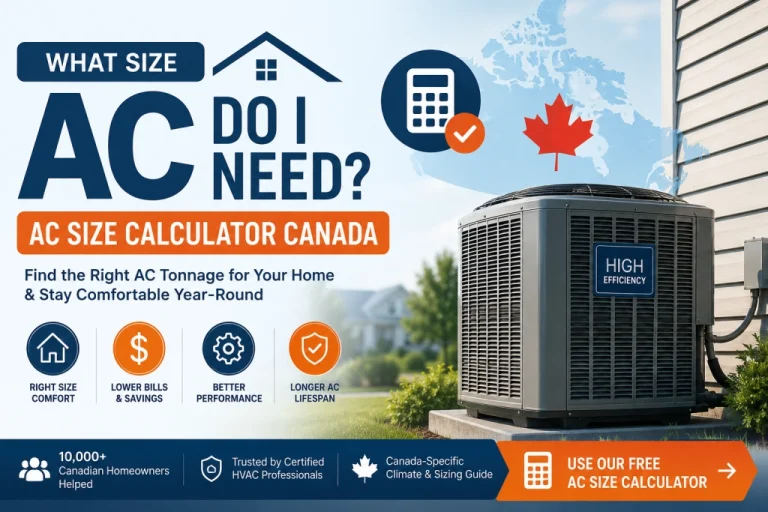
What Makes the Best Air Conditioner in Canada?
Our rankings are based on five weighted criteria specific to the Canadian market:
Reliability in Canadian climates — freeze-thaw cycle resilience, coil corrosion resistance, spring startup failure rates reported by Ontario and Alberta contractors
SEER2 efficiency range — impact on monthly hydro costs across provinces with varying electricity rates
Installed cost (Canada-specific) — not MSRP, but real installed price ranges from Canadian dealer quotes
Warranty terms and registration requirements — total years of coverage, what is and isn’t included
Canadian dealer network depth — how easy it is to get certified service and warranty work done outside major metros
📋 Methodology Note: Contractor reliability feedback was gathered from certified HVAC technicians serving Ontario, Alberta, and BC markets. Equipment cost ranges reflect 2026 Canadian installed pricing, including equipment, refrigerant, and standard installation labour — but not ductwork modifications or electrical upgrades, which vary significantly by home.
What Makes an Air Conditioner Good for Canada?
Canadian climates impose stresses on AC equipment that milder markets don’t. Before comparing brands, it’s worth understanding what those stresses actually are — because they directly explain why some brands rank higher for the Canadian market than they might in US comparisons.
The outdoor condenser unit in most Canadian homes sits unused for five to seven months per year in temperatures that can drop below −25°C. When cooling season starts — often abruptly, following the first significant heat event — that unit needs to perform immediately under full load.
Systems with cheaper compressor designs and inadequate coil coatings see disproportionately high failure rates in that first week of use. The best brands for Canada use corrosion-resistant coil coatings, robust start capacitors, and variable-speed compressors that ease into operation rather than hammering on at full load.
Canada’s summer profile also varies sharply by region. Ontario and Quebec experience significant humidity, which puts strong demands on humidity control — something single-stage systems handle poorly. Alberta and Saskatchewan have a drier summer profile where a two-stage system often represents the best value. Coastal BC deals with milder temperatures but moisture-driven corrosion exposure that rewards better coil coatings.
The other critical factor is SEER2 rating — the updated efficiency standard in effect since 2023. A higher SEER2 directly reduces your monthly electricity bill. In Ontario and BC where hydro rates are among the highest in North America, the efficiency premium of a 19–22 SEER2 variable-speed unit versus a 15 SEER2 single-stage unit frequently pays back within 5–7 years. Use the AC Operating Cost Calculator to model this for your specific province and usage pattern.
Step 1 of 70%
⚡
Air Conditioner Operating Cost Calculator
Calculate the estimated monthly and annual operating cost of your air conditioner based on your usage, climate, and electricity rate.
What type of air conditioner do you have?
What is the size of the area you are cooling?
How well insulated is your space?
What is your climate region?
What temperature do you set your thermostat to?
Thermostat setting affects how hard your AC works.
22°C
17°C27°C
What is your average electricity rate? ($/kWh)
Check your electricity bill for your rate. Average is $0.12–$0.15/kWh.
$0.13/kWh
0.07/kWh0.3/kWh
Would you like to receive a free no-obligation estimate from our local contractor partners as well?
Great! Almost done, your result is on the next page.
Please enter your contact details so our Certified contractors can provide estimates as well.
This field is required.
Please enter a valid email address.
Please enter your phone number.
Please enter your city or postal code.
By submitting this form, you are giving your consent to receive phone calls and text messages from our contractor partners.
You're almost done!
Please provide your details to see your results.
Name is required.
Email is required.
Please enter your city or postal code.
⚡ Costs Calculated
Your AC Operating Costs
Monthly Cost
—
Annual Cost
—
Reduce Your Energy Costs
A properly sized, high-efficiency AC keeps operating costs low. Get free quotes from certified contractors.
💡 Canadian Climate Note: According to the Natural Resources Canada ENERGY STAR program, high-efficiency central air conditioners can cut cooling energy use by 20–40% compared to standard models. For Ontario homeowners paying $0.13–$0.18/kWh peak hydro rates, that difference adds up to hundreds of dollars annually.
7 Best Air Conditioner Brands in Canada 2026 — Ranked
Here are the seven brands we recommend most consistently to Canadian homeowners, ranked by overall value and suitability for the Canadian market. Each review includes honest tradeoffs — including who should consider a different brand.
🏆 1. Carrier — Best Overall for Canadian Homeowners
Carrier consistently earns the top position in Canadian HVAC contractor surveys, and the data supports it. Their Infinity series — particularly the Infinity 26 with Greenspeed Intelligence — offers variable-speed compressor performance at SEER2 ratings up to 26, combined with build quality that holds up across Canadian climate extremes better than most competitors at similar price points.
What specifically advantages Carrier in the Canadian market is their WeatherArmor Ultra coil coating, which provides meaningful protection against the moisture accumulation and freeze-thaw cycles that degrade competitor coils over time. Ontario and Alberta contractors report Carrier units among the lowest callback rates after installation — a metric that matters more than spec sheets.
The Carrier dealer network is strong across major Canadian metros and reasonably accessible in mid-size Ontario and Alberta communities. Rural coverage is less consistent — see our note below on who should consider alternatives.
🔧 Contractor Insight: "Carrier Infinity units are one of the few systems where I rarely get callbacks in the first two years. The variable-speed compressor handles Ontario's shoulder seasons — May and September — noticeably better than single-stage competitors. The biggest failure I see is homeowners skipping warranty registration." — Aggregate feedback from certified Ontario HVAC technicians.
Best for: Ontario and Alberta homeowners who want the strongest long-term reliability and are willing to pay a premium upfront. See our full Carrier brand review for model-by-model details.
Who should look elsewhere: Homeowners in rural areas where Carrier's dealer network is thin — warranty service response can be slow when your nearest authorized dealer is 90+ km away. Also consider alternatives if upfront budget is a hard constraint below $3,800 installed.
Carrier Quick Facts
SEER2 Range
15 – 26
Equipment Cost Only
$2,200 – $4,500
Installed Cost (Canada)
$3,800 – $7,500+
Warranty
10-year parts (registration required within 90 days)
Top Model for Canada
Infinity 26 (24ACC636A003)
Noise Level (best model)
As low as 51 dB
Reliability Rating
⭐⭐⭐⭐⭐
Before getting quotes, use the AC Cost Calculator to understand what a Carrier installation should cost for your home size and province — so you can evaluate contractor quotes from a position of knowledge.
Step 1 of 70%
❄️
Air Conditioner Cost Calculator
How much is adding or upgrading your existing A/C going to cost? Get a new air conditioner price estimate instantly with this short quiz.
What size AC unit do you need (tons)?
1 ton = 12,000 BTU. Most homes need 2–3 tons.
2.5 tons
1 tons5 tons
Which efficiency rating do you prefer (SEER)?
Higher SEER = more efficient = lower energy bills, but higher upfront cost.
Do you need additional ductwork installation?
Do you need installation included?
Do you want a smart thermostat included?
Do you want noise reduction upgrade?
Would you like to receive a free no-obligation estimate from our local contractor partners as well?
Great! Almost done, your result is on the next page.
Please enter your contact details so our Certified contractors can provide estimates as well.
This field is required.
Please enter a valid email address.
Please enter your phone number.
Please enter your city or postal code.
By submitting this form, you are giving your consent to receive phone calls and text messages from our contractor partners.
You're almost done!
Please provide your details to see your results.
Name is required.
Email is required.
Please enter your city or postal code.
❄️ Estimate Ready
Your Air Conditioner Cost Estimate
Equipment Cost
—
Total Estimated Cost
—
Get Accurate Quotes from Local Pros
These are estimates. Get precise quotes from certified HVAC contractors in your area — for free.
No brand in the Canadian market beats Lennox on efficiency. The Lennox XC25 achieves up to 28 SEER2 — the highest rating of any central AC widely available through Canadian dealers — which translates to real annual savings for homeowners in Ontario and BC where electricity rates are highest. Lennox also pairs seamlessly with their iComfort S30 smart thermostat, which adds precise zoning control and energy monitoring that most competing platforms don't match.
Lennox systems are built with SilentComfort technology that makes the XC25 one of the quietest central AC units available — as low as 59 dB on the outdoor unit, relevant for homeowners with condensers near patios or bedroom windows.
Best for: Urban homeowners in Ontario and BC where electricity rates are high, dealer access is reliable, and the efficiency investment has the strongest payback. See our Lennox brand review for the full model breakdown.
Who should look elsewhere: Rural homeowners and those outside Ontario, BC, and Quebec where hydro rates are lower — the efficiency premium recovers more slowly in provinces with cheaper electricity. Lennox dealer networks are also thinner outside major metros, which can affect service timelines.
Lennox Quick Facts
SEER2 Range
16 – 28
Equipment Cost Only
$2,400 – $5,000
Installed Cost (Canada)
$4,000 – $8,500+
Warranty
10-year parts + 5-year labour (select models, registered)
Top Model for Canada
XC25 Variable-Speed
Noise Level (best model)
As low as 59 dB
Reliability Rating
⭐⭐⭐⭐½
Use the AC Savings Calculator to calculate how much a high-SEER2 Lennox unit would save you annually versus your current system — especially valuable if you're on Ontario's time-of-use hydro pricing.
Step 1 of 80%
💚
New Air Conditioner Savings Calculator
How much can you save by upgrading your air conditioner? Get an instant estimate of your potential annual electricity cost savings.
What is the size of your home?
How would you rate your home's insulation & windows?
How many months per year do you use your AC?
Hours per day you run your AC (on average)
How old is your current central air conditioner?
The SEER rating of older units is used to calculate your current running costs.
What type of new AC are you considering?
What is your average electricity rate? ($/kWh)
Check your electricity bill. Average is $0.12–$0.15/kWh.
$0.13/kWh
0.07/kWh0.3/kWh
Would you like to receive a free no-obligation estimate from our local contractor partners as well?
Great! Almost done, your result is on the next page.
Please enter your contact details so our Certified contractors can provide estimates as well.
This field is required.
Please enter a valid email address.
Please enter your phone number.
Please enter your city or postal code.
By submitting this form, you are giving your consent to receive phone calls and text messages from our contractor partners.
You're almost done!
Please provide your details to see your results.
Name is required.
Email is required.
Please enter your city or postal code.
💚 Savings Calculated
Your Potential AC Savings
Annual Savings
—
Payback Period
—
Current Annual Cost
—
New Annual Cost
—
Start Saving — Get Free Quotes
These are estimates. Certified HVAC contractors can give you accurate savings projections based on your home.
Daikin's strongest competitive advantage in Canada is one most homeowners don't know about: they manufacture their own compressors. Most North American HVAC brands source compressors from third-party suppliers, which introduces variability in the most failure-prone component in any AC system. Daikin's vertical integration gives them tighter quality control — and it shows in their reliability numbers.
The DX20VC variable-speed unit consistently earns high marks from Canadian HVAC technicians for quiet operation, consistent performance through Ontario's humidity peaks, and low failure rates over the first five years. Daikin also offers a 12-year parts warranty on registered systems — longer than Carrier or Trane at a lower price point.
Best for: Budget-conscious homeowners across all Canadian provinces who want solid reliability without the Carrier or Lennox premium. Especially strong value in Alberta where dealer coverage is good. See the full Daikin brand review for complete specs.
Who should look elsewhere: Homeowners who need the absolute best humidity control for high-humidity Ontario or Quebec homes — Lennox or Carrier's top-tier variable-speed systems have a slight edge there. Also, Daikin's SEER2 ceiling (23.5) is lower than Lennox, so if peak efficiency is the priority, Lennox wins.
Daikin Quick Facts
SEER2 Range
15 – 23.5
Equipment Cost Only
$1,800 – $3,800
Installed Cost (Canada)
$3,200 – $6,500
Warranty
12-year parts (registered, select models)
Top Model for Canada
DX20VC Variable-Speed
Noise Level (best model)
As low as 59 dB
Reliability Rating
⭐⭐⭐⭐½
🔩 4. Trane — Best for Long-Term Durability
Trane's engineering focus has always been on durability rather than headline SEER2 numbers. Their proprietary Climatuff compressors are built to tighter tolerances than most competing designs, and independent longevity testing consistently shows Trane systems outlasting comparable-tier competitors by 2–4 years of average lifespan. In Canada, where outdoor units endure extended dormancy and abrupt spring startup loads, that engineering matters.
The XV21i variable-speed model is Trane's standout unit for Canadian homeowners — modulating between 25% and 100% capacity, which means it handles long, mild shoulder seasons without the short-cycling and humidity issues that plague single-stage systems.
Best for: Homeowners planning to stay in their home for 15+ years who want the lowest total cost of ownership over that period. Strong choice across all Canadian climate zones. See the Trane brand review for model details.
Who should look elsewhere: Homeowners where upfront installed cost is the primary constraint. Trane's premium engineering comes at premium pricing — and if budget is tight, Daikin delivers comparable reliability at a lower price point.
Trane Quick Facts
SEER2 Range
15 – 22
Equipment Cost Only
$2,000 – $4,200
Installed Cost (Canada)
$3,500 – $7,200
Warranty
10-year parts (registered)
Top Model for Canada
XV21i Variable-Speed
Noise Level (best model)
As low as 55 dB
Reliability Rating
⭐⭐⭐⭐⭐
🛠️ 5. American Standard — Best for Rural & Smaller Cities
American Standard shares its core engineering platform with Trane — both are owned by Trane Technologies and use the same fundamental compressor and coil designs. The practical difference for Canadian homeowners is the dealer network: American Standard Comfort Specialist dealers are widespread across smaller Canadian communities where Trane's premium dealer network is thinner or absent entirely.
If you're in a mid-size Ontario town, rural Alberta, or anywhere outside a major metro area, American Standard is often the most practical choice. Warranty service is only as good as how close a certified dealer is to your home — and for homeowners outside Toronto, Vancouver, or Calgary, American Standard's network accessibility is a genuine advantage.
Best for: Homeowners in smaller cities and rural areas across Canada who need reliable dealer access for warranty work and maintenance. See the American Standard brand review.
Who should look elsewhere: Homeowners in major metros who can access Carrier or Trane dealers easily — the engineering is comparable but the premium brands carry marginally stronger efficiency specs at the high end.
American Standard Quick Facts
SEER2 Range
15 – 21
Equipment Cost Only
$1,900 – $4,000
Installed Cost (Canada)
$3,300 – $7,000
Warranty
10-year parts (registered)
Top Model for Canada
Gold 20 Variable-Speed
Reliability Rating
⭐⭐⭐⭐
🏷️ 6. Goodman — Best Budget Pick
Goodman is the dominant brand in the Canadian budget AC segment for straightforward reasons. Entry-level and mid-tier Goodman units are priced $800–$1,500 below equivalent-tier Carrier or Lennox equipment, while delivering acceptable reliability for the price. Their lifetime compressor warranty on registered units is genuinely among the strongest in the industry for this price tier.
The tradeoffs are real and worth stating plainly. Goodman single-stage units are louder than variable-speed competitors, provide less precise humidity control, and their SEER2 ceiling is lower — meaning higher monthly operating costs over the life of the system. For high-humidity Ontario summers, this matters. For drier Prairie climates, it matters less.
Best for: Budget-constrained homeowners, landlords replacing systems in rental properties, and smaller homes under 1,500 sq. ft. in lower-humidity Prairie climates. See the Goodman brand review.
Who should look elsewhere: Ontario homeowners with humidity concerns, or anyone planning a 15+ year ownership horizon where the operating cost difference compounds significantly. Use the AC Savings Calculator to model whether paying more upfront for a higher-SEER2 unit recovers within your planned ownership period.
Goodman Quick Facts
SEER2 Range
14.3 – 19
Equipment Cost Only
$1,200 – $2,800
Installed Cost (Canada)
$3,000 – $5,200
Warranty
Lifetime compressor (registered)
Top Model for Canada
GSXC18 Two-Stage
Reliability Rating
⭐⭐⭐½
🌀 7. Mitsubishi Electric — Best Ductless & Mini-Split Option
Mitsubishi Electric operates in a different category from the central AC brands above — their mini-split and multi-zone systems are the reference standard for ductless cooling in Canada, and their Hyper-Heating INVERTER (H2i) technology extends reliable operation down to −30°C, which makes them the strongest crossover option for Canadians evaluating year-round heat pump solutions.
For homes without existing ductwork, additions, basement suites, home offices, or garage conversions, a Mitsubishi mini-split is often the most cost-effective and comfortable cooling solution available — without the ductwork installation expense that central AC requires.
Multi-zone Mitsubishi systems allow independent temperature control across up to 8 zones from a single outdoor unit — a compelling option for multi-suite properties or large homes where zone-by-zone control significantly reduces wasted cooling.
Best for: Homes without ductwork, additions, basement apartments, home offices, or homeowners seriously evaluating a combined cooling and heating heat pump solution. Also the strongest choice for BC homeowners where the mild climate makes heat pump viability highest.
Who should look elsewhere: Homeowners with existing functional ductwork and a whole-home cooling requirement — central AC remains more cost-effective at whole-home scale with existing ducts. Multi-zone mini-split systems also require more maintenance touchpoints (filters on each indoor head) than a single central unit.
Mitsubishi Electric Quick Facts
SEER2 Range
16 – 33+ (mini-split)
Equipment Cost Only
$1,800 – $4,000
Installed Cost (Canada)
$3,200 – $7,500+ (single zone)
Warranty
12-year parts (registered)
Top Model for Canada
MSZ-FS Series (H2i)
Noise Level
As low as 19 dB (indoor unit)
Reliability Rating
⭐⭐⭐⭐⭐
🧮 Free Tools — Built for Canadian Homeowners
Not Sure Which Size or Brand Fits Your Home?
Our free calculators estimate real Canadian installed costs, model your monthly hydro savings, and recommend the right AC tier for your home — no sign-up required.
The right AC brand and efficiency tier varies meaningfully by province. Climate conditions, electricity rates, and dealer network density all shift the calculation.
Best AC for Ontario Homes
Ontario's combination of hot, humid summers and high time-of-use electricity rates makes variable-speed systems essential, not optional. A single-stage unit running at full blast through a humid July day drives up hydro bills significantly while delivering inferior humidity control.
For Ontario homeowners, Carrier Infinity and Lennox XC-series are the top picks — the efficiency premium recovers quickly against Ontario's hydro rates. Minimum 17 SEER2 is the recommended target for most Ontario homes.
Best AC for Alberta Homes
Alberta's summer climate is hotter than most Canadians expect but significantly drier than Ontario — which reduces the humidity control premium. A quality two-stage system from Daikin or Trane often represents the best value for Alberta homeowners: better comfort than a single-stage unit without paying the variable-speed premium that recovers faster in higher-electricity-rate provinces. Goodman is also a more reasonable budget consideration for Alberta than for Ontario.
Best AC for British Columbia Homes
BC's mild coastal climate and rising electricity rates make high-SEER2 and heat pump crossover systems particularly compelling. Lennox and Mitsubishi both have strong BC dealer networks. For Lower Mainland homeowners especially, a Mitsubishi mini-split heat pump system can efficiently cover both summer cooling and mild winter heating — reducing dependence on gas heating for the shoulder seasons and taking advantage of BC's clean electricity grid.
Best AC for Rural and Smaller-City Canada
Outside major metros, the most important factor is often which brands have certified service dealers within a reasonable drive. American Standard and Daikin both have broader rural Canadian dealer coverage than Carrier or Lennox. A highly efficient unit from a brand with no nearby dealer is a liability — you can't easily get warranty service or emergency repairs. Always confirm dealer proximity before committing to a brand.
💡 Rebate Reminder: Before purchasing, check your provincial rebate programs to maximize your upfront savings. In Ontario, the new Home Renovation Savings Program replaces older initiatives, shifting the primary focus from traditional central AC to high-efficiency heat pump upgrades.
Meanwhile, western programs like British Columbia's CleanBC Incentives and localized financing models highlighted in the Alberta Renewable Energy Directory continue to make HVAC upgrades more affordable. Government, utility, and municipal incentives commonly range from $500 to $1,500+ for qualifying eco-friendly units, which can drastically shorten your payback period on a variable-speed system upgrade.
Best Air Conditioner Cost Installed in Canada 2026
Installed cost is the number that matters — not MSRP or equipment-only pricing. The installed price includes the outdoor condenser unit, indoor air handler coil, refrigerant, electrical connections, and labour. It does not include ductwork modifications, permit fees (which vary by municipality), or electrical panel upgrades — all of which add cost if required.
As a general benchmark for a standard central AC replacement in a 1,500–2,500 sq. ft. Canadian home, costs break down across two buckets. Equipment only (unit cost, no labour): budget single-stage units start around $1,200–$1,800; mid-range two-stage systems run $2,000–$3,500; and premium variable-speed units typically fall at $3,500–$5,000+. Add $1,500–$2,500 in standard installation labour to arrive at your fully installed price — which means most homeowners should budget $3,000–$5,500 for a budget system, $4,500–$7,000 for a mid-range unit, and $6,500–$10,000+ for a top-tier variable-speed installation. Labour in Ontario and BC typically runs 15–25% higher than in Alberta and the Prairie provinces.
Use the AC Cost Calculator for a province-adjusted estimate based on your home's square footage — and the AC Operating Cost Calculator to model your monthly hydro costs at different SEER2 ratings.
⚠️ Watch Out for Hidden Costs: Some contractors quote "installed price" that excludes refrigerant, permit fees, or necessary electrical upgrades. Always request a fully itemized written quote and ask specifically: "Does this price include permits, refrigerant line set, electrical disconnect, and all labour?" Surprises on these items are common and can add $300–$1,200 to the final bill.
Best Air Conditioner for Canada: Single-Stage vs. Two-Stage vs. Variable-Speed
The compressor type decision affects your comfort, energy bills, and system lifespan more than brand choice in many cases. Here's how each type behaves in Canadian conditions.
Single-stage units run at 100% capacity or completely off — the lowest upfront cost but least comfortable and least efficient. They create temperature swings, run loudly, and handle Ontario and Quebec humidity poorly. A reasonable choice only for smaller homes in drier Prairie climates where the comfort tradeoffs are less significant.
Two-stage units run at approximately 65% or 100% capacity — noticeably better humidity control, quieter operation at low stage, and more even temperatures. A good middle ground for most Canadian homeowners who don't want to pay variable-speed pricing but want meaningfully better performance than a single-stage unit.
Variable-speed units modulate continuously between roughly 25% and 100% capacity. They offer the best humidity control (critical for Ontario and Quebec), the quietest operation, the highest SEER2 ratings, and the longest compressor lifespan — because the compressor isn't slamming on and off repeatedly throughout the day. For Canadian homes with humidity concerns or high electricity rates, variable-speed is worth the premium if budget allows.
The AC Recommendation Wizard asks a few questions about your home, climate, and budget and gives you a specific system-type recommendation — it's the fastest way to narrow down which tier suits your situation before talking to a contractor.
Common Mistakes Canadian Homeowners Make When Buying an AC
These are the mistakes that show up most frequently in Canadian AC purchases — and that cost real money to live with for 12–15 years.
Choosing based on upfront price alone. The cheapest installed price often becomes the most expensive AC over 10 years through higher hydro bills. Use the AC Savings Calculator to model the lifetime cost difference before assuming the lower quote is the better deal.
Accepting an oversized system without a load calculation. A contractor who quotes a specific tonnage without conducting a Manual J load calculation is guessing — and the consequences of an oversized system are poor humidity control, short-cycling, premature wear, and wasted money. Use the AC Size & Tonnage Calculator to understand your home's actual cooling load before any contractor quote.
Step 1 of 30%
📐
A/C Size Calculator
This short quiz is designed to help homeowners estimate the correct central air conditioning system size and BTU rating for your home.
Select your home type
Approximate home square footage of finished living space
Would you like to receive a free no-obligation estimate from our local contractor partners as well?
Great! Almost done, your result is on the next page.
Please enter your contact details so our Certified contractors can provide estimates as well.
This field is required.
Please enter a valid email address.
Please enter your phone number.
Please enter your city or postal code.
By submitting this form, you are giving your consent to receive phone calls and text messages from our contractor partners.
You're almost done!
Please provide your details to see your results.
Name is required.
Email is required.
Please enter your city or postal code.
📐 Size Calculated
Your Recommended AC Size
Recommended Tonnage
—
BTU Output
—
Get a Confirmed Size from a Pro
A certified HVAC contractor performs a Manual J load calculation for exact sizing.
Skipping warranty registration. Almost every manufacturer requires online registration within 30–90 days of installation to activate full warranty coverage. Missing this deadline can cut a 10-year warranty to 5 years. Confirm registration the day your unit is installed.
Not troubleshooting before calling for a quote. Many homeowners replace an AC that had a fixable issue — a failed capacitor, low refrigerant, or a blocked condenser coil. Before getting replacement quotes, use the AC Troubleshooting Wizard to identify what's actually wrong. If it's repairable, the AC Repair Cost Calculator can help you understand whether repair or replacement makes better financial sense.
Step 1 of 160%
🔧
A/C Repair Cost Calculator
How much will repairing your existing A/C cost? Answer a few questions about what you're experiencing and get a repair cost estimate.
How well has your A/C been cooling your home lately?
Have you noticed large indoor temperature fluctuations?
Is the thermostat on and appears to be functioning properly?
Have you noticed reduced airflow from vents even though the A/C is on?
Have you noticed air coming from vents feels warm?
Is the fan spinning very slowly or not at all on outdoor unit?
Does the air conditioner fan appear to never shut off (outdoor unit)?
Have you noticed strange odours coming from vents or near your furnace?
Have you noticed any unusual noises?
What best describes the unusual noise(s)?
Does your A/C turn on but shuts off soon after?
Does the breaker regularly trip or fuses repeatedly blow?
Have you noticed water damage or water leaking or pooling near your furnace?
Have you noticed ice build up on the refrigerant lines, copper tubing, or coil?
Have your electrical bills been significantly higher than usual lately?
Would you like to receive a free no-obligation estimate from our local contractor partners as well?
Great! Almost done, your result is on the next page.
Please enter your contact details so our Certified contractors can provide estimates as well.
This field is required.
Please enter a valid email address.
Please enter your phone number.
Please enter your city or postal code.
By submitting this form, you are giving your consent to receive phone calls and text messages from our contractor partners.
You're almost done!
Please provide your details to see your results.
Name is required.
Email is required.
Please enter your city or postal code.
🔧 Diagnosis Complete
Your A/C Repair Estimate
Estimated Repair Range
—
Likely Issue
—
Get an Accurate Repair Quote
A certified HVAC technician can diagnose the exact issue and provide a firm quote. Many offer free diagnostics.
Ignoring furnace compatibility. Your new AC shares its air handler and blower with your furnace. An aging, inefficient furnace blower can reduce the performance of even the best new AC unit. If your furnace is over 15 years old, explore whether a combined furnace and AC replacement makes financial sense — contractors often offer meaningful discounts for combined installations.
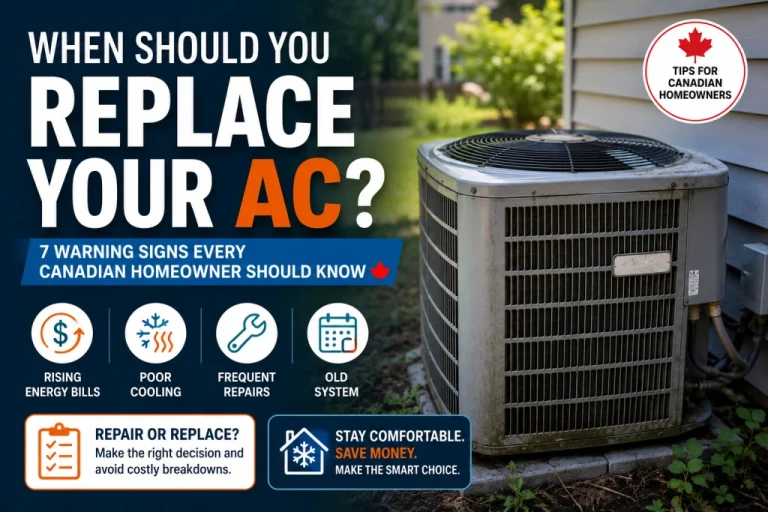
Should You Repair or Replace Your Existing AC?
If your current system is under 8 years old and facing a repair under $500, repair is almost always the right call. Once a system crosses 12–15 years with a repair quote above $800, the math typically favours replacement — especially factoring in the efficiency gains of modern SEER2-rated equipment.
A practical industry rule: multiply the system's age in years by the repair cost. If the result exceeds $5,000, replacement is usually the smarter long-term investment. A 13-year-old system facing a $650 repair comes to $8,450 — solidly in replacement territory.
The Repair or Replace Tool walks through this calculation for your specific situation. And the AC Savings Calculator shows how quickly a new high-efficiency unit would pay for itself — which often changes the calculus on "should I repair my aging system one more time."
For a framework grounded in Canadian energy standards, the Natural Resources Canada ENERGY STAR program publishes guidance on evaluating HVAC equipment replacement decisions, including efficiency benchmarks for qualifying equipment.
Also worth reading before deciding: our guide on real ways to boost your existing AC efficiency, which covers practical steps that can extend a functioning system's useful life and reduce operating costs while you plan a replacement.
Buying AC and Furnace Together: When It Makes Sense
If your furnace is approaching 15 years, replacing it alongside your AC often produces better economics than replacing each system independently. Installation labour overlaps significantly — a contractor can install both systems in one visit rather than two, reducing total labour cost. Matched same-manufacturer systems also typically deliver slightly better efficiency than mixing brands.
Use the Furnace Cost Calculator alongside the AC Cost Calculator to model combined replacement costs. The Furnace Savings Calculator projects what a high-efficiency furnace adds to your annual savings — and the Furnace Size & BTU Calculator ensures your replacement is correctly sized for your home's heating load.
If you're evaluating whether a heat pump system makes more sense than a traditional furnace-plus-AC setup, our Heat Pump vs. Furnace guide covers the honest pros and cons for Canadian winters — including which provinces make heat pumps genuinely viable year-round.
Before committing to a new furnace, the Furnace Operating Cost Calculator lets you compare monthly gas costs across AFUE efficiency ratings, and the Furnace Recommendation Quiz quickly narrows down which efficiency tier suits your situation.
🇨🇦 Get Quotes from Canadian Contractors
Compare Installed Prices on Any Brand Listed Above
Connect with certified local HVAC companies. Free quotes, no obligation. Most homeowners receive 2–3 competitive quotes within 24 hours.
🔒 Free · No obligation · Local certified contractors
The Bottom Line: Best Air Conditioner Canada 2026
For most Canadian homeowners, Carrier and Trane offer the strongest overall combination of reliability, efficiency, and long-term value — with build quality that handles Canadian climate demands better than most alternatives.
If minimizing monthly hydro bills is the priority, Lennox's XC25 is the standout choice for Ontario and BC homeowners where electricity rates justify the efficiency premium. For the best value at a lower price point, Daikin consistently over-delivers relative to cost. For homes without ductwork or homeowners evaluating year-round heat pump capability, Mitsubishi Electric is in a class of its own.
The right brand ultimately depends on your specific combination of budget, home size, province, existing infrastructure, and local dealer network. Use the free AC Recommendation Wizard to get a personalized direction before calling any contractor — you'll go into every quote conversation knowing what to ask and what fair pricing looks like.
Step 1 of 110%
🏆
AC Recommendation Wizard
Which air conditioner should you buy? Find out which air conditioning system is ideal for your home, needs, and budget.
What region do you live in?
How large is your home?
How well insulated is your home?
How often do you run your AC in the summer?
How important is energy efficiency to you?
What is your budget preference?
How long are you planning on staying in your home?
Do you want smart/advanced features?
Do you have central ductwork?
How many people live in your home?
Would you like to receive a free no-obligation estimate from our local contractor partners as well?
Great! Almost done, your result is on the next page.
Please enter your contact details so our Certified contractors can provide estimates as well.
This field is required.
Please enter a valid email address.
Please enter your phone number.
Please enter your city or postal code.
By submitting this form, you are giving your consent to receive phone calls and text messages from our contractor partners.
You're almost done!
Please provide your details to see your results.
Name is required.
Email is required.
Please enter your city or postal code.
🏆 Recommendation Ready
Your Recommended AC System
Best Match For You
—
Get Expert Advice & Free Quotes
A certified HVAC contractor can confirm the best unit for your specific home and climate.
🔒 Free · No obligation · Local certified contractors · Canada-wide
Frequently Asked Questions
1. What is the best air conditioner brand in Canada?
Carrier and Trane are top choices for reliability. Lennox leads in efficiency, while Daikin offers strong value. Mitsubishi Electric is best for ductless and heat pump systems.
2. How much does a new central air conditioner cost installed in Canada in 2026?
Installed central AC costs typically range from $3,000–$10,000+ depending on efficiency, brand, and installation complexity. Budget systems start around $3,000–$5,500, while premium variable-speed models can exceed $10,000.
3. What SEER2 rating should I look for in Canada?
Most Canadian homeowners should choose at least 15 SEER2. In Ontario and BC, 17–20 SEER2 often provides better long-term energy savings.
4. Is Daikin a good air conditioner brand in Canada?
Yes. Daikin is known for reliable compressor technology, good efficiency, and strong value pricing with up to 12-year parts warranty coverage on registered systems.
5. Are there government rebates for air conditioners in Canada in 2026?
Yes. Provinces like Ontario, BC, and Alberta offer rebates for high-efficiency AC systems. Incentives commonly range from $500–$1,500 depending on the program and equipment efficiency.
6. What is the best air conditioner for Ontario homes?
Variable-speed units from Carrier or Lennox — humidity control and high hydro rates make efficiency essential. Min. 17 SEER2 recommended.
7. How long does a central air conditioner last in Canada?
12–17 years average. Canadian freeze-thaw cycles and long dormancy seasons stress components; Trane and Carrier units tend toward the upper end. Annual maintenance extends lifespan.
8.Should I replace my furnace and AC at the same time in Canada?
If your furnace is 12–15+ years old, yes — combined replacement reduces total labour cost, ensures matched system efficiency, and avoids a second disruption in 2–3 years.
 Canadian